Resource Guide Page

Custom Golf Apparel Buying Guide

Buying custom golf apparel is not only about choosing a style and adding a logo. Buyers also need to decide fabric performance, fit direction, decoration method, size range, packaging, and the approval process that carries the order from sample to bulk. This guide is for golf apparel brands, private label programs, clubs, teams, retailers, and sourcing teams that need clearer purchasing criteria before requesting prices or starting development.

custom golf apparelUse this custom golf apparel buying guide to compare fabrics, fits, branding methods, quality checks, and quotation inputs.

Product Programs

The right buying decision starts with where the garments will be worn and how the program will be sold or distributed.

Buyer Types

Many sourcing delays happen because the buyer requests a quotation before defining the full assortment.

Development Support

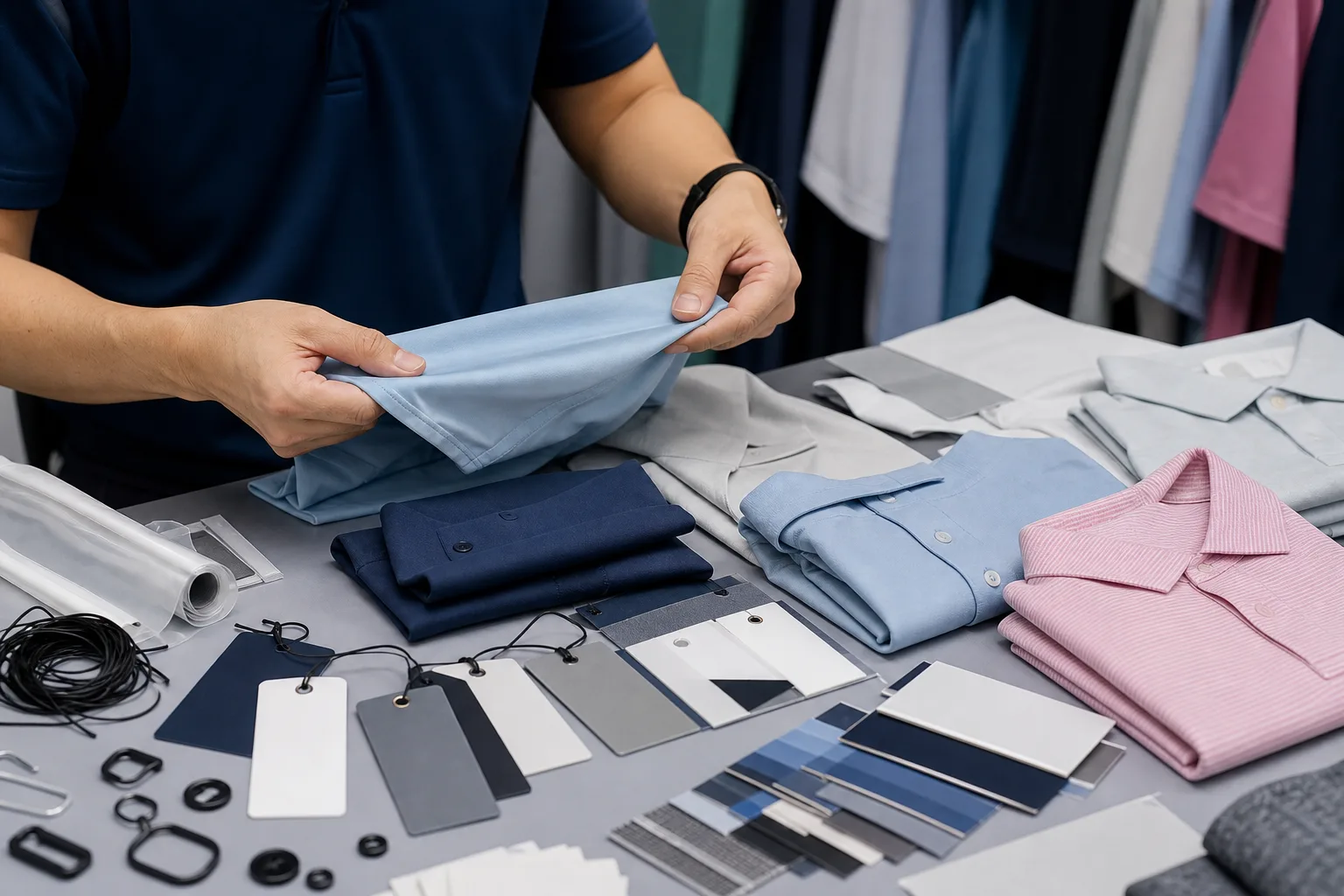
Golf apparel fabric selection should balance wear comfort with sourcing practicality.

Planning Timing

Branding method should be matched to fabric type, garment use, artwork detail, and target price range.

Start With the Program Goal

Match the product plan to the end use

The right buying decision starts with where the garments will be worn and how the program will be sold or distributed. A polo shirt program for a golf club shop does not need the same fabric, trim, or packaging approach as a private label collection or a tournament uniform package.

  • Retail and e-commerce programs: usually need stronger attention to hand feel, fit consistency, color presentation, packaging, and repeat-order continuity.
  • Club, academy, and team programs: often prioritize size coverage, easy reordering, logo visibility, and practical care performance.
  • Corporate and event programs: may focus on delivery windows, broad wearability, simplified styling, and mixed product bundles.

If your product mix is still being finalized, it may help to compare core categories such as custom golf polo shirts, golf jackets, and golf pants before sampling.

Fabric and fit review for golf clothing manufacturing buyers
Choose the Right Garment Mix

Build the assortment before requesting prices

Many sourcing delays happen because the buyer requests a quotation before defining the full assortment. Even a simple golf apparel program can involve different construction and costing logic across tops, layers, and bottoms.

Common starting combinations

  • Core uniform set: polo, outer layer, pants or shorts.
  • Retail capsule: polo, T-shirt, quarter-zip, lightweight jacket.
  • Seasonal weather set: base layer, windbreaker, rain jacket, vest.
  • Women’s range: polo, skort, dress, lightweight layering piece.

When the range includes multiple styles, confirm which items share the same color standards, branding placement, and packaging format. This helps avoid avoidable rework later in sampling and bulk approval.

Fabric Decisions That Affect Buying Risk

Evaluate fabric by performance, appearance, and supply stability

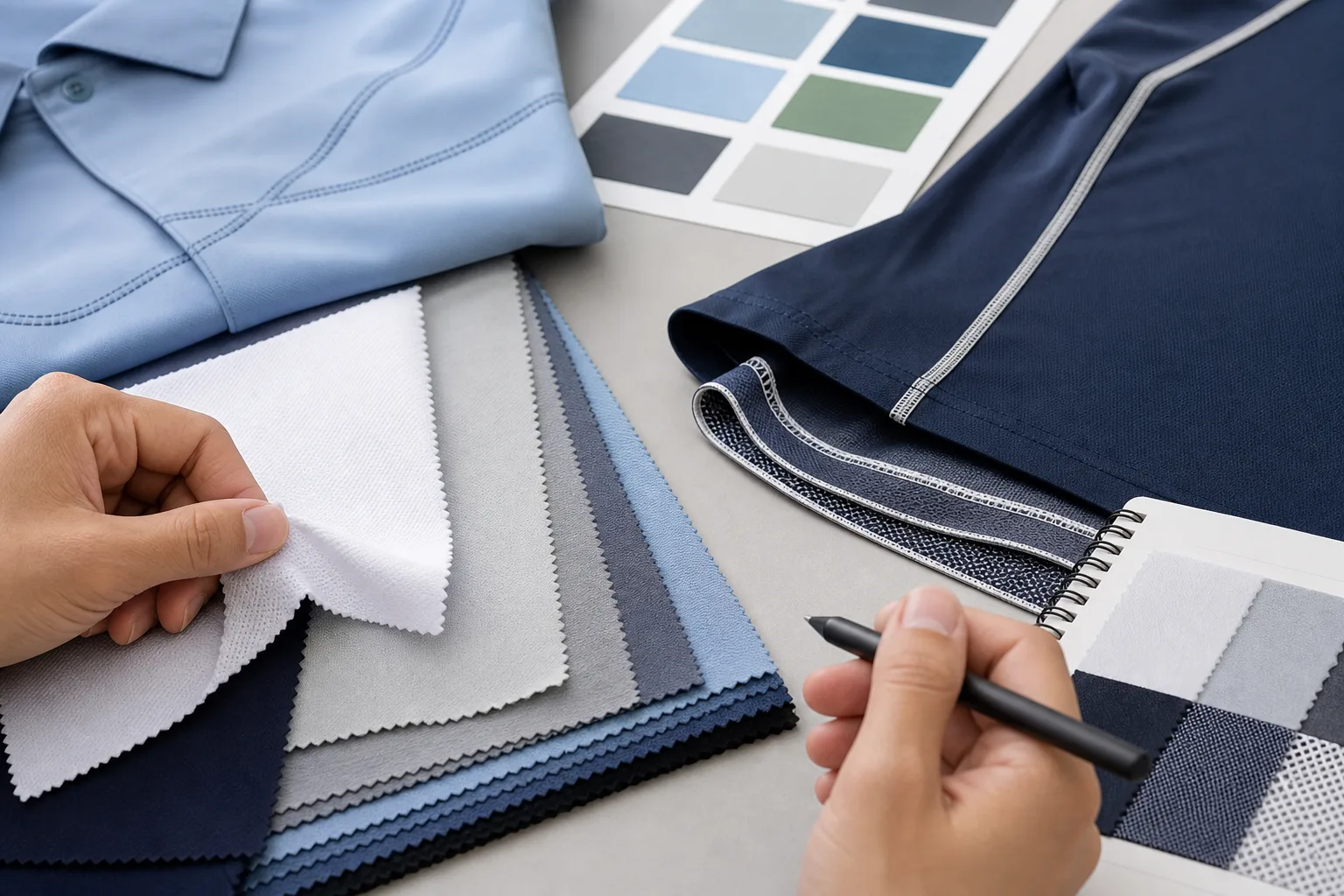
Golf apparel fabric selection should balance wear comfort with sourcing practicality. A fabric that feels ideal in a showroom may still create risk if color availability, finish consistency, or reorder continuity are unclear.

Key fabric checkpoints

  • Performance goal: moisture management, stretch, breathability, light warmth, or weather resistance.
  • Surface appearance: matte or shiny look, pique or jersey texture, brushed or smooth finish.
  • Weight: light for hot-weather polos and T-shirts, midweight for layering, heavier for outerwear.
  • Stretch structure: mechanical stretch or elastane blend depending on movement and recovery needs.
  • Color depth: especially important for navy, black, bright team colors, and white-body garments with contrast trims.
  • Reorder practicality: stable fabric sourcing matters for club programs and ongoing brand replenishment.

For deeper material planning, buyers can review the golf apparel fabric guide or discuss sourcing options through performance fabric sourcing.

Quality control and packing for golf clothing manufacturing buyers
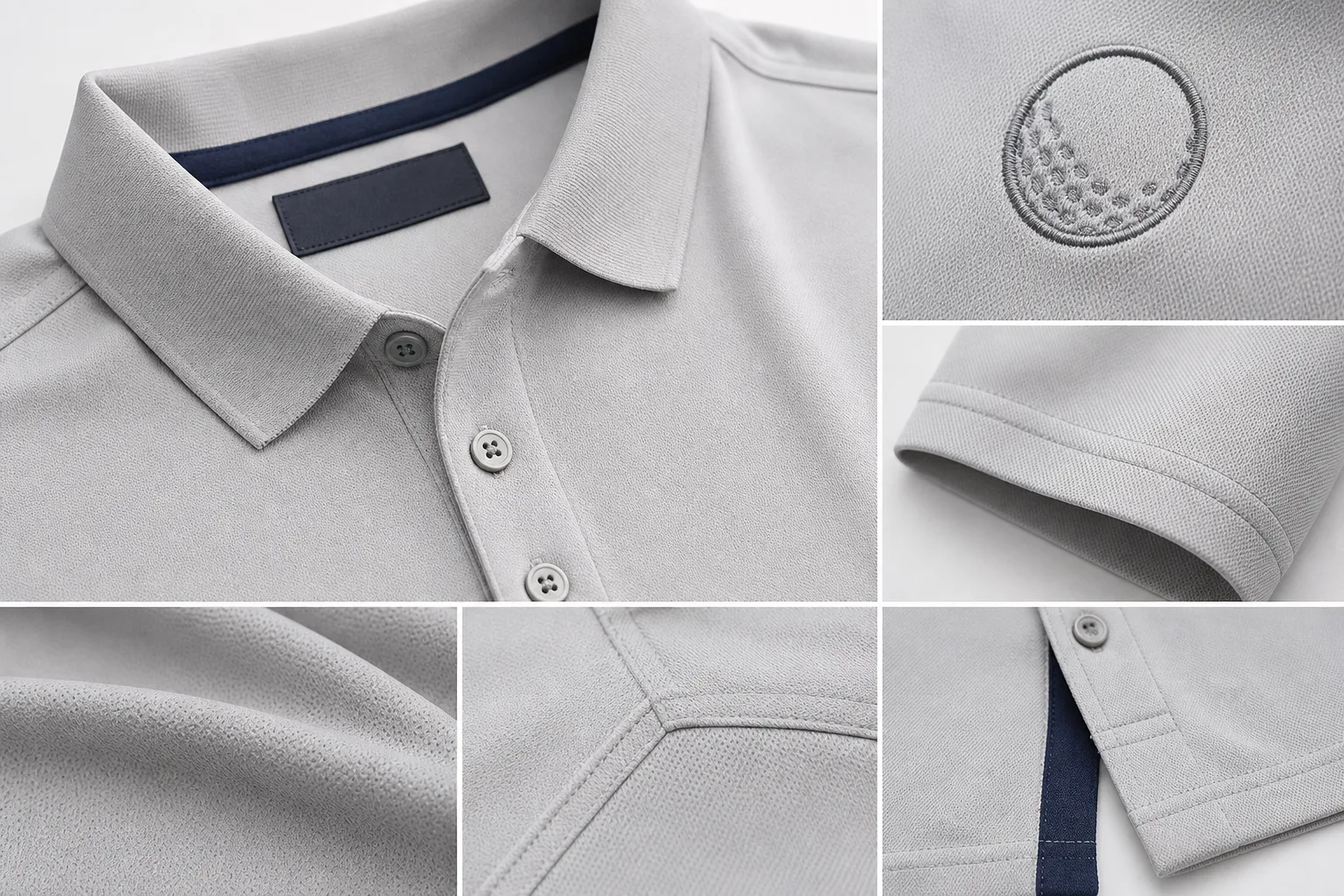
Golf apparel samples showing embroidery, labels, and construction details
Decoration and Brand Presentation

Select logo methods that suit the garment

Branding method should be matched to fabric type, garment use, artwork detail, and target price range. A logo approach that works well on a polo may not be ideal for a lightweight rain jacket or a compression base layer.

Decoration Method Often Suited For What Buyers Should Review
Embroidery Polos, caps, outerwear, premium club programs Stitch density, backing impact, logo size, distortion on stretch fabric
Screen or transfer printing T-shirts, event apparel, graphic programs Artwork sharpness, color matching, wash durability, hand feel
Heat-applied logos Performance tops, lightweight layers, sleek branding looks Adhesion, placement, heat sensitivity, edge lift risk
Woven or printed labels Private label collections Brand consistency, comfort, attachment method, packaging match

If your project is still comparing methods, review the logo decoration guide and embroidery vs. printing before sample approval.

Construction Details Buyers Often Miss

Review the garment details that change wear feel and cost

Two garments can look similar in a photo but differ significantly in construction, labor demand, and finished impression. Buyers should document the details that matter instead of relying only on broad product names.

Examples to confirm by product type

  • Polos: collar shape, placket depth, button count, side vents, cuff finish, hem shape.
  • Jackets and quarter-zips: zipper type, collar stand, pocket construction, lining choice, cuff and hem finish.
  • Pants and shorts: waistband construction, closure method, pocket layout, taper, inseam options.
  • Skorts and dresses: inner-short design, movement coverage, waistband recovery, layering compatibility.

These details affect not only cost but also sample accuracy and approval speed.

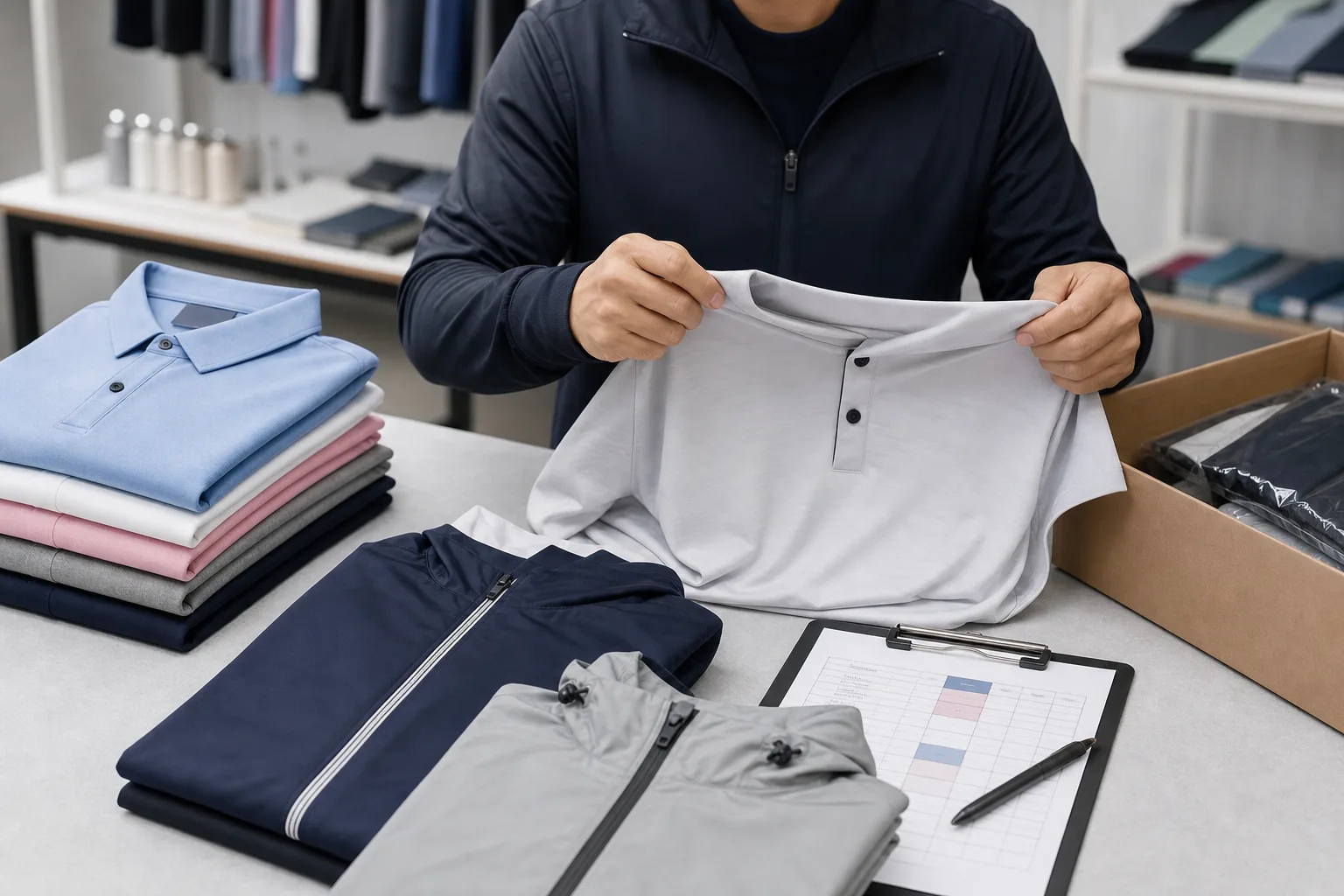
Private label branding preparation for golf clothing manufacturing buyers
Quotation Inputs That Speed Up Sourcing

Prepare the right information before asking for prices

Clear quotation requests produce more useful cost feedback. If key variables are missing, the first quotation may only be a rough reference and may change after development decisions are confirmed.

  • Product type and quantity by style
  • Target fabric or performance requirement
  • Estimated colorways and size range
  • Logo method and placement count
  • Private label, hangtag, barcode, or packaging needs
  • Target ship window and destination market
  • Tech pack, artwork, or reference garment if available

Buyers ready to move forward can submit project details through Request a Quote or send development files via Upload Your Tech Pack.

Sampling and Approval Strategy

Use sampling to reduce avoidable bulk issues

Sampling is where fit, fabric behavior, color direction, construction details, and logo execution are aligned. Standard sample development is often planned in approximately 5–7 days, while more complex developments may take approximately 7–10 days, depending on fabric readiness, artwork approval, revisions, and product complexity.

Bulk production planning is also conditional. For many programs, production may be planned in approximately 20–35 days after approvals, but timelines depend on order quantity, colorways, packaging, testing needs, and scheduling. Buyers with launch-sensitive programs should build buffer time for revisions and pre-production confirmation.

If you need the full process sequence, compare the sample-to-bulk process and sampling & production lead times.

Quality control and packing for golf clothing manufacturing buyers
Golf apparel samples showing embroidery, labels, and construction details
When Private Label Support Matters

Decide how much development support you need

Some buyers arrive with complete tech packs and approved artwork. Others need help refining measurements, sourcing better materials, or organizing trims and packaging for a more consistent collection launch.

Ninghow Golf presents Ninghow’s apparel development and production capabilities for custom golf apparel programs, including product review, sourcing coordination, sample development, logo application, custom trims, packaging support, and repeat-order follow-up where needed.

Private label buyers may want to review private label golf clothing and the private label launch guide before finalizing their first range plan.

Final Buying Checklist

What to confirm before placing the order

  1. Final product list and quantities by style
  2. Approved fabric direction and color standards
  3. Fit approval based on measurements and sample review
  4. Confirmed logo method, placement, and artwork files
  5. Label, trim, and packaging requirements
  6. Inspection or testing requirements for the order
  7. Shipment terms and destination planning

A careful brief at this stage usually reduces later changes, helps quotation accuracy, and makes pre-production confirmation more efficient.

Private label branding preparation for golf clothing manufacturing buyers
Next Step

Move from buying criteria to project review

If your team already knows the garment mix, fabric direction, and branding requirements, the next step is to submit the specification set for review. If some decisions are still open, it is often faster to share your target use case, reference garments, and expected launch window first.

Request a Quote for your golf apparel program

Common Questions

Answers buyers usually need before starting

Keep the project conversation practical with clear expectations around sampling, production and quotation inputs.

What information should I prepare before buying custom golf apparel?

The most useful starting package includes product types, estimated quantities, target fabric performance, colorways, size range, logo method, packaging needs, target market, and any tech pack or reference garment. The clearer these inputs are, the more accurate the early quotation and sampling plan can be.

How do I choose between a retail-quality program and a uniform-focused program?

Retail programs usually need more attention to hand feel, silhouette, branding details, packaging, and collection consistency. Uniform-focused programs often prioritize broader sizing, practical care, visible logo placement, and easier repeat ordering. The right choice depends on how the garments will be sold, issued, or reordered.

What usually causes delays when sourcing custom golf apparel?

Common causes include unfinished size charts, unclear artwork, late fabric confirmation, multiple color revisions, undecided packaging, and changes after sample approval. Weather-protection garments and multi-style collections can also require more review before bulk production.

How should I review a sample before approving bulk production?

Review the sample against your intended fit, measurements, fabric feel, color direction, logo execution, construction details, and care expectations. It is also helpful to check movement comfort for golf use, especially at the shoulders, waist, sleeves, and hem depending on the garment category.

What factors can affect MOQ for a custom golf apparel project?

MOQ is not fixed across all orders. It may depend on the garment type, fabric availability, color count, size range, decoration method, private label requirements, packaging complexity, and whether the order is a single style or a multi-style program.

Can I start with a few styles first and expand later?

Yes, many buyers begin with a focused range and expand after fit, branding, and reorder patterns are established. This can help reduce development risk, especially for newer private label programs or buyers testing a new golf category.
Start a Project

Build your next golf clothing program with a clearer production path.

Share product type, quantity, fabric direction, branding requirements and target timing so Ninghow Golf can suggest the most practical next step.

Scroll to Top