Resource Guide Page

Golf Apparel Fabric Guide

Fabric choice shapes how golf apparel performs, fits, decorates, and holds up through repeated wear. For brands, clubs, teams, and private label buyers, the right fabric decision starts with the intended garment, climate, logo method, and price position rather than a single best material. Ninghow Golf supports custom golf apparel programs with fabric sourcing, sample development, and manufacturing coordination for performance-driven products.

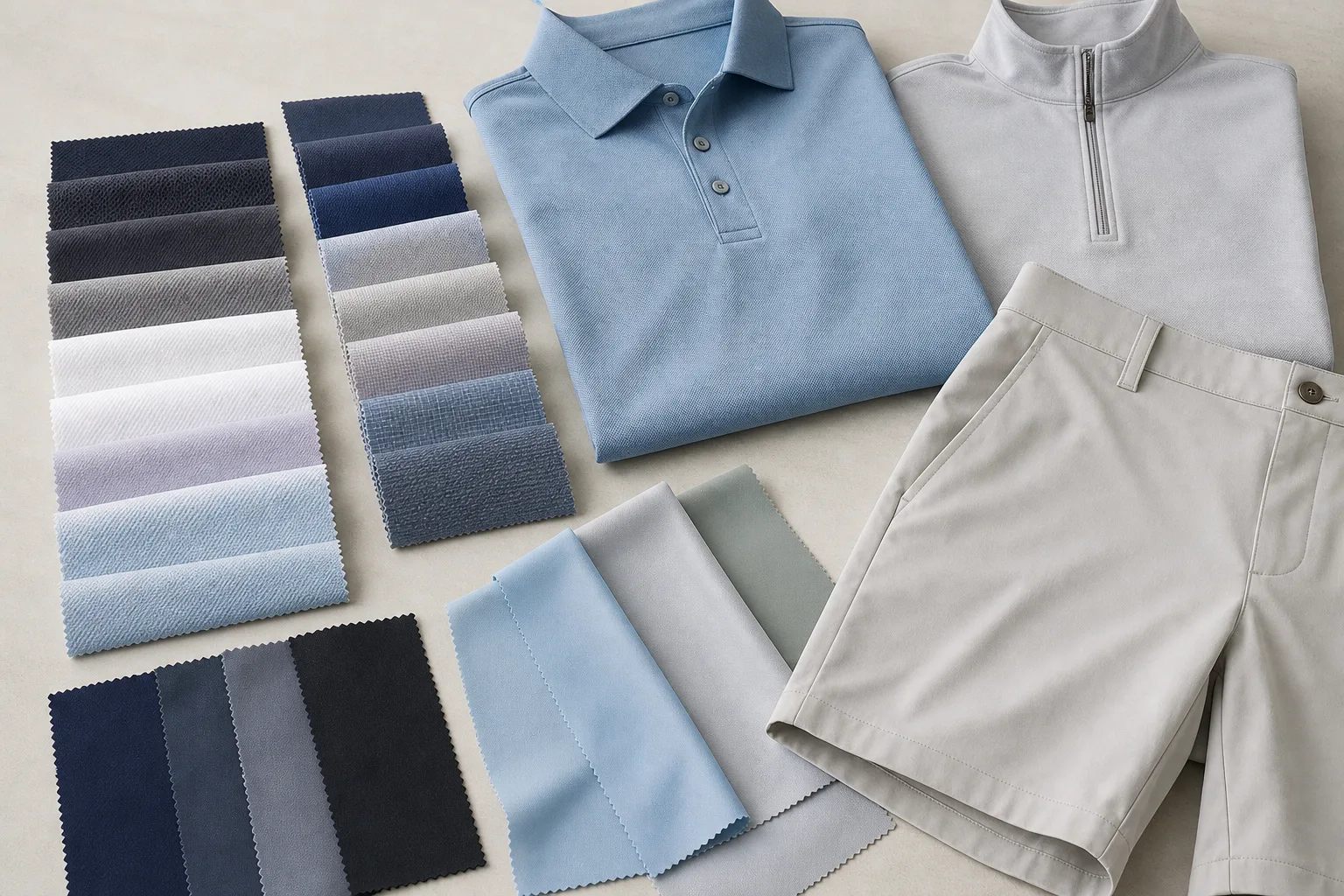
Golf apparel fabric swatches with sample polo, quarter-zip, and shorts
Fabric ChoiceCompare golf apparel fabrics for polos, layers, outerwear, and uniforms.

Product Programs

Golf apparel fabrics should be selected by end use.

Buyer Types

Most golf apparel sourcing decisions come down to a short list of practical performance factors.

Development Support

No single fabric suits every golf program.

Fabric Choice

Buyers working through a category-specific brief can continue into golf pants, golf skorts, or quarter-zip pullovers for.

Fabric Selection Basics

Start with the garment, not the fiber name

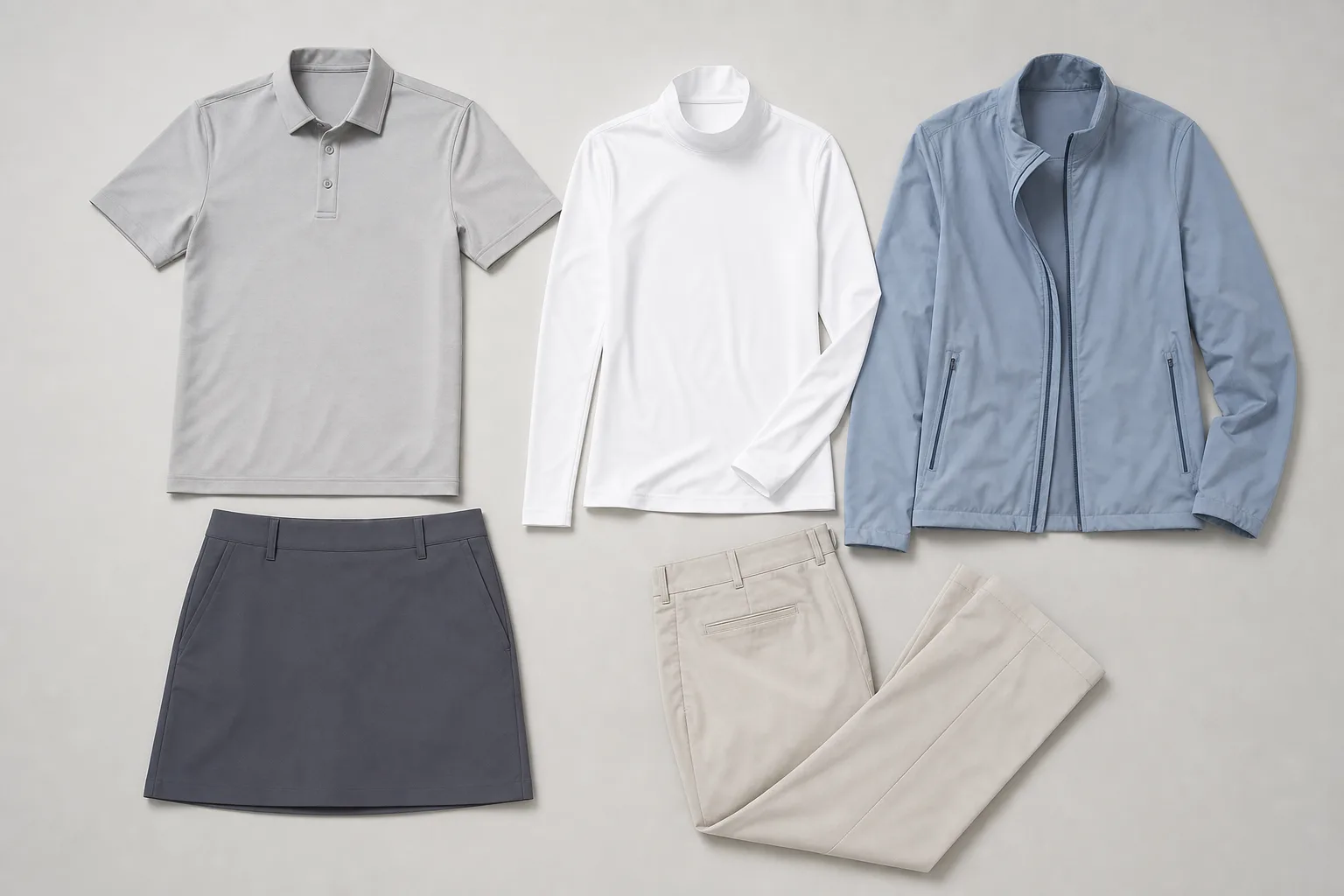
Golf apparel fabrics should be selected by end use. A polo shirt, base layer, windbreaker, and skort may all require stretch or moisture management, but the construction, weight, surface, and recovery priorities are different. Buyers usually make better decisions when they define the garment role first and then compare fabric options within that use case.

  • Polo shirts: balance hand feel, drape, breathability, print or embroidery compatibility, and placket stability.
  • T-shirts and lightweight tops: focus on softness, weight, movement, and surface consistency.
  • Base layers and compression styles: prioritize stretch recovery, body fit, opacity, and seam performance.
  • Pants, shorts, and skorts: require shape retention, movement comfort, abrasion resistance, and stable color appearance.
  • Outerwear: evaluate shell structure, lining compatibility, wind resistance, and decoration limits before style approval.

When the product brief is still open, it is often useful to compare parent categories such as custom golf polo shirts, golf base layers, and golf outerwear collection before locking a fabric path.

Unbranded golf garments showing different fabric applications by product type
Performance Priorities

Performance properties buyers usually compare first

Most golf apparel sourcing decisions come down to a short list of practical performance factors. These should be reviewed as a combination rather than in isolation, because improving one property can affect cost, hand feel, weight, or decoration results.

  • Moisture management: useful for polos, tees, and active layers where players and staff wear garments for long periods.
  • Stretch and recovery: important for swing movement, especially in fitted tops, sleeves, waist areas, and performance bottoms.
  • Breathability: relevant for warm-weather programs, tournament wear, and layering systems.
  • Weight and drape: influences comfort, silhouette, and how premium or casual the garment feels.
  • Opacity and coverage: especially important for lighter colors, women’s styles, skorts, and fitted items.
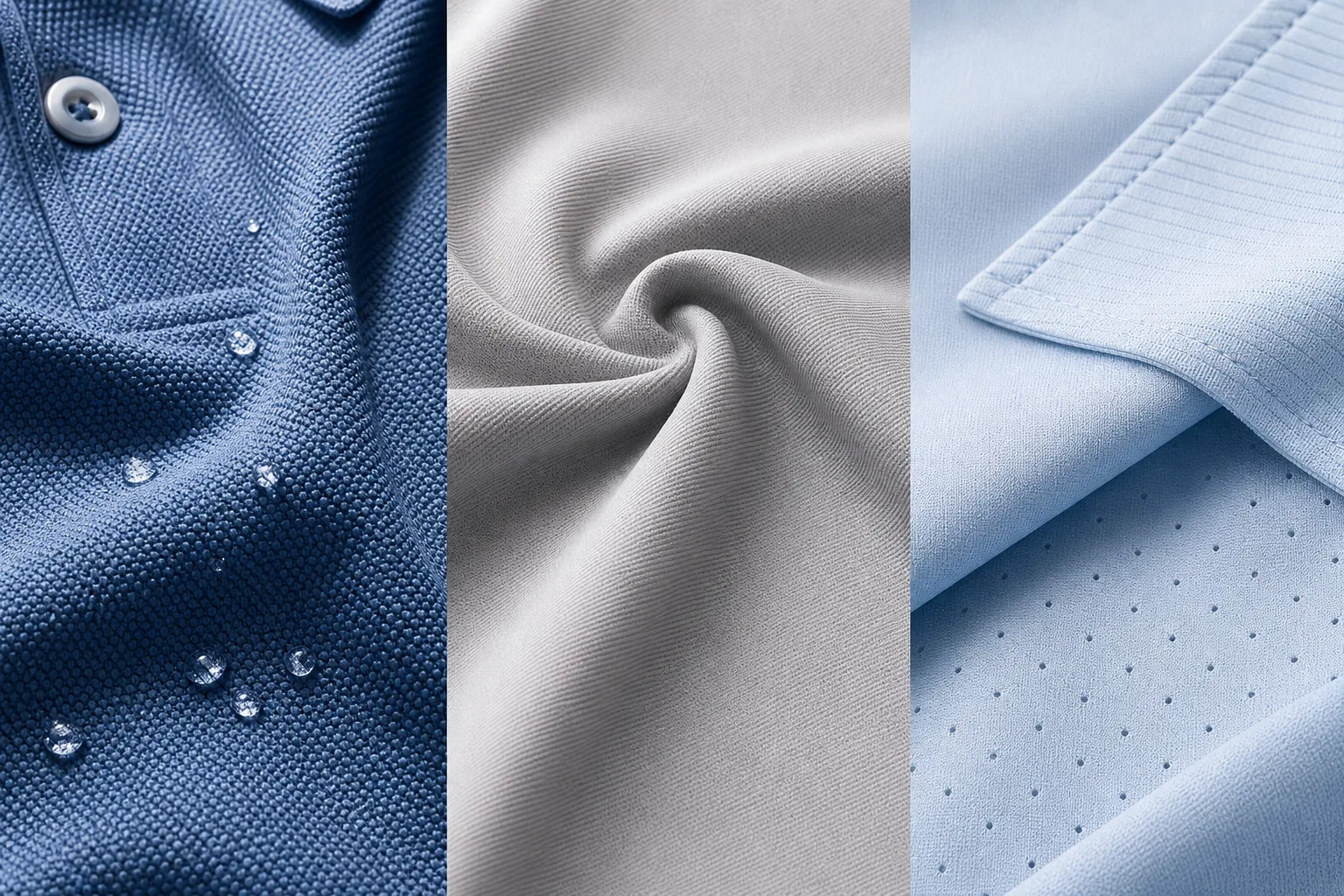
  • Surface stability: affects printing clarity, embroidery appearance, pilling risk, and long-term presentation.
  • Care behavior: repeated washing can affect shrinkage, shape, collar appearance, and decoration stability.

For buyers that also need fabric treatment support, functional finishes and fabric & performance testing should be reviewed alongside the material shortlist.

Common Fabric Directions

Common golf apparel fabric directions and where they fit

No single fabric suits every golf program. The most common directions below are often used as a starting point during product development and swatch review.

Polyester performance knits

Common for golf polos, training tops, event uniforms, and lightweight layers. They are often chosen for color consistency, moisture management potential, and practical care. Surface texture can range from smooth jersey to pique and engineered structures.

Recycled polyester options

Used when a buyer wants to include a recycled-material direction in a golf collection or club program. Suitability still depends on hand feel, weight, appearance, and available documentation for the exact fabric under review. Buyers comparing these options in more detail can also review polyester vs. recycled polyester and recycled golf fabrics.

Polyester-spandex blends

Often selected for added movement and recovery in polos, fitted tops, skorts, and performance bottoms. The blend can improve comfort, but it should be checked carefully for logo distortion, seam stability, and recovery after repeated wear.

Nylon-based performance fabrics

Useful where a smoother hand feel, denser construction, or specific outerwear and bottom applications are preferred. These materials are often reviewed for premium-feel tops, technical layers, and selected woven garments.

Cotton-blend casual fabrics

Sometimes suitable for golf lifestyle capsules, retail-driven pieces, or less technical clubhouse apparel. Buyers should weigh softness and familiar hand feel against drying speed, shape retention, and performance positioning.

Woven performance fabrics

More common in golf pants, shorts, skorts, windbreakers, and rainwear than in standard polos. Evaluation should include movement, noise level, crease behavior, and compatibility with the garment’s intended structure.
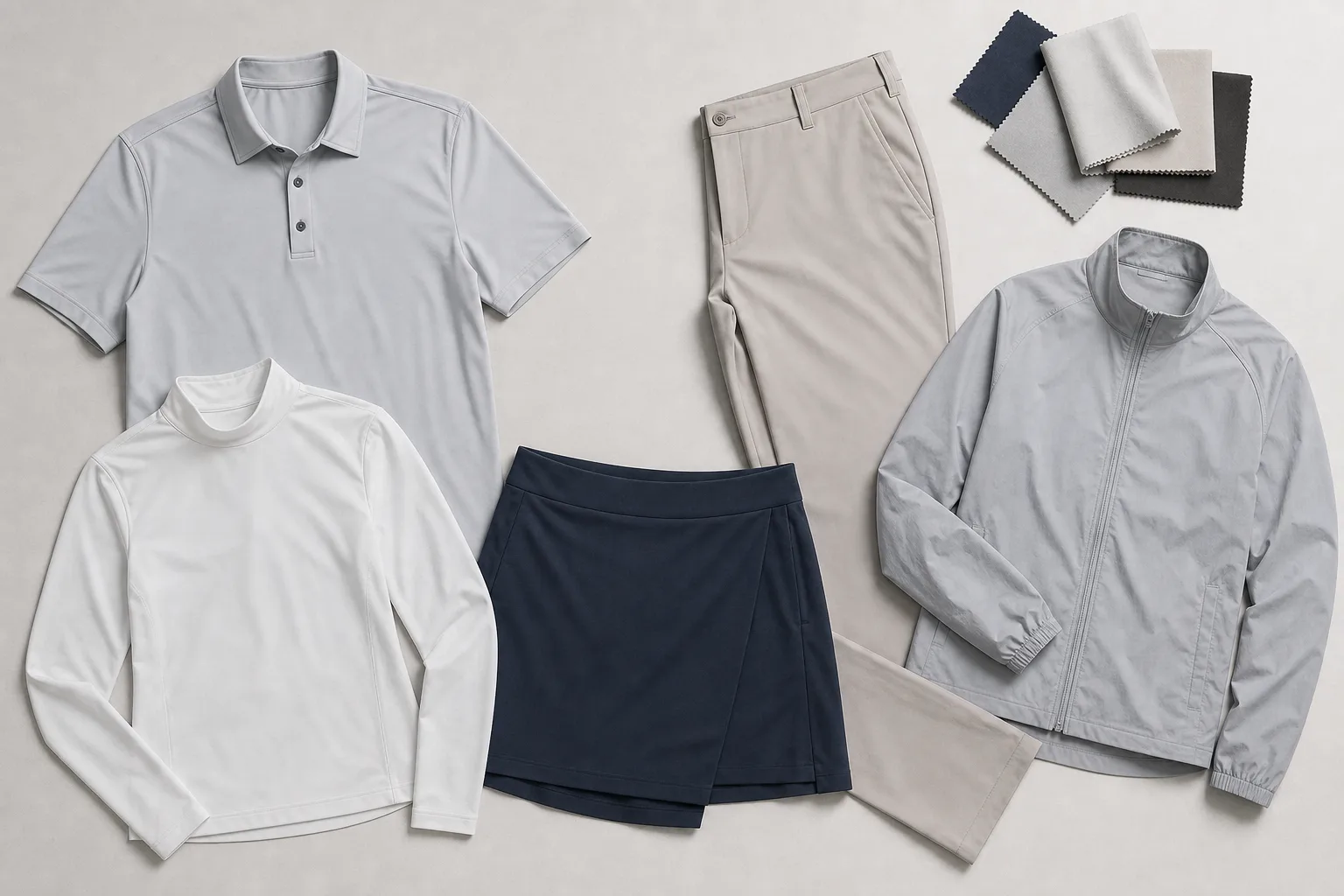
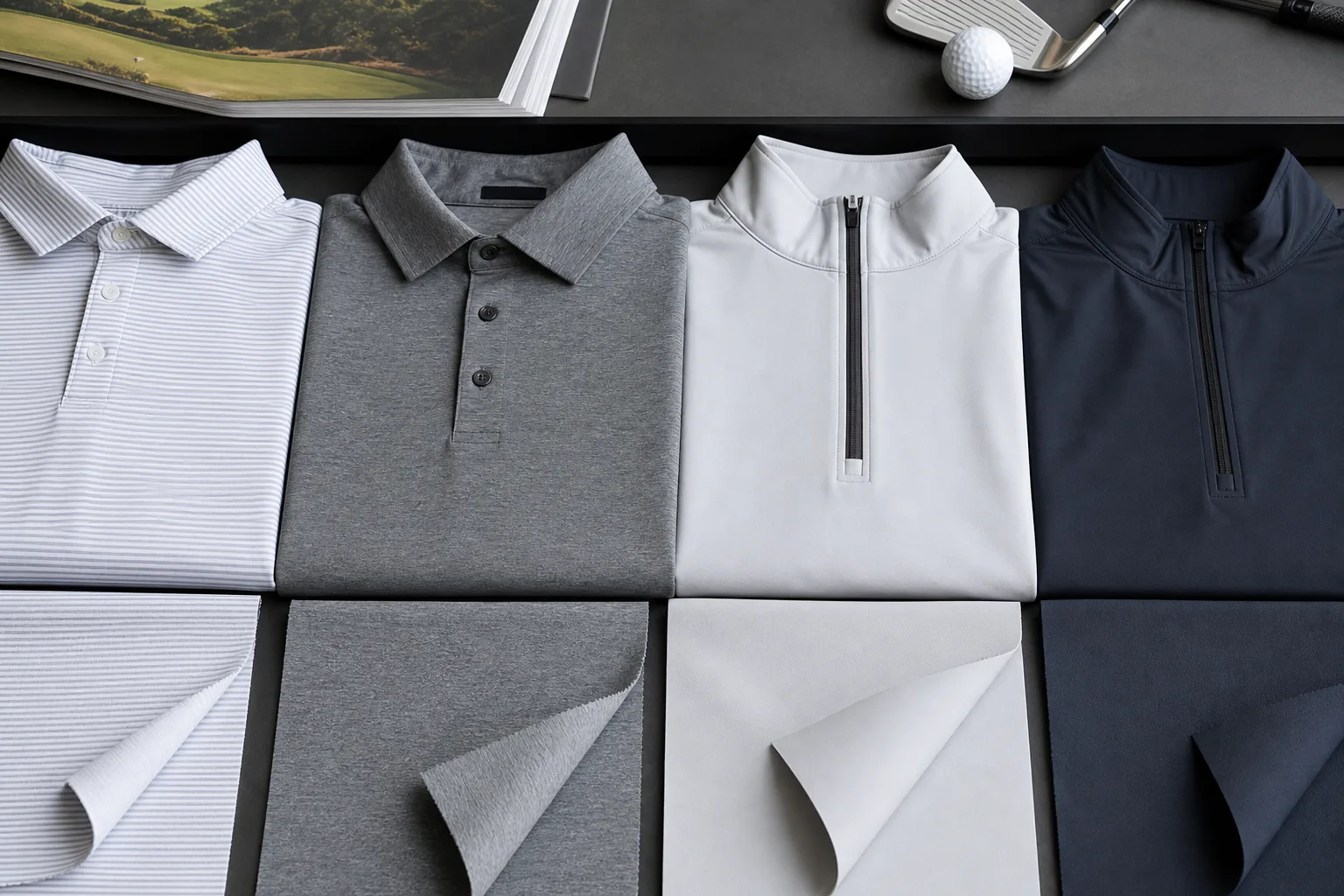
Unbranded golf garments showing different fabric applications by product type
By Product Type

How fabric priorities change by product type

Fabric selection becomes clearer when tied to the actual garment category.

Product Type Main Fabric Focus Typical Buyer Concerns
Golf polos Breathability, collar support, surface consistency, moderate stretch Hand feel, placket stability, logo compatibility, color range
Base layers High stretch, recovery, close-body comfort, opacity Fit pressure, seam comfort, layering function
Pants and shorts Movement, shape retention, abrasion resistance, clean drape Waist comfort, leg shape, pocket strain, wrinkle behavior
Skorts and dresses Coverage, stretch, recovery, stable appearance in motion Opacity, balance, inner-short compatibility, body confidence
Quarter-zips and jackets Layering comfort, structure, recovery, outer surface stability Zipper behavior, collar shape, decoration placement
Windbreakers and rainwear Lightweight shell performance, movement, packability Noise, stiffness, lining choice, finish verification

Buyers working through a category-specific brief can continue into golf pants, golf skorts, or quarter-zip pullovers for more focused garment guidance.

Decoration Compatibility

Check fabric compatibility with logos before sampling

A fabric that feels right is not automatically the right base for every decoration method. Texture, stretch, thickness, and surface stability all influence logo appearance and long-term durability.

  • Embroidery: works well on many polos, outerwear pieces, and caps of structured garments, but very light or highly stretchy fabrics may need extra review for puckering or distortion.
  • Printing: cleaner on smoother surfaces and often useful for event apparel, promotional garments, and large-format branding.
  • Heat-applied logos: can suit technical garments when placement, temperature sensitivity, and fabric recovery are reviewed in advance.
  • Woven or molded branding details: may be better for premium private label programs than oversized chest decoration.

Logo review should happen with both the fabric and garment construction in mind. For a deeper comparison, buyers can use logo decoration guide, golf apparel embroidery, and apparel printing.

Unbranded golf garments showing different fabric applications by product type
Close-up comparison of golf fabric textures and surfaces
Development Risks

Common fabric selection mistakes in golf apparel programs

Many avoidable delays start with fabric approval decisions that were made too early or with too little garment context.

  1. Approving by fiber label only: two fabrics with the same composition can perform very differently because of knit structure, weight, finish, and yarn quality.
  2. Ignoring color impact: white, light, and bright shades can change opacity, hand feel, and even decoration appearance.
  3. Choosing stretch without checking recovery: comfort may look good on first wear but weaken after repeated use if recovery is not suitable.
  4. Skipping collar and trim matching: polo body fabric and collar or cuff materials need to work together visually and structurally.
  5. Overlooking packaging and use environment: tournament kits, club staff uniforms, and retail pieces may need different wrinkle, folding, or presentation behavior.
  6. Delaying swatch review: digital references are useful, but hand feel and actual garment response still need physical confirmation before sample approval.
What to Submit

What to prepare before requesting fabric recommendations

Fabric sourcing moves faster when the buyer submits a concise, product-specific brief. This does not need to be complicated, but it should narrow the intended use.

  • Garment type and intended season
  • Target hand feel such as smooth, textured, soft, crisp, or structured
  • Preferred weight range if known
  • Stretch expectation and fit direction
  • Color range and any light-color coverage concerns
  • Logo method and approximate placement
  • Target market position or price range reference
  • Reference garment, swatch image, tech pack, or buyer-supplied sample if available

Buyers with a more developed specification set can also use upload your tech pack or request support through performance fabric sourcing.

Golf fabric directions displayed through sample garments and swatches
Unbranded golf garments showing different fabric applications by product type
Sampling and Review

Why swatches and sampling still matter after shortlist approval

Fabric approval should usually move through at least two stages: shortlist review and garment-level confirmation. Swatches help narrow direction, but full assessment often requires a sample because collar roll, drape, sleeve movement, zipper behavior, opacity, and logo response can change once the fabric is made into a finished garment.

Ninghow Golf can coordinate swatch review, sample development, and production planning through Ninghow’s product development and manufacturing workflow. Standard sample timing is often discussed as a planning reference and may vary based on fabric availability, style complexity, revisions, and artwork approval. Buyers who need process detail can review sample-to-bulk process or send a direct request through request samples.

Common Questions

Answers buyers usually need before starting

Keep the project conversation practical with clear expectations around sampling, production and quotation inputs.

How should I choose fabric for custom golf polos versus golf outerwear?

Start with the garment role. Golf polos usually need breathable knit structure, stable collar performance, and a surface that works with your logo method. Outerwear often requires a more structured shell, layering comfort, movement through the shoulders, and review of lining or finish options.

Is polyester always the right choice for golf apparel?

Not always. Polyester is common because it can support practical care and performance-driven constructions, but the right option depends on the garment type, weight, hand feel, stretch needs, decoration method, and market position. Some programs may be better served by blends, nylon-based fabrics, or selected woven constructions.

What should I send if I want fabric recommendations for a new golf apparel program?

The most useful inputs are garment type, intended season, target hand feel, expected stretch, logo method, color direction, and any reference garment, inspiration image, or tech pack you already have. A clearer brief usually leads to a faster and more relevant material shortlist.

Can I approve golf apparel fabric from swatches alone?

Swatches are useful for narrowing options, but final approval is often stronger when supported by a garment sample. Drape, opacity, collar behavior, sleeve movement, and decoration response may look different once the selected fabric is made into the actual style.

What can affect fabric MOQ or sourcing availability?

MOQ and availability may depend on the fabric type, mill source, colorways, finishing requirements, width, order structure, decoration plan, and whether the material is stock-supported or custom-developed. This should be confirmed against the exact product brief rather than assumed in advance.

Start a Project

Build your next golf clothing program with a clearer production path.

Share product type, quantity, fabric direction, branding requirements and target timing so Ninghow Golf can suggest the most practical next step.

Scroll to Top