Resource Guide Page

Golf Apparel Logo Decoration Guide

Logo decoration can change the look, feel, cost structure, and production path of custom golf apparel. For golf brands, clubs, events, and private label programs, the right method depends on the garment, the artwork, the wear condition, and the image you want to present. Ninghow Golf supports logo application planning across polos, outerwear, uniforms, and promotional apparel programs. If you are comparing decoration methods before sampling, send your logo files, garment list, and placement needs for review.

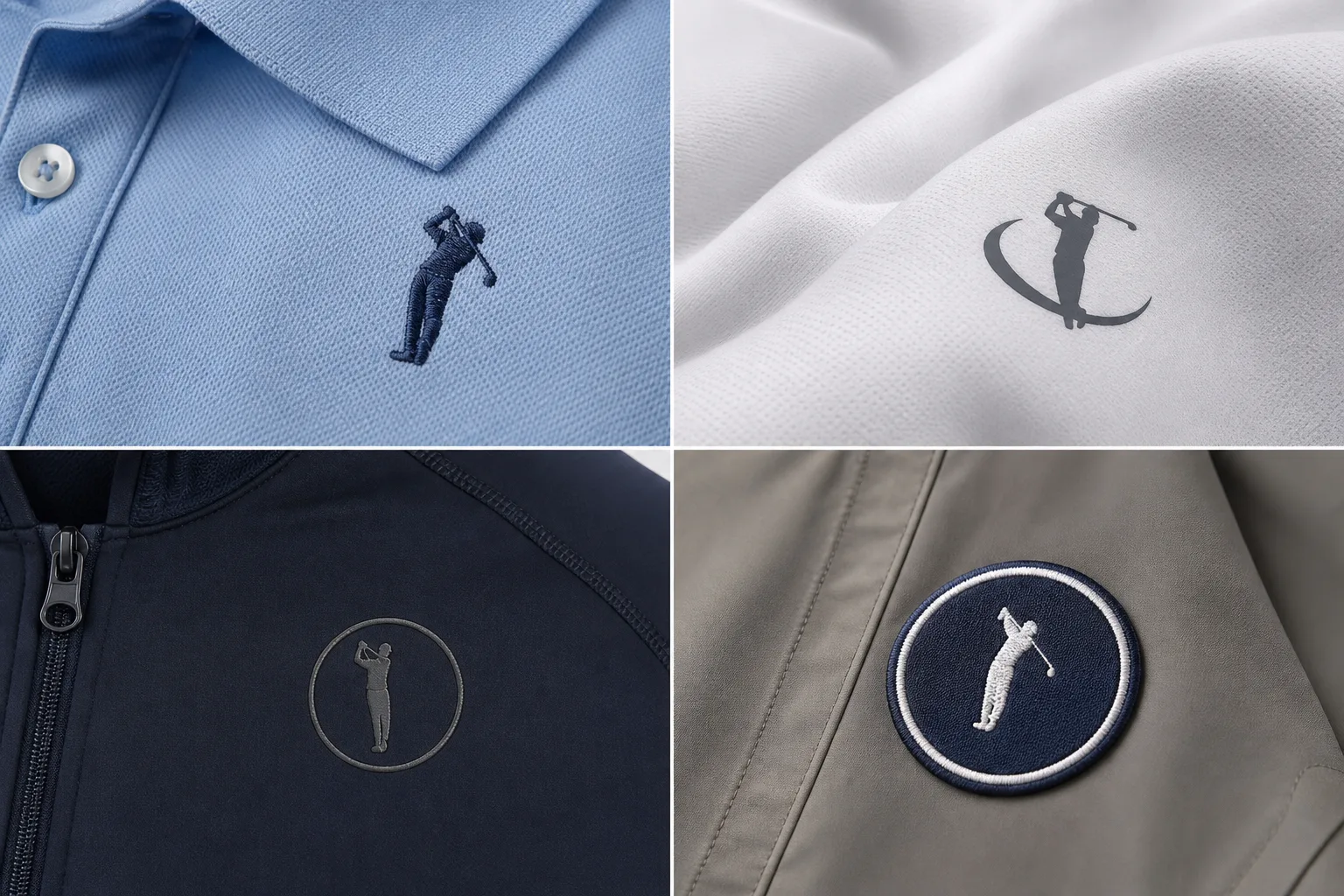
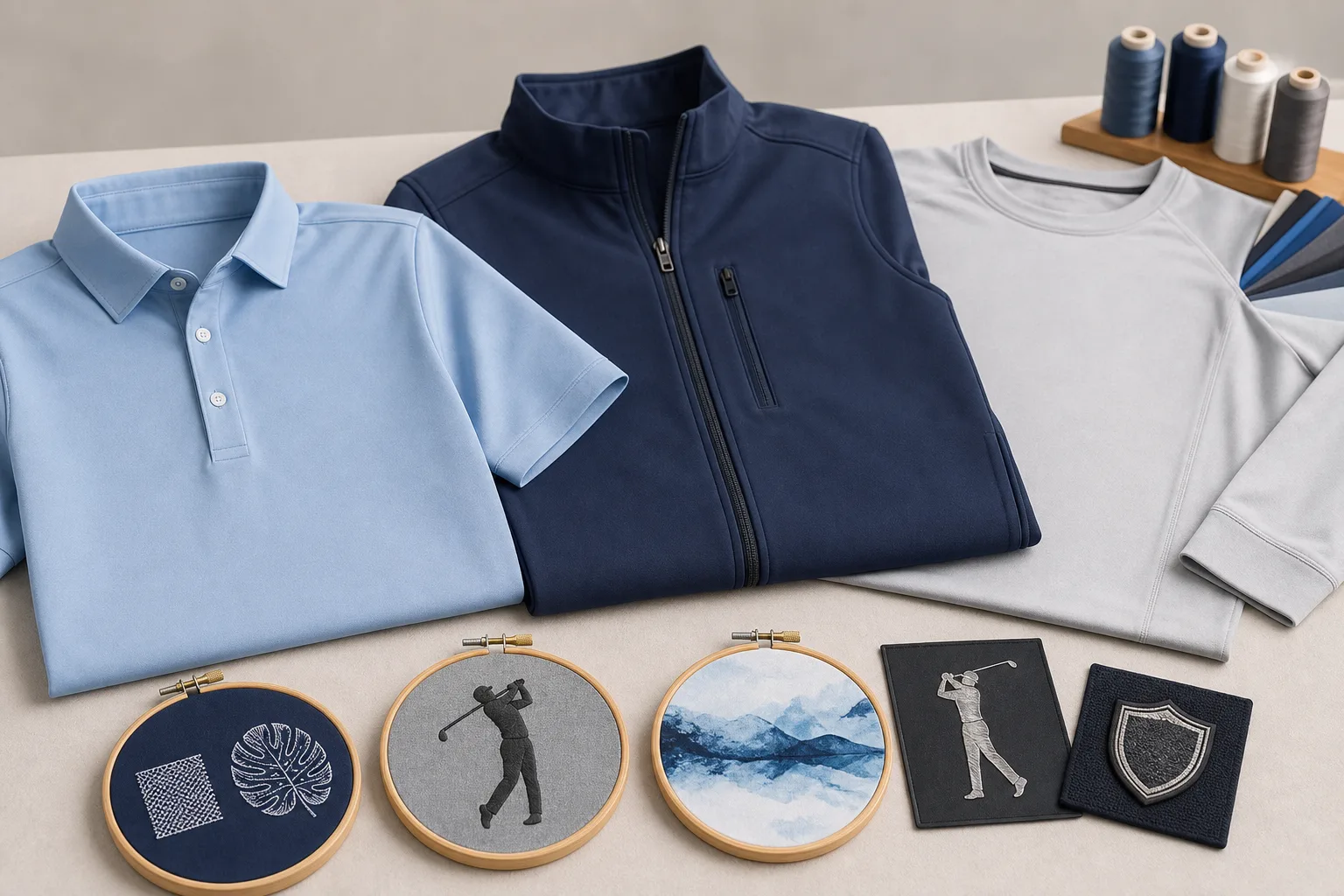
Custom golf garments showing embroidery, print, heat-applied logo, and patch decoration
golf apparel logoCompare embroidery, printing, patches, and heat-applied logo options for custom golf apparel, with placement, artwork,.

Product Programs

There is no single logo method that fits every golf apparel program.

Buyer Types

Placement affects brand visibility, decoration stability, and wearer comfort.

Development Support

Golf apparel uses a wide mix of fabrics, including performance polyester, stretch blends, brushed layers, lightweight.

Quality Checks

Decoration quality depends heavily on the artwork provided for confirm.

Choosing the Right Method

Choose the logo method by garment, artwork, and end use

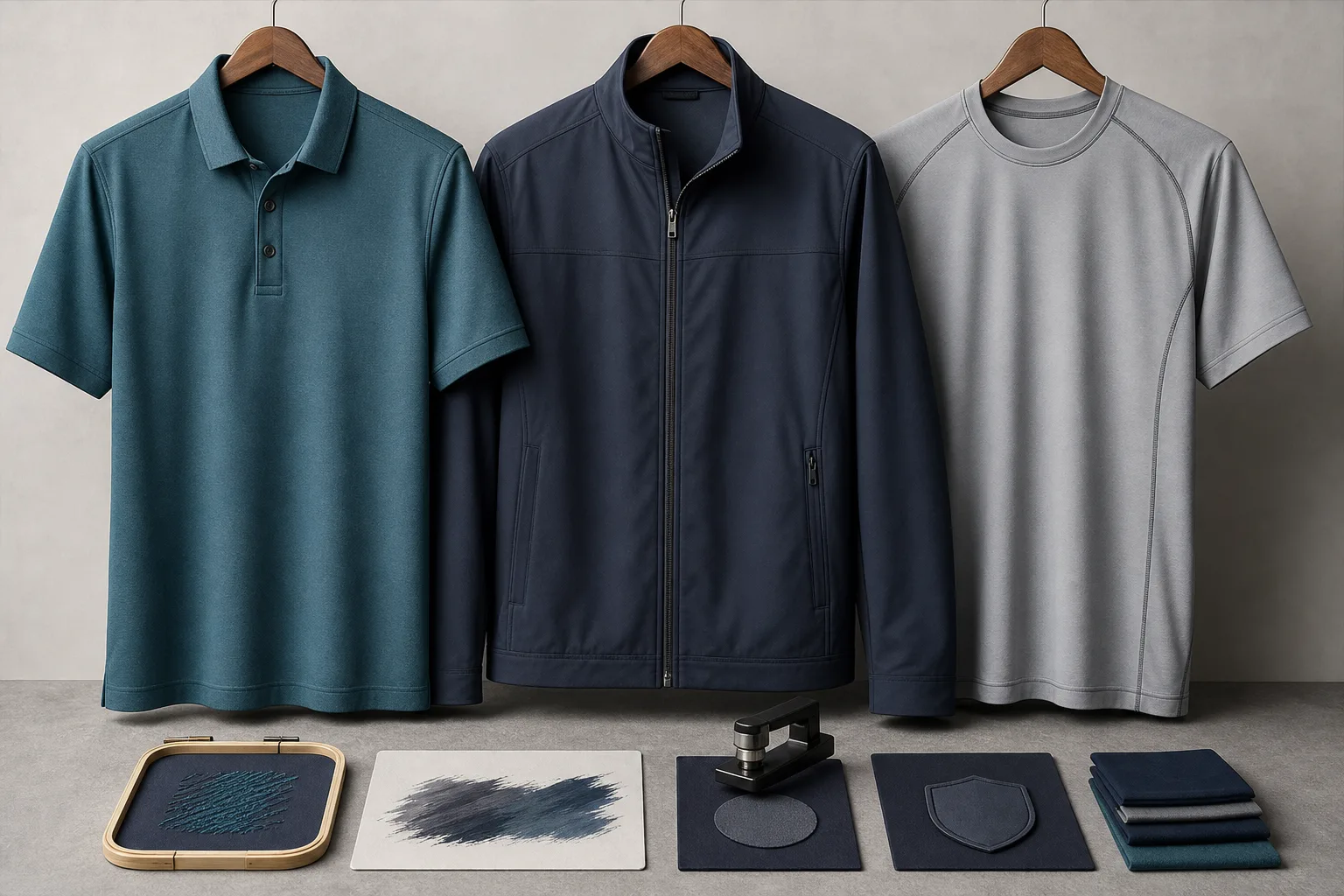
There is no single logo method that fits every golf apparel program. A chest logo on a performance polo has different requirements from a sleeve mark on a windbreaker or a back graphic on a tournament T-shirt. The first decision is not decoration type alone. It is the combination of garment fabric, logo detail, placement, expected wash use, and brand appearance.

  • Embroidery suits many chest logos, caps, and structured placements where texture and dimension are preferred.
  • Screen or transfer printing suits graphic logos, flatter surfaces, and artwork with fine lines or larger coverage.
  • Heat-applied logos suit lightweight performance garments where reduced bulk matters.
  • Patches and badges suit club identity, heritage styling, and selected outerwear or premium programs.

For broader customization options across garment programs, see custom logo options.

Golf apparel garments arranged to compare different decoration methods
Macro views of embroidery, printing, heat-applied logo, and patch on golf apparel
Placement Guidance

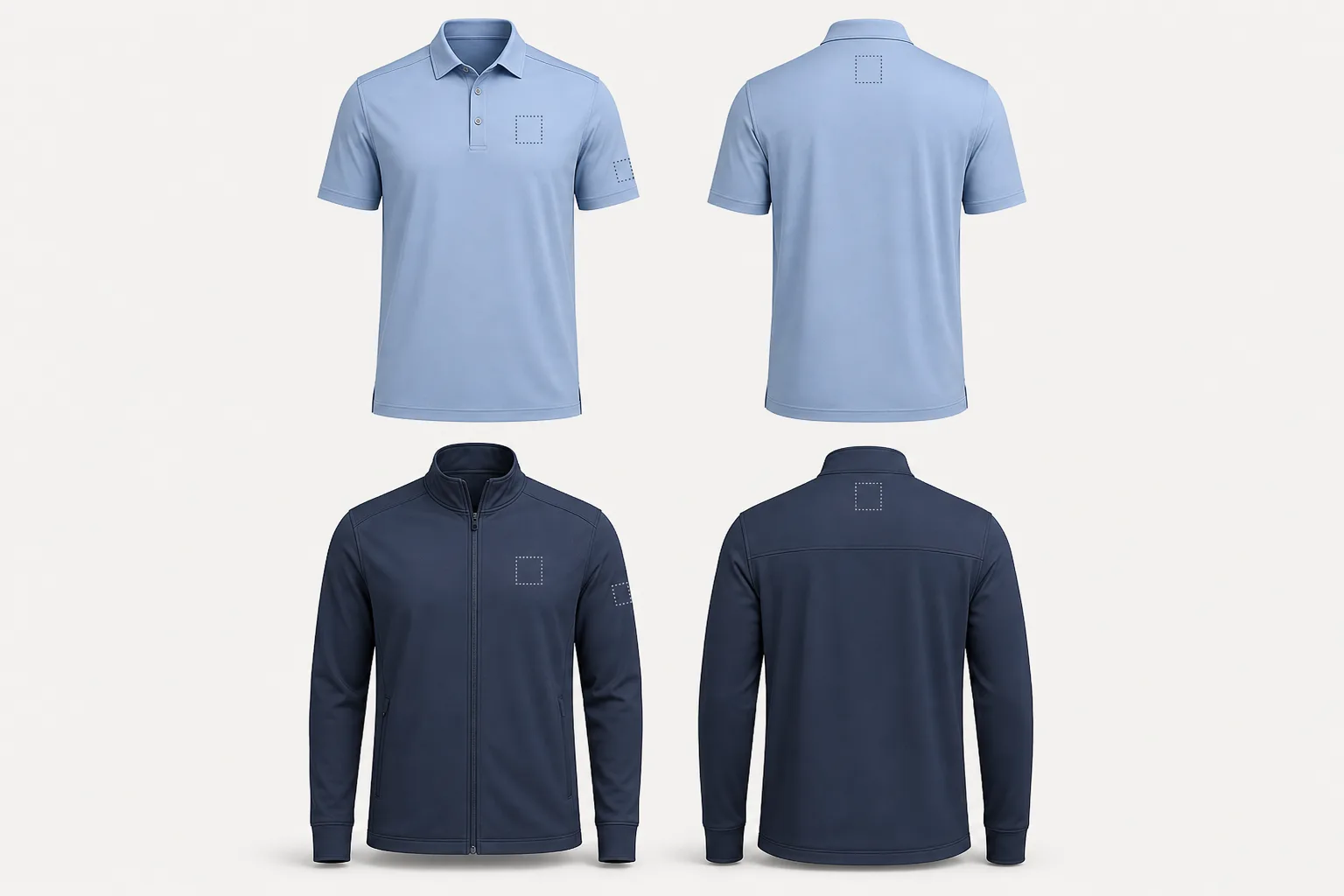
Common logo placements and what to check before approval

Placement affects brand visibility, decoration stability, and wearer comfort. Golf garments also involve movement at the shoulder, chest, and back, so a logo that looks balanced on a flat spec sheet may need adjustment on the worn garment.

  • Left chest: common for club, corporate, and private label logos; check size, placket distance, and balance against garment seams.
  • Sleeve: suitable for sponsor, event, or secondary brand marks; check visibility when the arm bends.
  • Center back neck: often used for smaller brand marks; check collar interference and neck seam position.
  • Front or back body: more common on T-shirts, outerwear, and promotional pieces; check scale, drape, and decoration weight.
  • Collar, cuff, or hem detail: useful for subtle branding, but artwork must be simplified to fit reduced space.

Before approval, buyers should review artwork scale, exact placement measurements, seam interaction, and visibility across the full size range.

Fabric Compatibility

Match decoration to fabric performance

Golf apparel uses a wide mix of fabrics, including performance polyester, stretch blends, brushed layers, lightweight shells, and recycled materials. Decoration selection should protect the fabric’s intended feel and function rather than work against it.

  • Lightweight performance polos: often benefit from controlled embroidery density or lighter heat-applied options.
  • Stretch fabrics: need decoration methods that limit distortion during movement.
  • Layering pieces and outerwear: can support embroidery, patches, or printing depending on lining, thickness, and panel construction.
  • Textured or water-resistant surfaces: may limit adhesion or visual sharpness and should be reviewed by sample.

If fabric selection is still open, compare options in the golf apparel fabric guide or discuss sourcing support through performance fabric sourcing.

Golf apparel garments arranged to compare different decoration methods
Artwork Preparation

Artwork files and logo details that affect results

Decoration quality depends heavily on the artwork provided for review. A logo that works well in digital branding may need adjustment before it can be applied effectively to a garment.

  • Provide vector artwork when available for clearer sizing and separation review.
  • Identify official brand colors or closest production references.
  • Mark preferred logo width or height by placement.
  • Flag any small text, fine outlines, gradients, or layered effects that may require simplification.
  • Confirm whether the artwork is for embroidery, print, transfer, patch, or multiple methods.

Buyers with development-ready specifications can also use Upload Your Tech Pack to submit artwork and garment construction details together.

Approval Risks

Common approval mistakes that delay logo execution

Most decoration problems begin before bulk production. Early review reduces revisions, remakes, and placement disputes.

  1. Approving a visual mockup without confirming actual decoration method.
  2. Using artwork with details too small for the selected application.
  3. Skipping on-garment review for stretch, lightweight, or textured fabrics.
  4. Not defining measurement points from seam, placket, or collar.
  5. Changing artwork colors after fabric or trim decisions are already locked.
  6. Assuming one logo size will scale well across all garment types.

Where needed, sample review can include decoration strike-off, placement confirmation, and garment-level approval before bulk starts. Timing remains conditional and may change with artwork complexity, revisions, and material readiness.

Method Comparison Table

Quick comparison of common logo methods

Method Best Use Main Strength Main Limitation
Embroidery Polos, vests, jackets, chest logos Textured and durable appearance Less suitable for very fine detail or very light fabrics
Printing T-shirts, outerwear graphics, larger artwork Handles fine detail and flatter color areas Method choice must match fabric and coverage
Heat-applied logo Stretch garments, lightweight layers, modern branding Low bulk and clean finish Needs compatibility review by fabric and care requirement
Patch or badge Outerwear, club identity, premium trims Distinct visual character Needs stable placement area and suitable garment weight
Quote Inputs

What to prepare when requesting a logo decoration review

A faster review usually starts with a focused set of inputs rather than a long general brief.

  • Garment type or product list
  • Logo artwork files
  • Preferred decoration method if already known
  • Logo placement and approximate size
  • Estimated quantity and size range
  • Target market or use case such as club uniform, private label, event, or retail
  • Any special packaging, labeling, or brand presentation requirements

For full garment development alongside branding, you may also review private label golf clothing support.

Golf polo and jacket showing common logo placement zones
Common Questions

Answers buyers usually need before starting

Keep the project conversation practical with clear expectations around sampling, production and quotation inputs.

How do I choose between embroidery and a heat-applied logo for golf apparel?

Start with the garment fabric, logo detail, placement, and desired finish. Embroidery often suits chest logos on polos, vests, and jackets, while heat-applied methods may be a better fit for lightweight or stretch-based garments where lower bulk is important. Final selection should be confirmed through artwork and sample review.

Can the same logo file be used across polos, jackets, and base layers without changes?

Not always. A logo may need different sizing, simplification, or decoration methods depending on fabric weight, stretch, panel shape, and placement area. A chest logo that works on a polo may not translate directly to a base layer or rain jacket.

What logo details commonly create problems during sampling?

Very small text, thin outlines, gradients, dense stitch areas, and artwork placed too close to seams or plackets are common issues. These details can affect readability, alignment, fabric distortion, or overall appearance once applied to the garment.

Do I need to approve placement measurements as well as the logo artwork?

Yes. Artwork approval alone is not enough. Buyers should also confirm placement size, distance from seams or plackets, and balance on the actual garment, especially for polos, quarter-zips, and outerwear where construction lines influence the final look.

What information should I send for a logo decoration quotation or review?

Send the garment type, artwork files, preferred placement, approximate logo size, estimated quantity, target use, and any method preference such as embroidery, print, transfer, or patch. If available, include a tech pack or reference garment to reduce revision time.
Start a Project

Build your next golf clothing program with a clearer production path.

Share product type, quantity, fabric direction, branding requirements and target timing so Ninghow Golf can suggest the most practical next step.

Scroll to Top