Comparison Page

Polyester vs. Recycled Polyester

Compare two common golf shirt fabrics with a practical lens: performance feel, sourcing considerations, decoration behavior, and what to confirm before sampling or bulk approval. For brands, clubs, retailers, and private label teams, the right choice depends on garment use, handfeel, color goals, compliance needs, and how the program is planned from sample to bulk.

Fabric ChoiceCompare polyester vs recycled polyester for golf shirts, including feel, durability, sourcing, decoration, and what to.

Product Programs

Polyester and recycled polyester can both support golf apparel programs, but they are not the same purchasing decision.

Execution Control

Standard polyester is often selected for golf shirts because it is familiar to mills and factories, works across many.

Quality Checks

Recycled polyester is usually considered when a buyer wants a lower-waste material story or a sustainability-oriented.

Buyer Types

The better choice is usually the one that matches your commercial brief, not the one with the strongest marketing language.

Key Decision Factors

Key Decision Factors for Golf Shirts

Polyester and recycled polyester can both support golf apparel programs, but they are not the same purchasing decision. The right option depends on the look you want, the fabric story you need to tell, and the production details behind the shirt.

  • Handfeel: Confirm whether the fabric should feel smooth, soft, dry, or more structured.
  • Appearance: Review sheen, color depth, and how the surface looks under indoor and outdoor light.
  • Decoration: Check whether embroidery, printing, or labels will sit cleanly on the selected fabric.
  • Supply planning: Verify yarn, fabric, and trim availability before committing to a launch calendar.
  • Compliance: Confirm any required test reports or sustainability documents for the exact material and order.
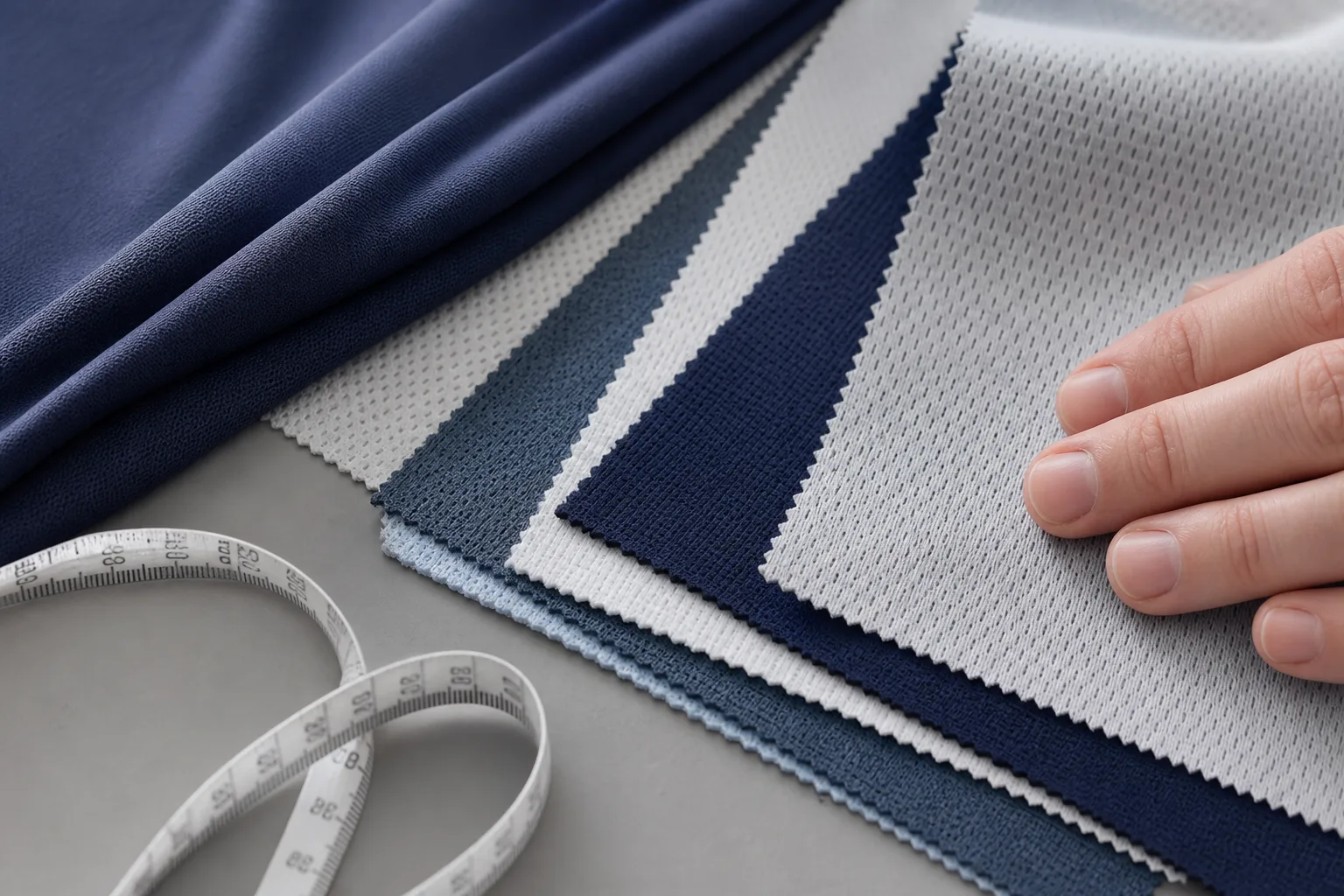
Close-up of polyester and recycled polyester fabric swatches for comparison
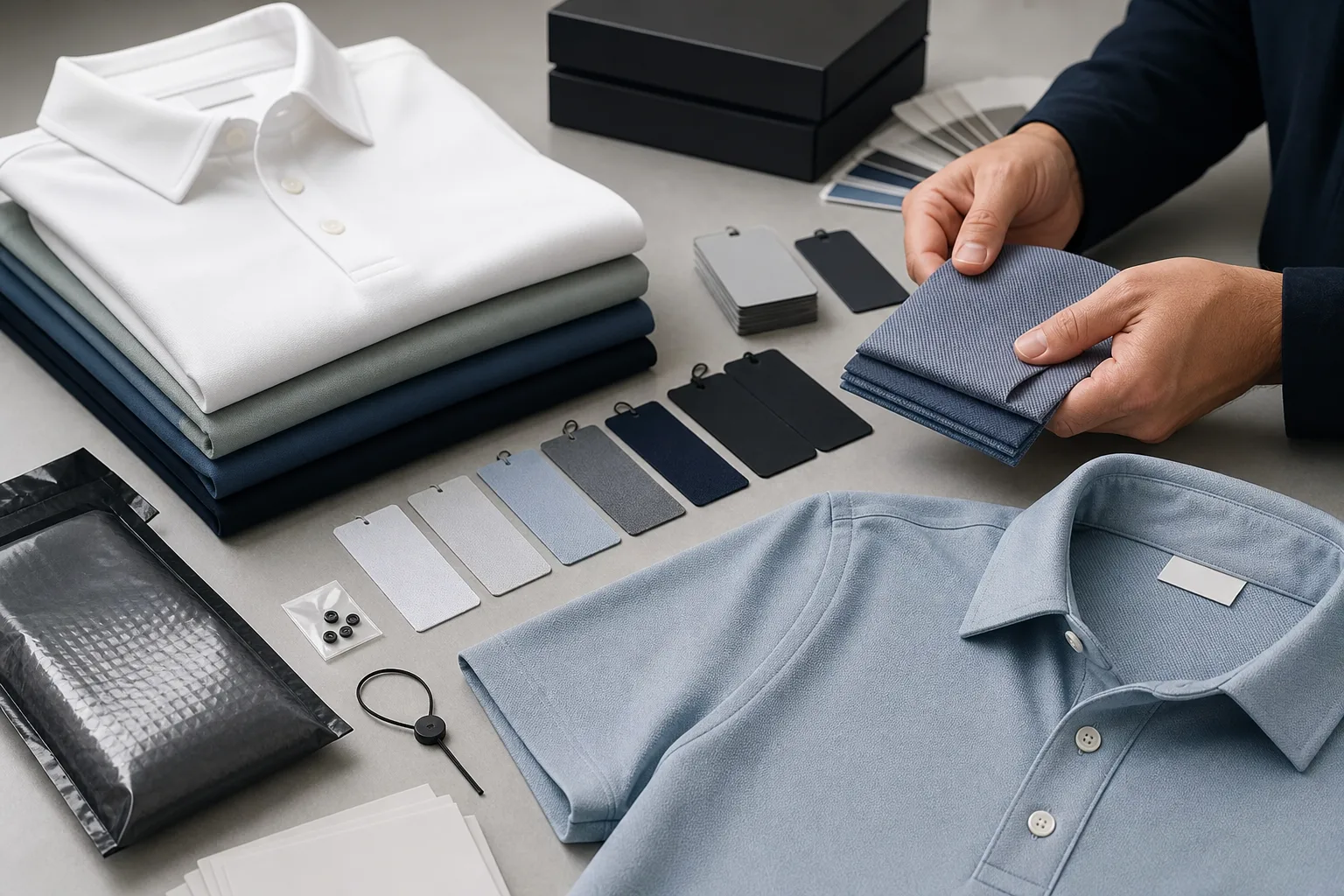
Private label branding preparation for golf clothing manufacturing buyers
Polyester Overview

What Polyester Is Commonly Chosen For

Standard polyester is often selected for golf shirts because it is familiar to mills and factories, works across many constructions, and can support a wide range of performance finishes. It is commonly used when a buyer wants stable production behavior and broad fabric availability.

For custom golf polos, polyester can be suitable when the priority is consistent batch behavior, color clarity, and dependable decoration placement. The exact result still depends on knit structure, yarn quality, weight, and finishing.

Recycled Polyester Overview

What Recycled Polyester Changes

Recycled polyester is usually considered when a buyer wants a lower-waste material story or a sustainability-oriented collection direction. It can be used in golf shirts, but the fabric needs to be checked carefully for handfeel, color matching, and supply continuity.

Any recycled-content claim should be supported by documents for the specific fabric and order. Applicable certification or testing documents should be confirmed for the relevant factory, material, product, and shipment.

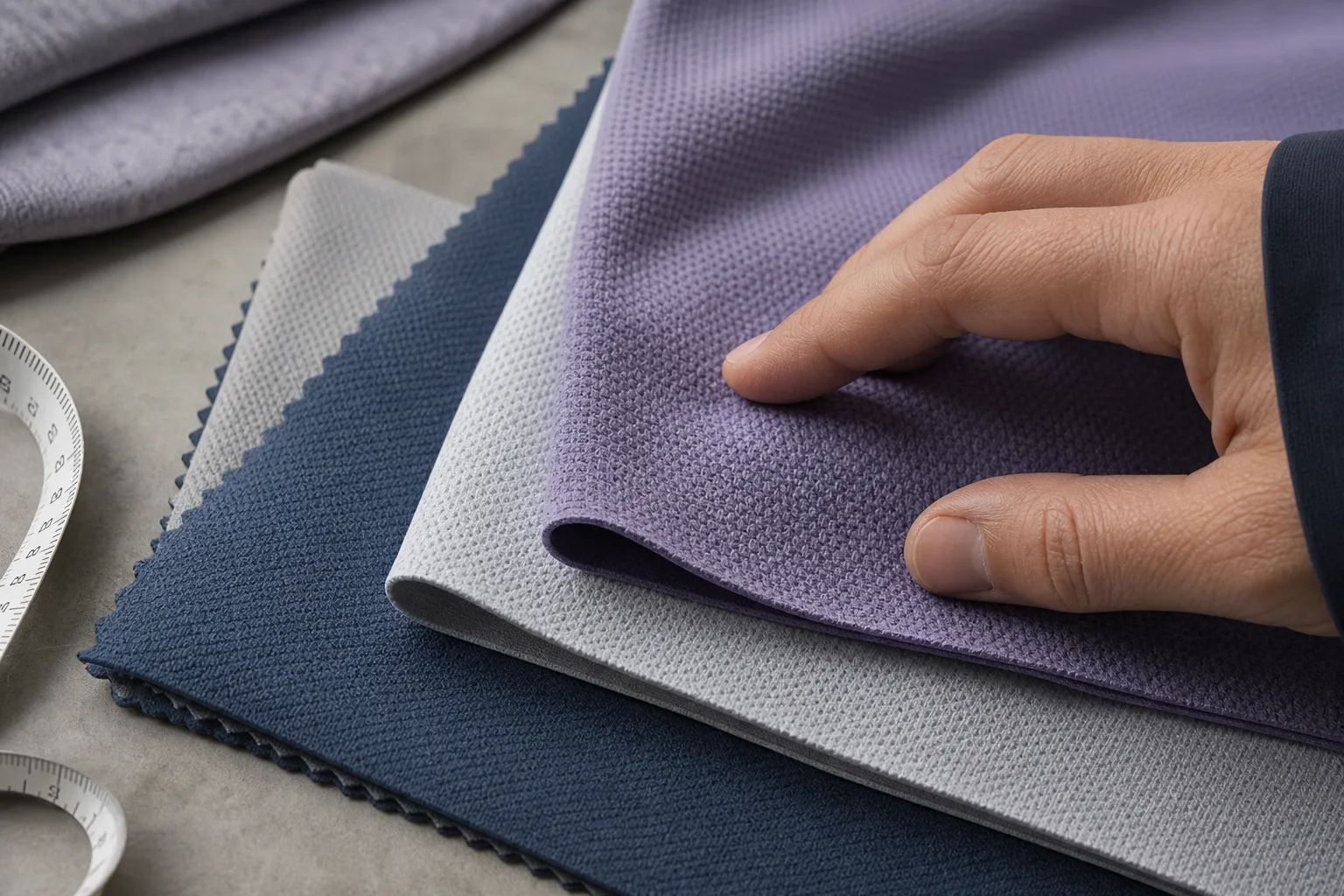
Close-up of polyester and recycled polyester fabric swatches for comparison
Performance Comparison

How They Compare in Golf Shirt Programs

Decision Area Polyester Recycled Polyester
Fabric story Traditional, widely used material base Preferred when a recycled-material narrative matters
Consistency Usually easier to source in established constructions Depends more on the available recycled yarn and mill support
Color approval Often easier to manage across repeat orders Can require closer shade review between lots
Decoration behavior Commonly predictable for print and embroidery Also workable, but fabric finish should be checked first
Program risk Lower sourcing uncertainty in many standard styles More document and supply verification may be needed

The better choice is usually the one that matches your commercial brief, not the one with the strongest marketing language. For repeat programs, stable fabric sourcing may matter more than novelty. For sustainability-led collections, recycled polyester may be the better fit if the supporting documents are in place.

Golf Shirt Construction

Construction Details That Affect the Final Choice

Fabric choice is only one part of the result. Knit density, surface texture, moisture-related finish, collar construction, placket stability, and logo placement all affect how the shirt performs in use.

  • Collar shape: Evaluate whether the fabric holds structure after wear and washing.
  • Placket alignment: Confirm that the front opening lies flat without twisting.
  • Surface compatibility: Check how the fabric accepts embroidery, heat transfer, or print.
  • Shade control: Review sample swatches and strike-offs before bulk approval.

For golf polo programs, these checks often matter more than the fiber label alone.

Buyer Use Cases

When Each Option Makes More Sense

Different buyers usually prioritize different outcomes. A club uniform program may care most about repeatability and easy reordering. A retail brand may care more about handfeel and shelf presentation. A sustainability-led label may want recycled polyester, but only if supply and documentation remain manageable.

  • Golf apparel brands: Compare launch consistency, margin structure, and fiber story.
  • Country clubs and golf clubs: Focus on member perception, comfort, and repeat-order stability.
  • Retailers and e-commerce brands: Review color, decoration, and replenishment planning.
  • Corporate and promotional buyers: Balance budget, lead time, and logo execution.
Sourcing and Approval

What to Confirm Before Sampling

Before approving either fabric, request the exact material description, composition, weight, finish, color standard, and available supporting documents. If recycled content is part of the brief, ask for current verification for the specific fabric under review.

Ninghow Golf can help coordinate fabric sourcing, swatches, and sample development, with production planning based on the approved direction. The company is headquartered in Shenzhen, with additional production bases in Zhongshan and Jiangxi, which supports product development, sewing, finishing, packaging, and larger-order capacity planning.

  • Fabric composition: Confirm the exact blend and yarn description.
  • Swatch review: Check handfeel, color, and sheen under real lighting.
  • Decoration test: Review the logo method on the selected fabric.
  • Document check: Verify any requested certification or testing records.
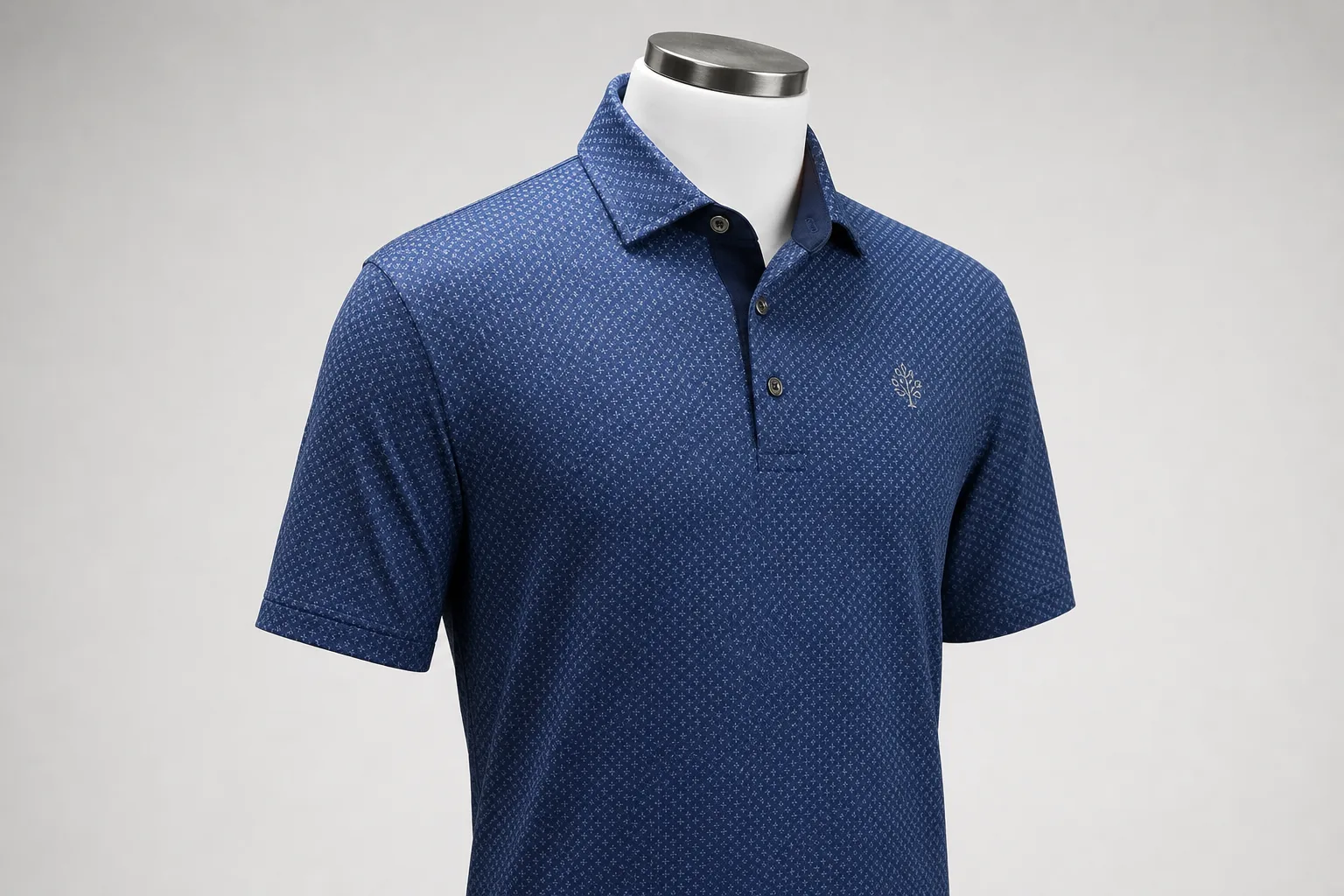
Golf polo sample showing embroidery placement and collar construction
Close-up of polyester and recycled polyester fabric swatches for comparison
Quote Inputs

Information to Share for an Accurate Quote

To compare polyester and recycled polyester for a golf shirt program, share the details that affect fabric and production planning.

  • Target garment style and fit
  • Fabric preference, including standard or recycled polyester
  • Fabric weight or handfeel direction
  • Color count and size range
  • Logo method and placement
  • Packaging requirements
  • Requested timeline and destination market

Upload Your Tech Pack or Request OEM / ODM Consultation

Common Questions

Answers buyers usually need before starting

Keep the project conversation practical with clear expectations around sampling, production and quotation inputs.

Which fabric is easier to keep consistent across repeat golf shirt orders?

Standard polyester is often easier to source in established constructions, but repeat consistency still depends on the mill, finish, color control, and the exact program specification.

Does recycled polyester change how a golf shirt feels?

It can. Handfeel depends on yarn quality, knit structure, and finishing, so swatches and a sample garment are the reliable way to compare.

What should I check if my collection needs a recycled-material claim?

Confirm the exact fabric, supplier documents, and any supporting test or certification records for the specific material and order. Do not assume a generic recycled label is enough.

Is one of these fabrics better for embroidery or printing?

Either can work, but the result depends on surface texture, fabric stability, and the decoration method. A logo test on the selected fabric is the safest approach.

Can the same shirt style be produced in both polyester and recycled polyester?

Often yes, but the fabric availability, shade behavior, and approval process may differ. The pattern, collar, and finishing also need to be checked for both options.

What information helps you quote the fabric choice accurately?

Share the style, fabric direction, weight or handfeel target, color count, size range, logo method, packaging needs, and shipment destination.

Start a Project

Build your next golf clothing program with a clearer production path.

Share product type, quantity, fabric direction, branding requirements and target timing so Ninghow Golf can suggest the most practical next step.

Scroll to Top