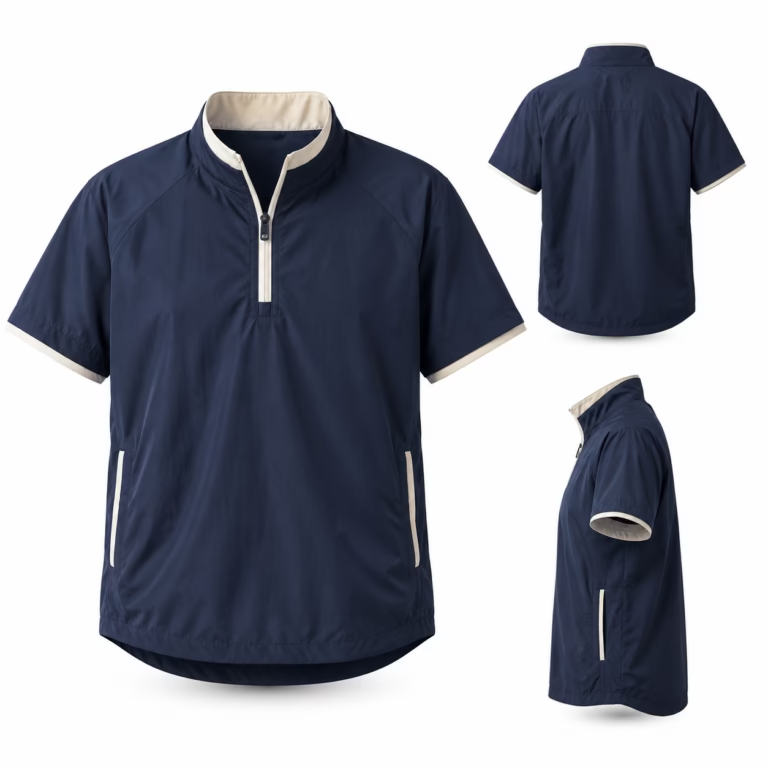
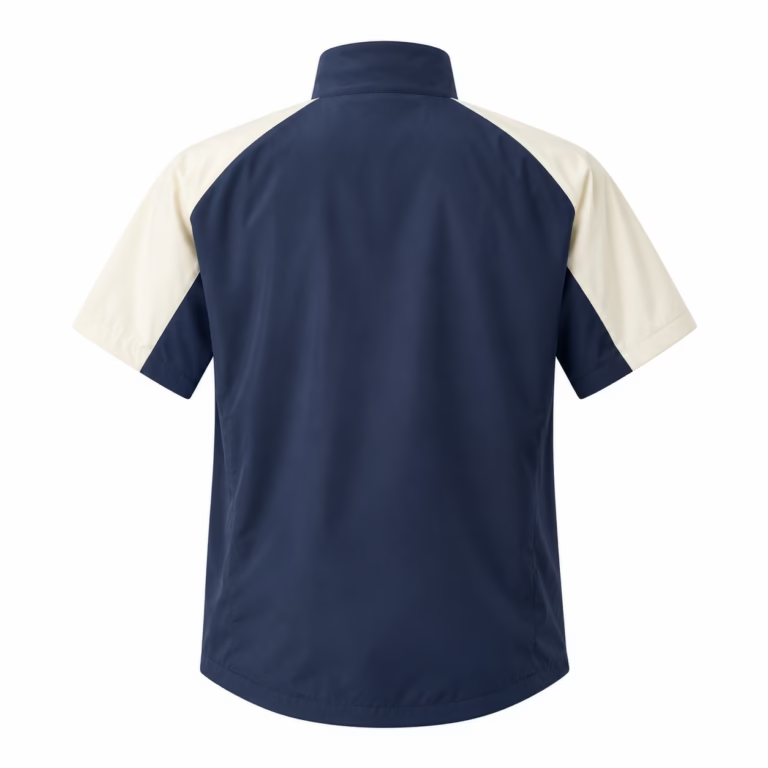
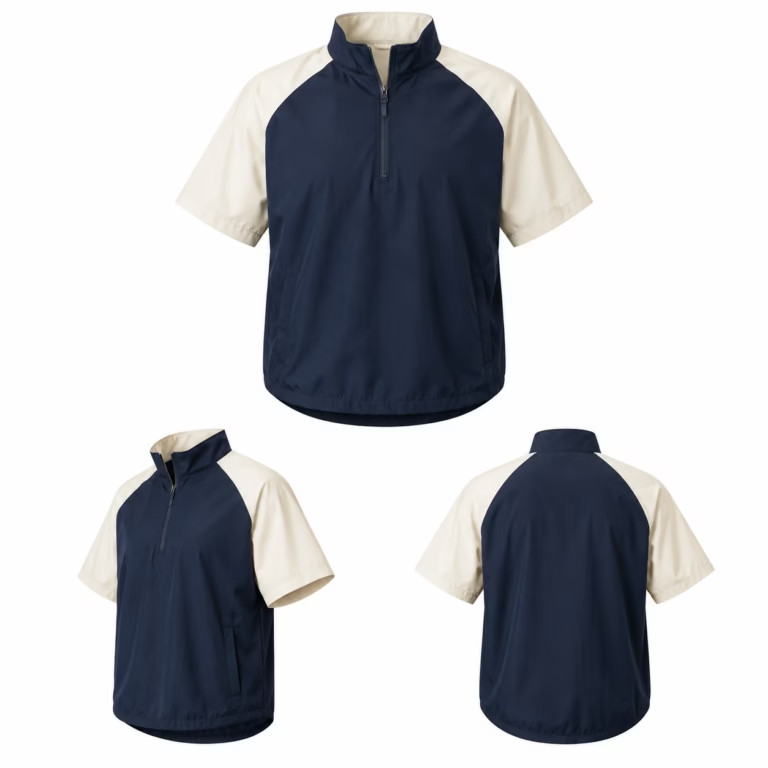
BULK CUSTOM GOLF APPAREL
Short Sleeve Golf Windbreaker Pullovers
Estimated customization price:
-
For apparel brands, golf clubs and team programmes. Share a reference style, quantity and available specifications to start.
01 / MATERIALS & PERFORMANCE
Fabric Composition
Compare these blend options for your preferred fabric feel, stretch, and care needs. The shell and any lining should be specified separately. Final material specifications depend on the selected fabric.
| Blend option | Application | Tradeoff |
|---|---|---|
| 100% polyester | Lightweight shell for a simple wind-layer concept | Easy to keep consistent across a color program, but less natural stretch than an elastane blend |
| 100% nylon | Light woven shell where a smooth, crisp fabric feel is preferred | Useful for a clean shell appearance, but the final feel and recovery depend strongly on fabric construction |
| 95% polyester / 5% elastane | Stretch woven shell for golf-swing movement | More stretch than a plain polyester shell, with added attention needed for recovery and decoration placement |
| 92% nylon / 8% elastane | More flexible stretch shell for an active fit | Supports movement, but higher stretch can affect shape control and print or embroidery selection |
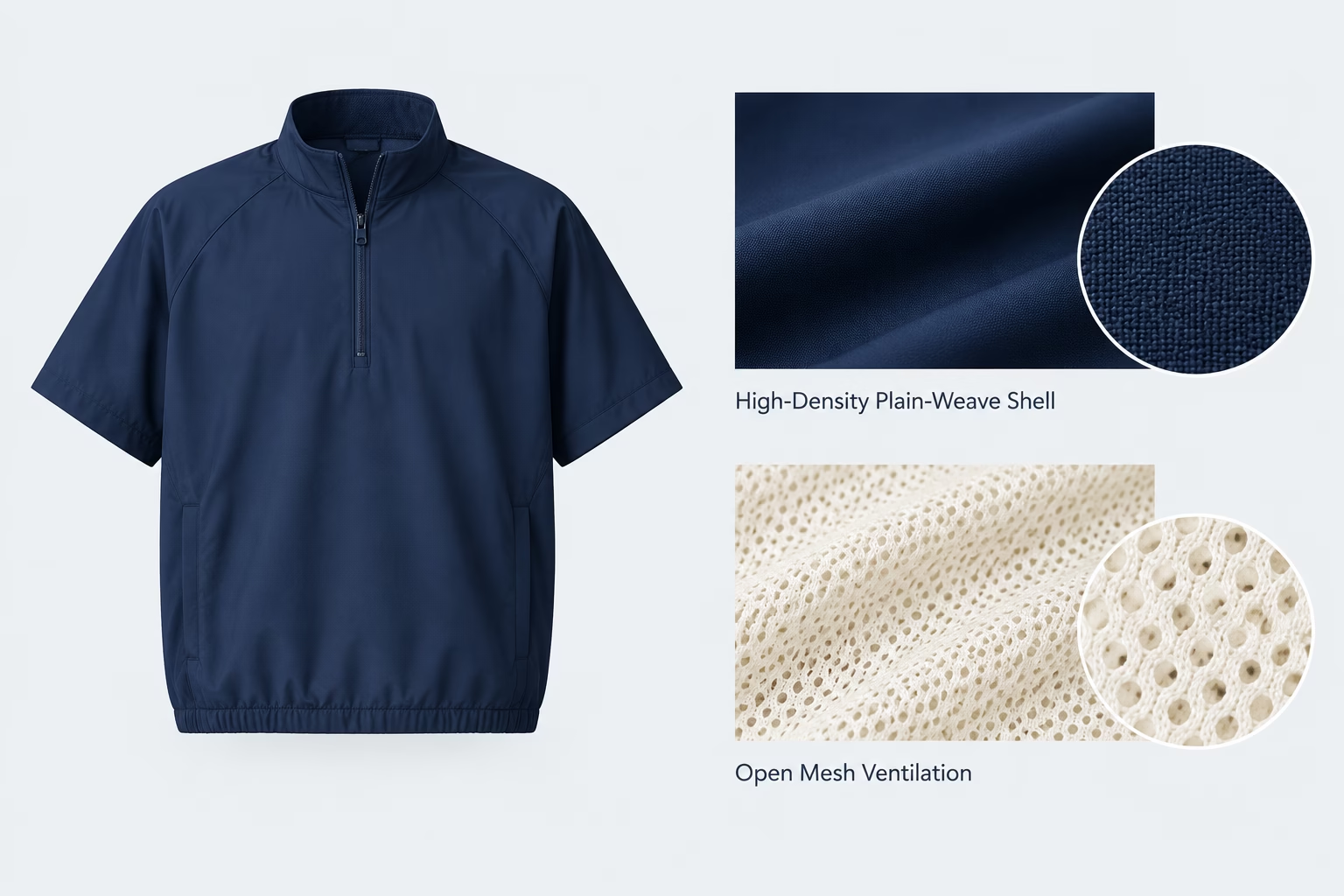
| 100% polyester mesh lining | Optional lining or ventilation panel | Can add separation from the shell and airflow, while adding material and construction complexity |
Fabric Weight
GSM means grams per square meter, so a higher number generally indicates more fabric mass. Compare the shell weight with the desired body, drape, and season of use; lining weight is considered separately.
| Reference weight | Fabric effect | Useful direction |
|---|---|---|
| 80 g/m² shell | Very light drape and low bulk | Packable golf layer or mild-weather use |
| 100 g/m² shell | Light body with a balance of ease and coverage | General short-sleeve windbreaker development |
| 130 g/m² shell | More body and a steadier drape | Cooler conditions or a more structured appearance |
| 160 g/m² shell | Heavier body and less airy drape | Cooler-weather concept where a substantial shell is preferred |
| 50–90 g/m² lining | Light separate lining weight | Evaluate with the shell when a lined or partial-lined construction is selected |
Fabric Construction
High-density plain weave gives the shell a clean, compact surface for a wind-layer concept. A light twill can add a subtle diagonal texture and different drape. A stretch woven construction can support elbow and shoulder movement, while a local mesh panel can increase airflow. These structures can be used selectively; the final choice should match the sleeve opening, hem, and intended level of ventilation.
Performance Features
- Wind-layer construction: a compact woven shell can help reduce airflow through the fabric; the opening design still affects how much wind enters around the arms and hem.
- Water-shedding finish: a suitable water-repellent finish can be evaluated for light surface moisture, but it should not be treated as waterproof protection.
- Ventilation: a more open back or mesh panel can improve airflow, with the tradeoff of changing the shell coverage and appearance.
- Lightweight design: a lower-GSM shell can reduce bulk for layering, while a higher-GSM option gives more body and a different drape.
02 / FIT, SIZING & COLOR
Fit Options
Choose a regular fit for an easy team layer or an athletic fit for a closer profile during the swing. A looser torso allows room over a golf shirt but can create more fabric movement; a closer torso looks cleaner but needs enough elbow and shoulder ease. Sleeve length and opening width should be assessed together so the exposed-arm coverage feels intentional rather than restrictive.
Sizes
We can develop the size range around your size chart, with options such as XS–3XL evaluated against the intended market. Size planning should cover chest, body length, shoulder, sleeve length, and sleeve opening, plus enough room for the golf shirt worn underneath. Grading means adjusting the base garment pattern across sizes; the graded pattern should be checked against the sample measurements before production.
Color Options
Choose a base color for the pullover, then add contrast panels or seasonal colors where the design needs visual separation. Black, navy, white, and gray are useful starting points for golf programs. Pantone color matching and custom dyeing can be evaluated against a physical color reference; the final shade depends on the selected fabric and dye route.
03 / GARMENT CONSTRUCTION
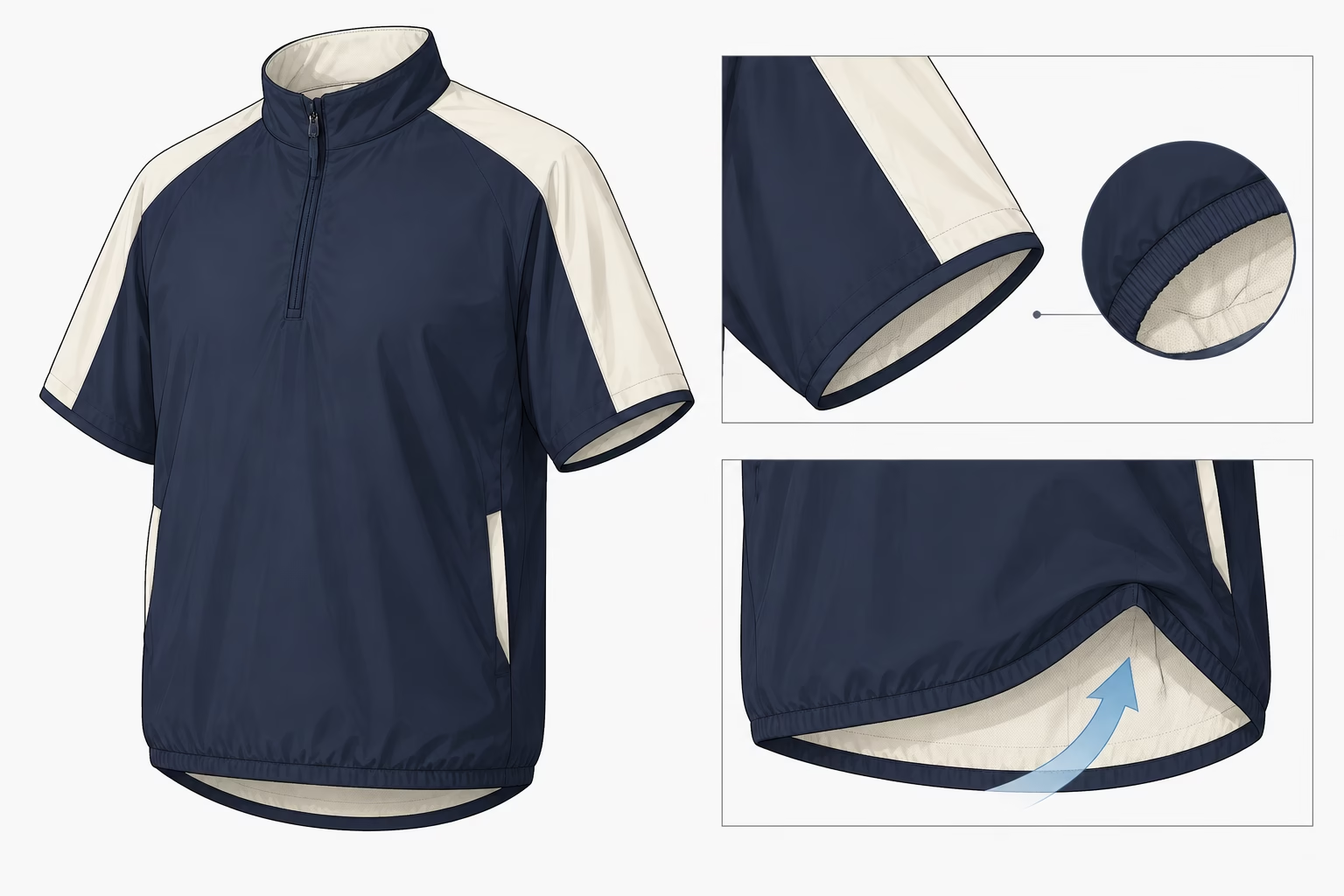
Construction concept / reference build.
Construction Details
The shell, sleeve opening, and hem work together to manage how the pullover sits during movement. Compare the neckline and opening shape on the sample, check that the sleeve edge stays comfortable through a golf swing, and inspect the hem for even shaping without unwanted wind entry. A back ventilation panel or elastic binding can be evaluated when airflow is a priority, while a cleaner shell construction may suit a simpler brand aesthetic.
04 / YOUR BRAND & PRODUCT SPECIFICATION
Logo Options
Decoration should follow the shell surface, stretch level, and logo size. Direct embroidery gives a raised stitched mark and works best when the base fabric is stable with suitable backing; too much stitching can add weight or affect comfort. Heat transfer supports fine artwork on an appropriate smooth surface, while screen printing suits simpler graphic shapes. A silicone mark or woven label creates a different surface effect and should be placed where it will not interfere with arm movement.
- Chest: useful for a small team or brand mark on the front.
- Back: provides a larger display area, with placement checked against the pullover opening and fabric movement.
- Sleeve: suitable for a compact mark, subject to the opening shape and available area.
Send vector artwork where available, including the intended size, colors, and placement. We can compare direct decoration with an applied patch or label concept when the artwork and shell are selected.
Customization Scope
Use the base garment pattern as the starting point, then select only the changes that support your use case. Sleeve-opening width is the main product-specific adjustment because it changes arm coverage, airflow, and how much wind can enter during movement.
| Area | Choices | Purpose |
|---|---|---|
| Sleeve opening | Wider, narrower, or edge-bound opening | Balances exposed-arm coverage, comfort, and wind entry |
| Body structure | Lightweight woven shell, stretch woven shell, or selected ventilation panel | Adjusts movement, airflow, and fabric feel |
| Neck and front | Pull-over opening, zipper opening, or optional chin guard | Changes entry, neck comfort, and protection from zipper contact |
| Hem | Straight, shaped, or elastic-bound finish | Controls the lower silhouette and movement around the hips |
These choices are evaluated together because a lighter shell, open ventilation area, and wider sleeve opening create a different wearing experience from a denser shell with closer openings.

05 / ORDER & DEVELOPMENT PLANNING
Minimum Order Planning
Our minimum order quantity is 300 pieces. Send your planned quantity and intended size and color breakdown so we can discuss the order details for the selected shell, construction, and decoration.
Sample Lead Time
Sample lead time is 7–10 days. Use the sample to assess the shell fabric feel and weight, sleeve-opening width, fit through the torso and elbow, and the effect of the selected front and hem construction.
Bulk Lead Time
Bulk production lead time is 15–30 days. Share your target delivery schedule with the order quantity, selected fabric, colors, sizes, and approved sample details so we can discuss the production plan.
06 / APPROVAL & APPLICATION
Quality & Approval Checks
Use the selected fabric, size specification, and sample details as references when agreeing quality requirements for this order.
| Quality point | Reference to compare | Why it matters |
|---|---|---|
| Shell material | Agreed fiber composition, fabric construction, and GSM | Confirms the selected fabric direction and expected body |
| Fit measurements | Approved size chart and base garment pattern | Keeps torso ease, sleeve length, and opening width consistent |
| Sleeve and hem shape | Approved sample viewed front, side, and during arm movement | Shows whether the wind-layer silhouette sits as intended |
| Seams and openings | Sample neckline, sleeve edge, hem, and any ventilation panel | Helps compare clean alignment and comfortable contact areas |
| Decoration | Approved artwork size, position, colors, and method | Controls logo appearance and placement on the selected shell |
Suitable Bulk Buyers
- Golf apparel brands: develop a distinctive short-sleeve wind layer with controlled shell, color, and logo details.
- Golf teams and clubs: coordinate a practical outer layer across planned sizes and team colors.
- Corporate or tournament programs: combine a consistent base garment with clear chest, back, or sleeve decoration zones.
Target Markets
For US and other international programs, confirm the size chart against your customer measurements rather than relying on a standard label alone. Warm or transitional climates may favor a lighter shell and more open ventilation, while cooler use may call for more body or a separate lining. Review fiber labeling, care details, and color requirements for the destination market before finalizing the specification.
What to Include in Your Enquiry
Send your reference style, planned quantity, preferred size and color breakdown, artwork, and desired delivery date. If your specification is still developing, include a reference photo or initial idea so we can identify the key construction details.
Discuss Your Product Requirements
Share your reference style, estimated quantity, colors and available artwork. We can review a practical next step for your bulk project.