

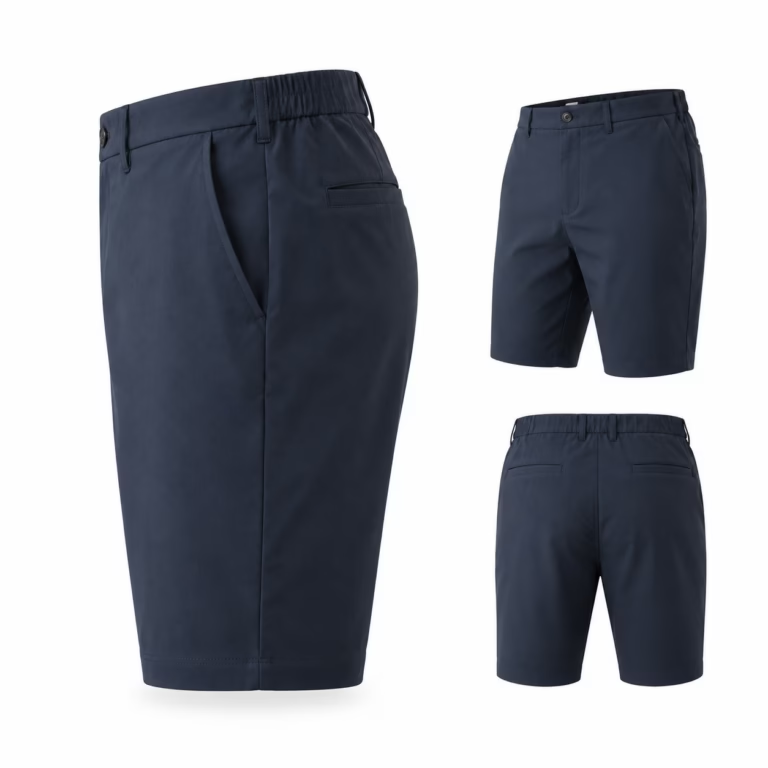
BULK CUSTOM GOLF APPAREL
Tapered Golf Shorts
Estimated customization price:
-
For apparel brands, golf clubs and team programmes. Share a reference style, quantity and available specifications to start.
01 / MATERIALS & PERFORMANCE
Fabric Composition
Compare these blend options for your preferred fabric feel, stretch and care needs.
| Blend option | Useful application | Tradeoff |
|---|---|---|
| 95% polyester / 5% elastane | Balanced stretch for active golf shorts with easy-care potential. | Offers more stretch than a mechanical-stretch option but may feel less natural than cotton blends. |
| 90% polyester / 10% elastane | Higher stretch for a more flexible movement profile. | Greater elastane content can change recovery, fabric feel and care requirements. |
| 92% nylon / 8% elastane | Smooth, flexible fabric direction for a lightweight activewear look. | Usually gives a different surface feel and cost direction from polyester; confirm the selected fabric. |
| 97% cotton / 3% elastane | Cotton-rich option for a more natural fabric feel. | Provides less stretch than higher-elastane options and may need more care. |
| 60% cotton / 37% polyester / 3% elastane | Balances cotton feel with polyester content and modest stretch. | Has less stretch than active blends and a different care and appearance profile. |
Recycled polyester may also be evaluated within a suitable blend. Final material specifications depend on the selected fabric and the relevant garment components.
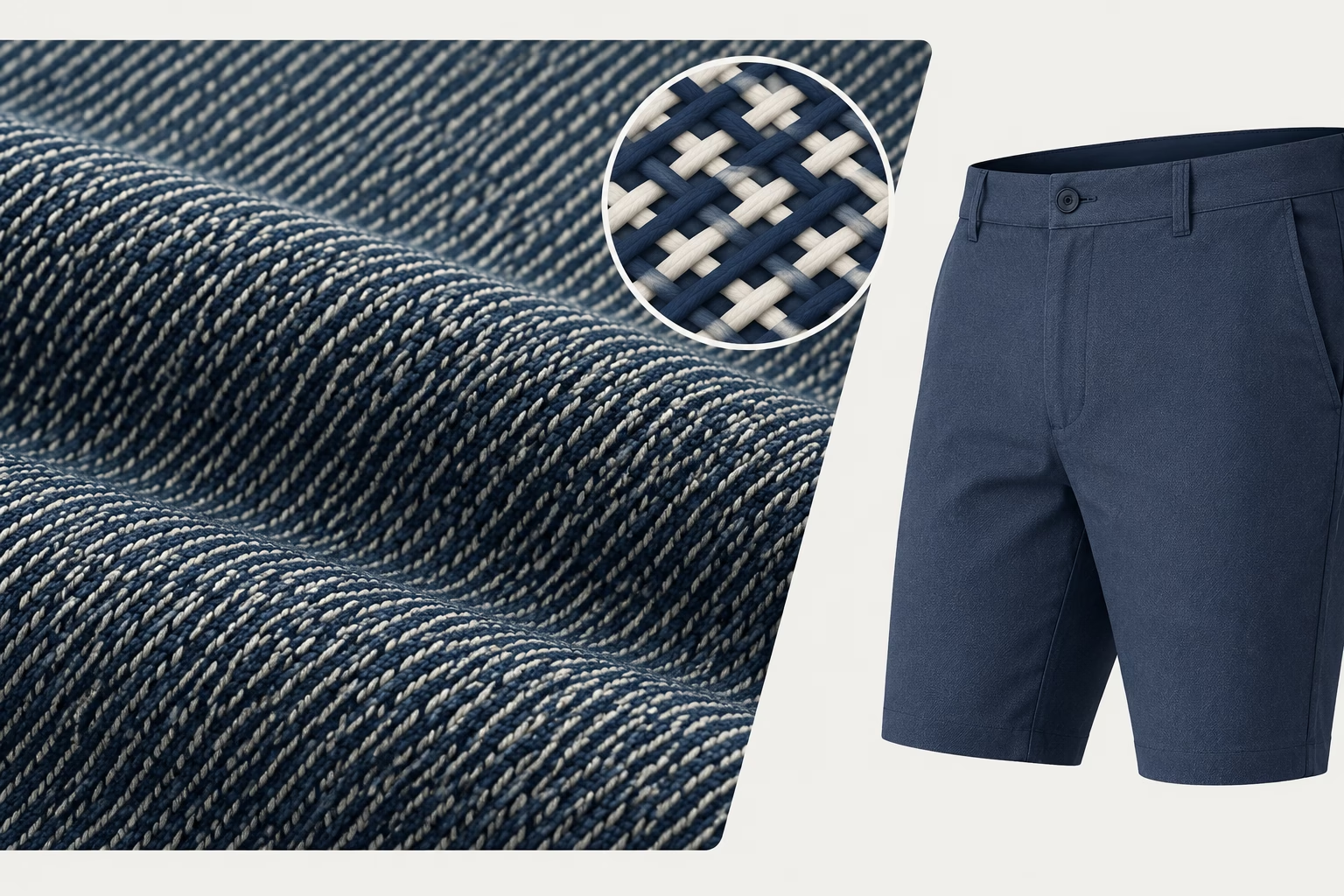
Fabric Weight
GSM means grams per square meter. It helps compare fabric mass, but it does not determine fit, coverage or durability by itself. Use these reference weights to balance body, drape and seasonal use.
| Reference weight | Fabric body and drape | Potential use |
|---|---|---|
| 160 GSM | Lighter body and easier drape. | Warm-weather shorts when a lighter feel is preferred. |
| 180 GSM | Moderate body with a balanced drape. | Versatile golf and activewear programs across mild conditions. |
| 200 GSM | More body and a steadier shape. | Useful when the short should feel less lightweight. |
| 220 GSM | Heavier body and firmer drape. | Cooler conditions or designs that need a more substantial fabric feel. |
Final fabric weight depends on the selected material and garment components. Compare the actual fabric and sample, not GSM alone.
Fabric Construction
For this short, suitable structures include stretch plain-weave, twill and subtle-texture woven fabrics. Plain weave can support a clean, lighter appearance; twill can create a more visible diagonal surface and a firmer visual structure; a micro-texture weave can add surface interest. Construction interacts with composition, GSM and finishing, so compare the actual fabric swatch and sample before locking the specification.
Performance Features
Elastane or a suitable mechanical-stretch construction can support movement, but the level of stretch and recovery depends on the selected fabric. A more open or lighter woven structure may improve airflow, while a denser structure can give the short a firmer body. Moisture management, easy care and water-repellent finishing can be evaluated as development options when they suit the fabric and intended use. Confirm the chosen effect on the actual fabric and sample.
02 / FIT, SIZING & COLOR
Fit Options
The defining fit decision is the relationship between upper-thigh room and the narrowed leg opening. Keep enough thigh ease for walking, sitting and golf movement while setting the lower opening to the desired tapered look. The short is tapered, not automatically tight through the entire leg. Review waist, hip, rise, inseam and opening measurements together, then assess the sample in standing and seated positions.
Sizes
We can work from waist-number sizing or letter sizing. Provide your US or customer size chart with waist, hip, rise, inseam and leg-opening measurements. Grading means adjusting the base garment pattern across sizes; review the graded measurements so the tapered relationship remains consistent from size to size. Send your preferred size breakdown with the inquiry.
Color Options
Choose a base color such as black, navy, white or gray for a consistent team or brand program. Seasonal colors, contrast colors and Pantone-matched dyeing can also be evaluated against a physical color reference. Confirm the color on the selected fabric because fiber, structure and finishing can affect the final appearance.
03 / GARMENT CONSTRUCTION

Construction concept / reference build.
Construction Details
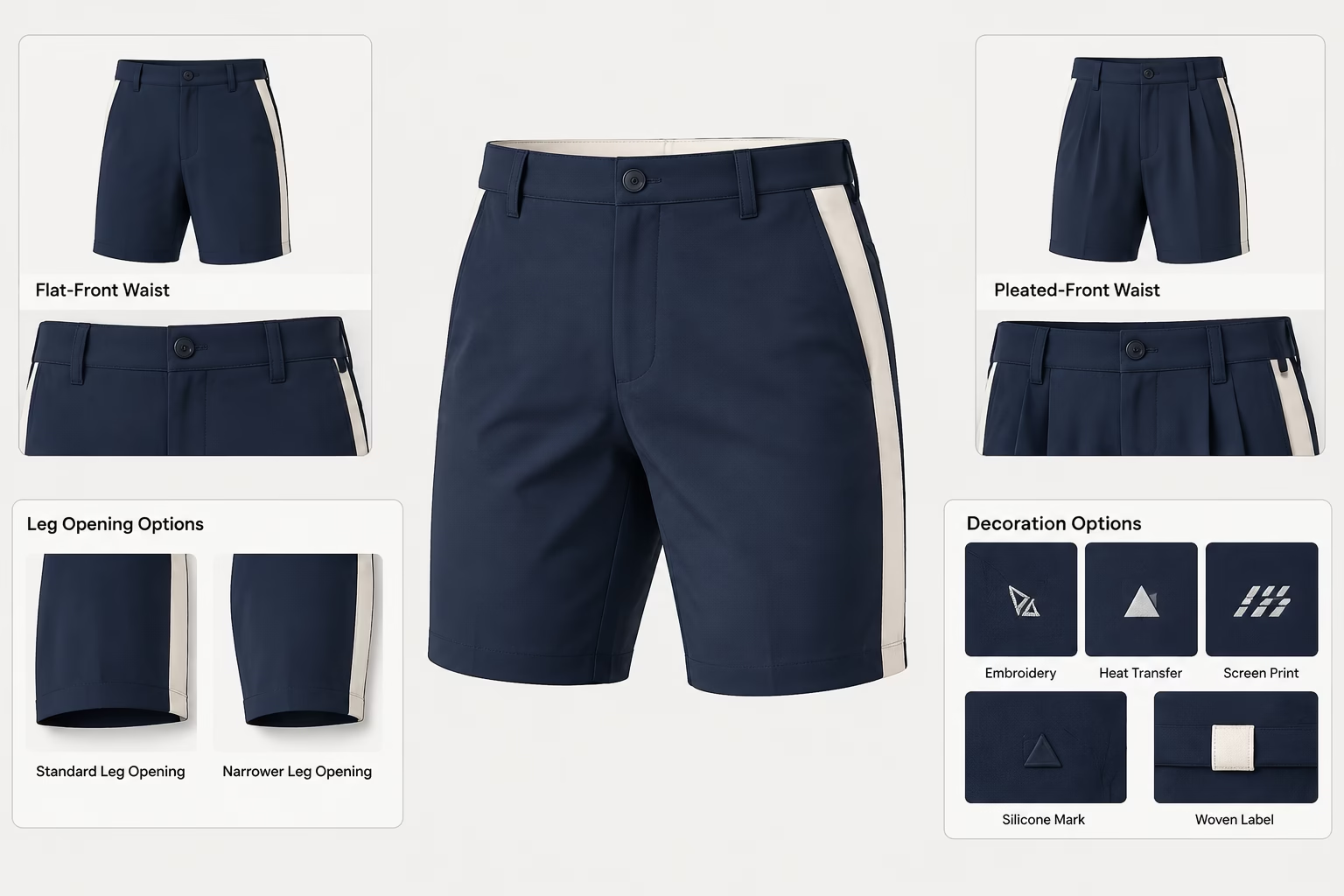
The upper-thigh pattern and narrowed leg opening must work together: the thigh needs enough room for walking, sitting and golf movement, while the lower opening controls the tapered look. Depending on the design, a flat-front or pleated front changes the amount of room at the waist and upper hip. Belt loops, pocket-opening bartacks and an active waistband can then be evaluated around that base pattern. Inspect the finished sample in standing and seated positions to compare the intended shape without restricting movement.
04 / YOUR BRAND & PRODUCT SPECIFICATION
Logo Options
Choose the decoration method after reviewing the fabric surface, stretch and artwork size. Direct embroidery gives a stitched mark on the garment but can add structure to a flexible area. A heat transfer or screen print can support a flat graphic, while a silicone mark creates a raised effect. A woven label is an applied label rather than direct embroidery. Placement can be considered on suitable areas such as the front or back body, but the final position should account for pockets, seams, curved surfaces and movement. Provide vector artwork or a clear reference with preferred dimensions and colors.
Customization Scope
Use the table to define the base garment before adding decoration. Every option should be checked against the selected fabric, stretch level and intended movement.
| Area | Choices | Purpose |
|---|---|---|
| Leg shape | Tapered opening; adjusted opening width | Balances upper-thigh room with the desired lower-leg silhouette. |
| Waist | Flat front; pleated front; active waistband | Changes front appearance, waist comfort and movement allowance. |
| Pockets | Selected pocket shape; pocket-opening bartack | Supports the intended use and adds a visible construction detail. |
| Material and color | Stretch or mechanical-stretch fabric; base, seasonal or contrast color | Adjusts fabric feel, movement, care needs and program appearance. |
05 / ORDER & DEVELOPMENT PLANNING
Minimum Order Planning
Our minimum order quantity is 300 pieces. Send your preferred quantity and intended size and color breakdown so we can discuss the order details.
Sample Lead Time
Sample lead time is 7–10 days. Use the sample to assess upper-thigh room, leg-opening width, waist and rise, fabric stretch and feel, and the placement or method of any decoration.
Bulk Lead Time
Bulk production lead time is 15–30 days. Share your desired delivery schedule with the quantity, size and color details so we can discuss the production plan for your order.
06 / APPROVAL & APPLICATION
Quality & Approval Checks
Use the selected fabric, size specification and sample details as references when agreeing quality requirements for this order.
| Quality point | Reference to compare | Why it matters |
|---|---|---|
| Material specification | Approved fabric sample, fiber composition and GSM target | Confirms the finished material direction and expected fabric feel. |
| Thigh and opening measurements | Approved size chart and tapered sample | Checks that upper-thigh room and leg-opening width stay in the intended relationship. |
| Waist, rise and inseam | Base garment pattern and approved sample | Controls comfort, proportion and size grading. |
| Sewing and pocket details | Approved seam appearance, pocket shape and bartack locations | Helps keep construction consistent with the chosen design. |
| Decoration position | Approved artwork, method, size and placement reference | Checks that the mark sits correctly on the garment without interfering with seams or movement. |
Suitable Bulk Buyers
- Activewear brands: develop a controlled tapered silhouette with a chosen fabric feel, color program and decoration method.
- Golf teams and clubs: coordinate a practical size and color breakdown with consistent logos and movement-focused fit.
- Corporate or event apparel buyers: define the quantity, artwork, delivery schedule and repeatable base pattern for a group order.
Target Markets
For US-focused golf and activewear programs, share the intended US size chart and destination climate so we can balance rise, inseam, fabric weight and airflow. For other destinations, provide the local measurement system and any required label or product information for review before the specification is finalized.
What to Include in Your Enquiry
Send the reference style, target quantity, preferred size and color breakdown, artwork, and desired delivery date. A reference photo or early design idea is also useful when the technical specification is not ready.
Discuss Your Product Requirements
Share your reference style, estimated quantity, colors and available artwork. We can review a practical next step for your bulk project.