BULK CUSTOM GOLF APPAREL
Short Sleeve Golf Pullovers
Estimated customization price:
-
For apparel brands, golf clubs and team programmes. Share a reference style, quantity and available specifications to start.
01 / MATERIALS & PERFORMANCE
Fabric Composition
Compare these blend options for your preferred fabric feel, stretch and care needs. The selected fabric determines the final material specifications.
| Blend option | Suitable use | Tradeoff |
|---|---|---|
| 90% polyester / 10% elastane | Stretch-oriented knit mid-layer | Good flexibility potential; may feel more synthetic |
| 93% polyester / 7% elastane | Light stretch pullover route | Lighter stretch balance; less elastane than the 90/10 option |
| 60% cotton / 40% polyester | Cotton-blend casual layering | More cotton character; less built-in stretch |
| 60% cotton / 35% polyester / 5% elastane | Stretch cotton-blend team garment | More natural fabric feel with moderate stretch potential |
| 100% polyester | Lightweight woven outer-layer route | Easy-care synthetic option; no elastane stretch from the fiber blend |
Fabric Weight
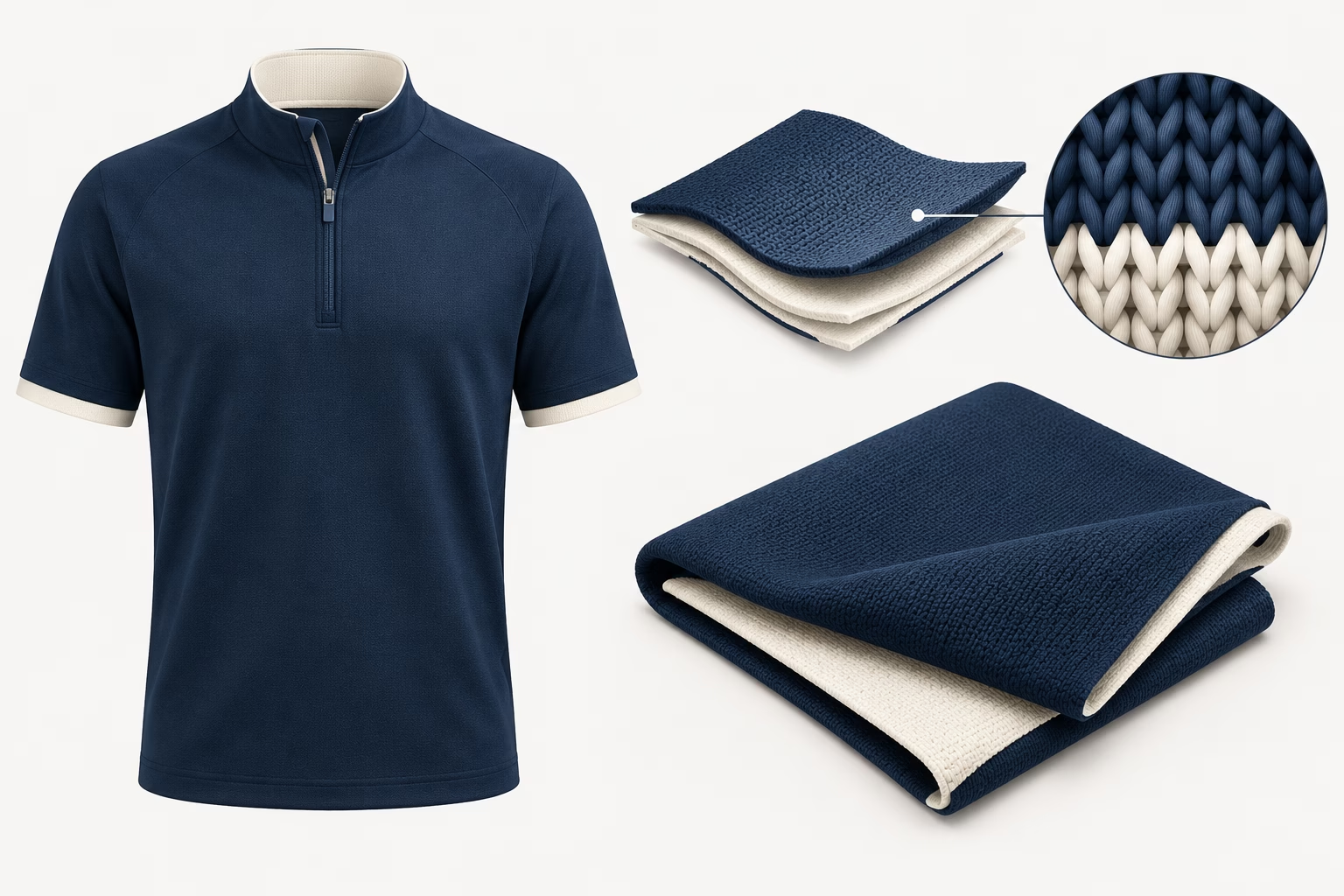
GSM means grams per square meter and helps compare fabric weight. Choose the structure first, then use weight to refine body, drape and layering comfort.
| Route | Reference weights | Likely effect |
|---|---|---|
| Knit | 160 g/m² | Lighter drape for mild-weather layering |
| Knit | 190–220 g/m² | Balanced body for general golf use |
| Knit | 250 g/m² | More body and a warmer layering direction |
| Woven outer layer | 80–110 g/m² | Light, easy-to-layer shell direction |
| Woven outer layer | 140–170 g/m² | More structure and a less fluid drape |
These ranges are selection targets for the chosen route. Confirm the final fabric weight on the selected material or garment component.
Fabric Construction
Choose the structure before finalizing the blend and weight. A single-jersey knit can support a light, flexible feel; a double-knit route can provide more body; and a lightweight woven construction can create a cleaner outer layer. These are different garment directions, so do not combine them as one default specification.
Performance Features
Choose features according to the fabric route and use case. Elastane or a stretch knit can support easier movement; a more open knit can improve airflow; and a brushed or heavier knit can create a warmer feel. Polyester-based options may support easier care, while cotton blends change the fabric feel. These effects depend on the final structure, finishing and weight.
02 / FIT, SIZING & COLOR
Fit Options
Choose a regular fit for a straightforward pullover shape or a sport layering fit for more room through the shoulders and elbows. The base garment pattern, sleeve opening and neck opening should allow the intended underlayer without excess fabric. Test elbow flexion and shoulder reach in the sample, especially when the pullover will be worn over a golf shirt.
Sizes
We can develop a size range such as XS–3XL, subject to the agreed size chart and pattern. Send your target body measurements and intended wearer profile. Grading means adjusting a base garment pattern across sizes; review the graded measurements and sample fit before approving the size plan.
Color Options
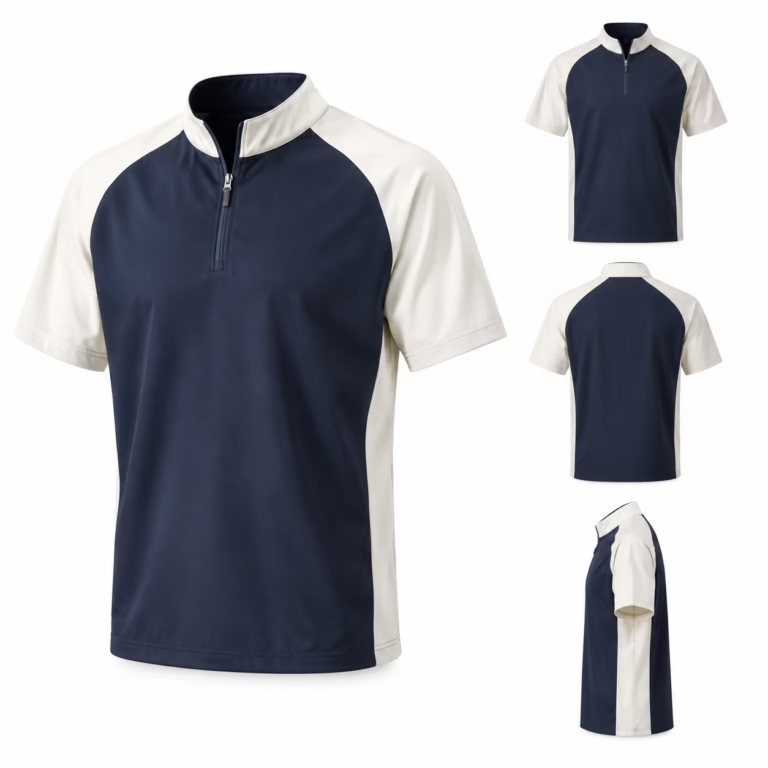
Choose core colors such as navy, black, white or grey for a consistent team or club program. Seasonal colors, contrast panels and Pantone color matching can be evaluated against a physical or approved color reference. Final shade decisions should account for the selected fabric and decoration method.
03 / GARMENT CONSTRUCTION

Construction concept / reference build.
Construction Details
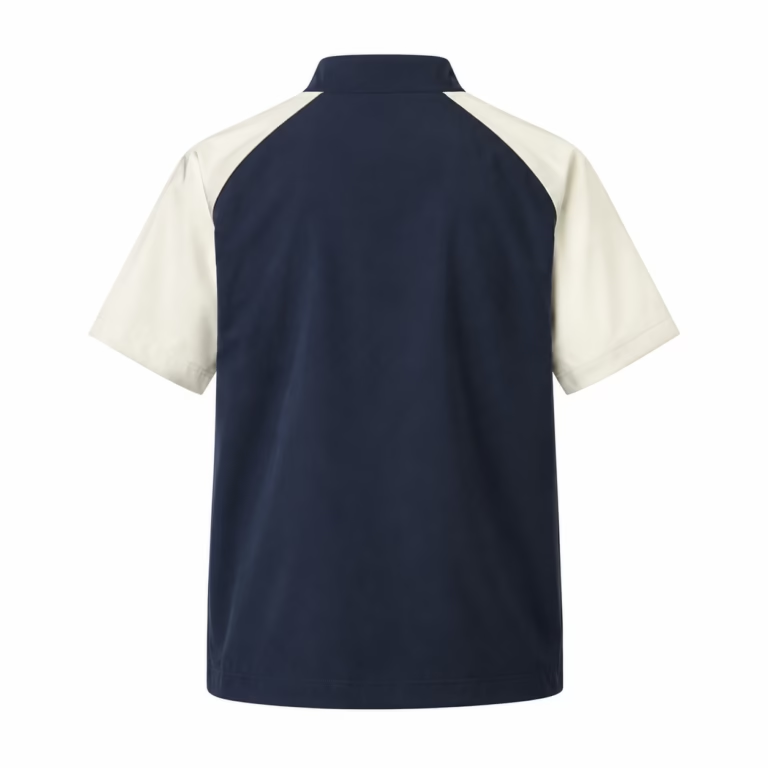
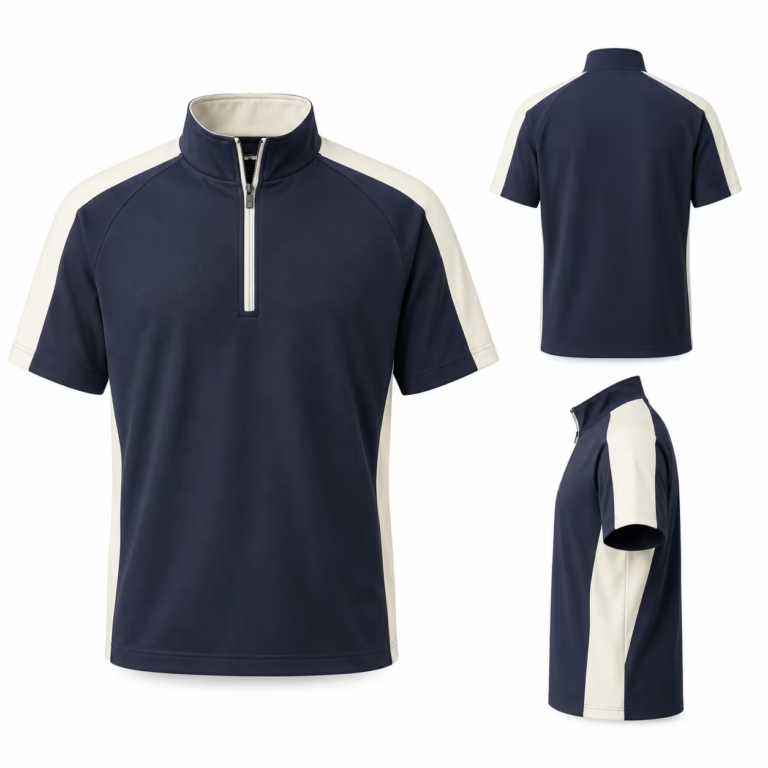
The neckline opening, sleeve attachment and sleeve edge should work as one system. A zipper guard can improve comfort at the neck, while the chosen stand-collar shape affects layering and visual structure. Raglan sleeves can support a different shoulder appearance and movement feel than set-in sleeves. Review the neckline shape, sleeve balance, seam appearance and elbow movement on the sample.
04 / YOUR BRAND & PRODUCT SPECIFICATION
Logo Options
We can evaluate direct embroidery, heat transfer, screen print, silicone labels and woven labels for this style. Direct embroidery gives a textured mark but may add stiffness or bulk, so artwork size, stitch density and backing should suit the fabric. A heat transfer or screen print can keep the surface flatter, while silicone or woven labels create a separate applied element. Placement options may include the chest or sleeve; provide vector artwork, a high-resolution file or a reference image and identify the preferred size and position.
Customization Scope
Choose the garment changes that support the intended use. The final combination depends on the selected knit or woven construction.
| Area | Choices | Purpose |
|---|---|---|
| Fabric route | Knit mid-layer or lightweight woven outer layer | Sets the fabric feel, drape and layering role |
| Neck opening | Short opening with optional zipper guard or a simpler closed neckline | Adjusts neck coverage and ease of dressing |
| Sleeves | Set-in or raglan construction; adjustable sleeve length | Changes shoulder appearance and movement feel |
| Sleeve edge | Different opening widths or elasticated options | Balances arm mobility with a closer or easier opening |
| Color and panels | Solid, contrast or seasonal color placement | Supports team identity and collection styling |

05 / ORDER & DEVELOPMENT PLANNING
Minimum Order Planning
Our MOQ is 300 pieces. Send your preferred quantity and intended size and color breakdown so we can discuss the selected fabric route and order details.
Sample Lead Time
Sample lead time is 7–10 days. Use the sample to assess the selected knit or woven route, fabric weight and drape, neckline and sleeve opening, elbow movement over a golf shirt, and logo position if decoration is included.
Bulk Lead Time
Bulk production lead time is 15–30 days. Share your desired delivery schedule together with the quantity, selected fabric route, colors, sizes and customization details so we can discuss the production plan.
06 / APPROVAL & APPLICATION
Quality & Approval Checks
Use the selected fabric, size specification and sample details as references when agreeing quality requirements for this order.
| Quality point | Reference to compare | Why it matters |
|---|---|---|
| Material | Approved composition, structure and GSM reference | Confirms the chosen knit or woven direction |
| Fabric appearance | Approved fabric and sample feel, drape and surface | Connects the material choice to the finished garment |
| Measurements | Agreed size chart and base garment pattern | Controls sleeve, body and layering proportions |
| Construction | Sample neckline, sleeve attachment and seam appearance | Helps assess the garment’s shape and movement areas |
| Decoration | Approved artwork size, position and surface result | Reduces distortion, stiffness or placement variation |
Suitable Bulk Buyers
- Golf apparel brands: develop a coordinated short-sleeve layering style with controlled fabric, color and logo choices.
- Golf teams and clubs: align the neckline, sleeve opening and decoration with a repeatable team uniform program.
- Golf retailers and event programs: select a practical weight and color range for a defined seasonal or event collection.
Target Markets
For warm or changeable climates, compare a lighter knit or woven route and allow room for layering. For cooler use, consider a heavier knit with more body. Confirm local measurement preferences, care labeling and any market-specific labeling requirements as part of the order specification.
What to Include in Your Enquiry
To start, send the reference style, planned quantity, preferred size and color breakdown, artwork if applicable, and desired delivery date. Include a reference photo or initial idea if your technical specification is not ready.
Discuss Your Product Requirements
Share your reference style, estimated quantity, colors and available artwork. We can review a practical next step for your bulk project.