

BULK CUSTOM GOLF APPAREL
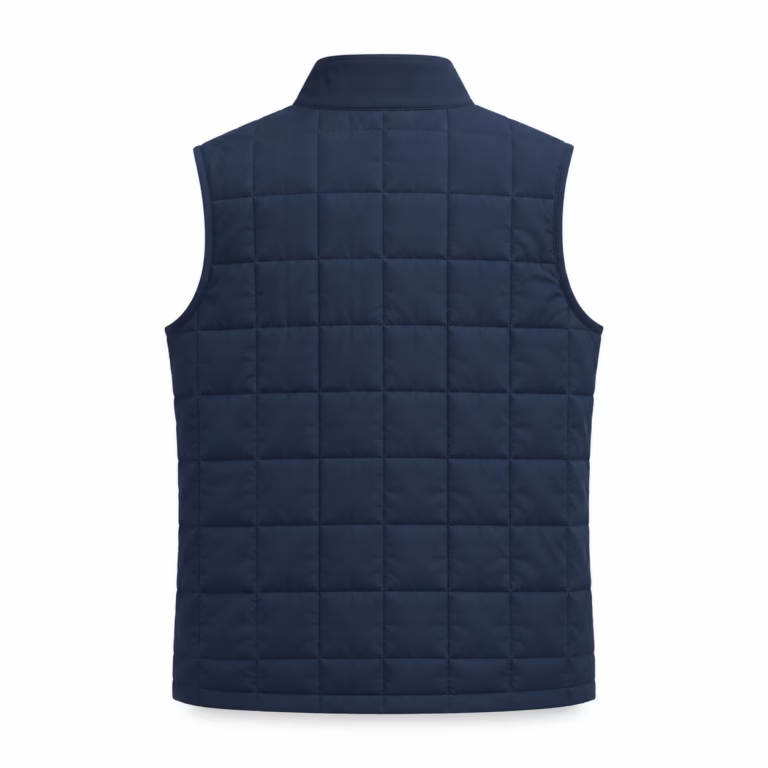
Quilted Golf Vests
Estimated customization price:
-
For apparel brands, golf clubs and team programmes. Share a reference style, quantity and available specifications to start.
01 / MATERIALS & PERFORMANCE
Fabric Composition
Compare these material options for your preferred fabric feel, movement, weight, and care needs. Shell, lining, fill, and any activity panel should be specified separately. The final material specification depends on the selected fabric and development route.
| Material option | Typical use | Tradeoff |
|---|---|---|
| 100% polyester shell and 100% polyester lining | Stable quilted body with a familiar synthetic construction | Reliable structure, but less natural fiber character |
| 100% nylon shell and 100% nylon lining | Lightweight shell and lining for a smooth layering garment | Can feel lighter and smoother, while the final finish still depends on fabric construction |
| 90% polyester / 10% elastane activity panel with a polyester or nylon body | Selected side or movement panel | Adds stretch where used, but needs careful seam and decoration review |
| 100% recycled polyester shell or lining with 100% polyester fiber fill | Synthetic material route with recycled content in the selected component | Supports a recycled-fiber direction, while the exact component and content must be specified |
| 80% down / 20% feather or 90% down / 10% feather fill route | Separate down-fill development for a different loft and warmth direction | Requires separate sourcing, construction, and fill approval from a synthetic-fill vest |
Fabric Weight
GSM means grams per square meter. It helps compare fabric mass, but the finished vest also depends on construction, fill, quilting, and finishing.
| Component | Reference weights | Effect to consider |
|---|---|---|
| Shell | 50, 70, or 90 GSM | Lower weights can support a lighter shell; higher weights can give a more substantial surface |
| Lining | 50, 70, or 90 GSM | Changes the interior feel and total garment mass |
| Synthetic fiber fill | 40, 60, 80, or 100 GSM | Lower fill weights suit light layering; higher weights add insulation and bulk |
| Down fill | Specify grams per garment by size | Uses a different fill specification from sheet-style synthetic insulation |
Fabric Construction
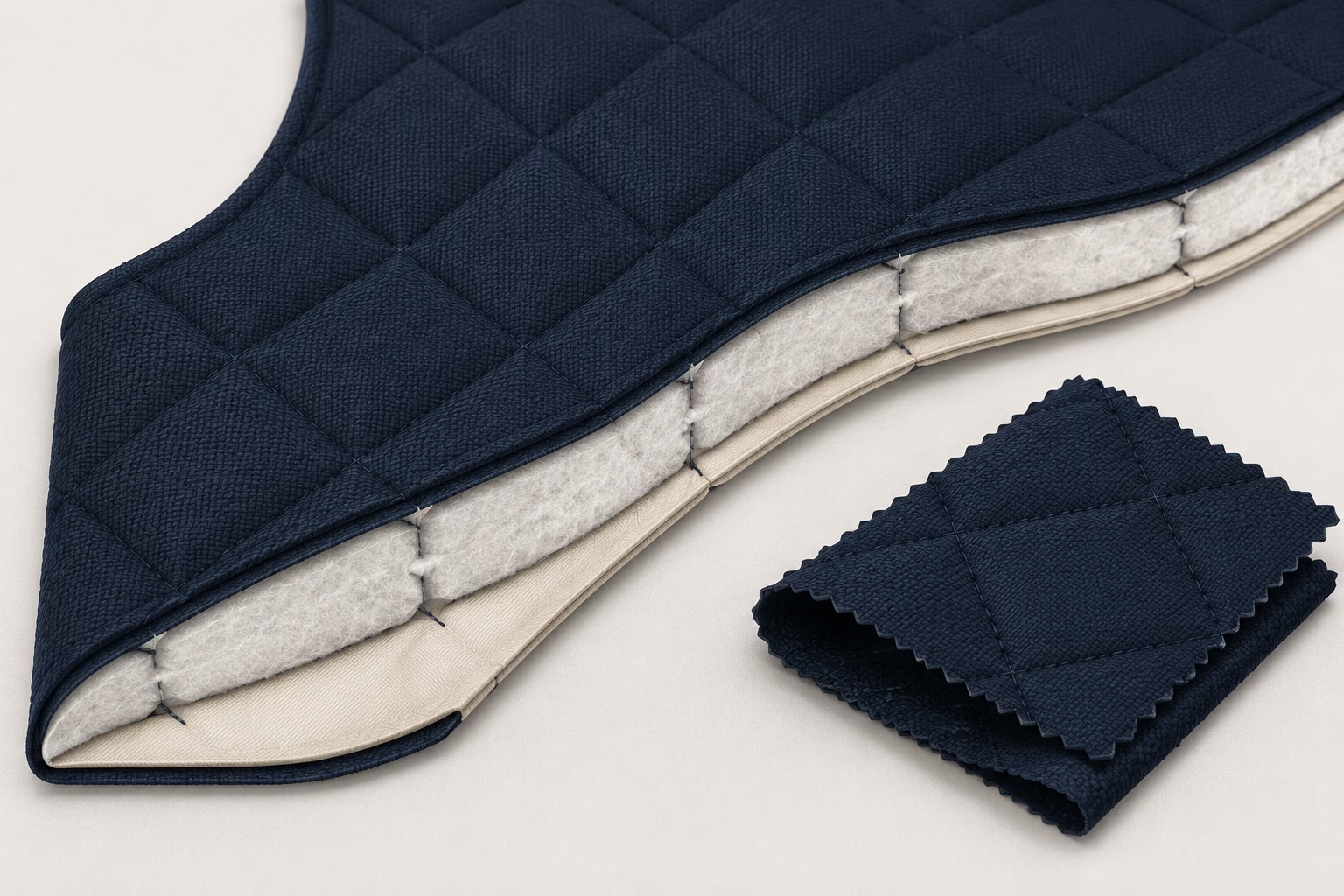
A dense woven shell and lining can provide a stable surface for quilting, while a synthetic fiber fill forms the insulating layer between them. Quilting joins the layers at planned intervals to shape the surface and help control fill placement. A selected stretch panel can support movement, but its stretch and recovery should be matched with the surrounding shell and seams. A down-fill route uses different sourcing and construction decisions from a synthetic fiber fill.
Performance Features
- Warmth: Select a thin or fuller fill according to the intended layering season and desired bulk.
- Lightweight construction: Lower shell, lining, and fill weights can support a lighter vest, subject to the complete material combination.
- Wind resistance: A dense shell can help reduce air passage, but the result depends on fabric construction and finishing.
- Water repellency: A water-repellent finish can be evaluated when needed; the vest is not automatically waterproof.
- Movement: A selected stretch panel may improve mobility in that area, but its compatibility with the quilted body and decoration should be reviewed.
02 / FIT, SIZING & COLOR
Fit Options
A regular fit leaves room for a golf polo or light mid-layer. A slightly shaped fit gives a closer profile but leaves less space for additional layers. Set the chest, shoulder, armhole depth, and hem width in the base garment pattern, then check movement with the vest worn over the intended golf outfit. The armhole should allow a full swing without adding unnecessary thickness at the shoulder.
Sizes
We can develop a size range such as XS–3XL when it suits your program. Provide your size chart or target body measurements so we can set chest, shoulder, armhole, length, and hem measurements in the base garment pattern. Grading means adjusting the pattern across sizes; review the graded sample or measurement set to keep the vest proportionate and comfortable over a golf layer.
Color Options
Choose a base color such as navy, black, ivory, white, or gray for a consistent team or brand program. Seasonal colors, contrast panels, and Pantone-based dye development can be evaluated against a color reference before approval. Quilted surfaces and different materials can reflect color differently, so review the shade on the selected shell, lining, and trim.
03 / GARMENT CONSTRUCTION

Construction concept / reference build.
Construction Details
The shell, lining, fill, and quilt lines must work together as one controlled structure. Review a close view of the quilt lines for even spacing and clean intersections, then inspect whether the fill remains distributed across the panels. At the armhole, compare the edge finish with the vest thickness to ensure the opening sits cleanly over a base layer without unnecessary bulk. A zipper guard, binding, or other edge treatment can be selected to suit the final design.
04 / YOUR BRAND & PRODUCT SPECIFICATION
Logo Options
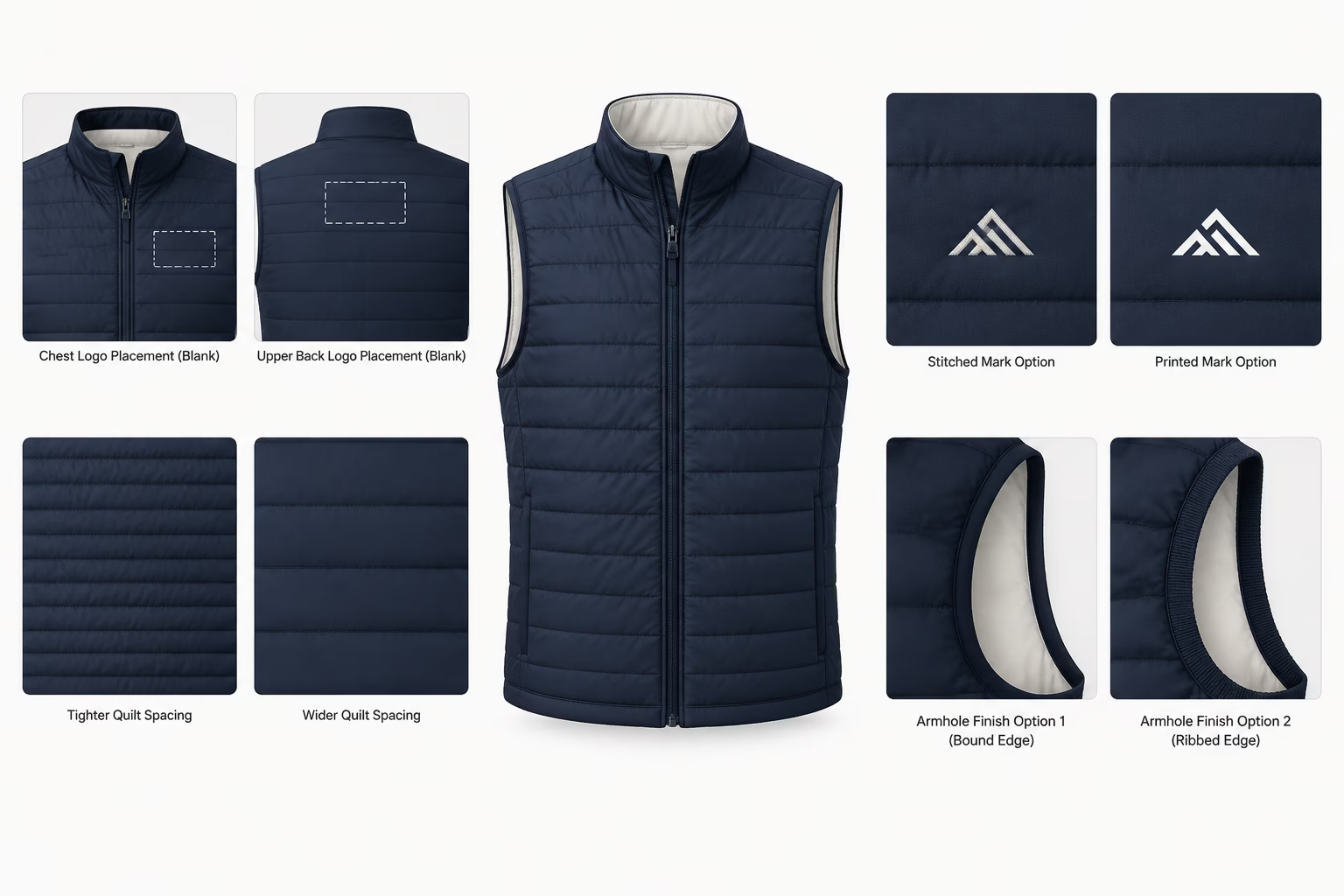
For a quilted vest, place the logo on a relatively stable area such as the upper chest or upper back, away from heavy quilt intersections when possible. Direct embroidery gives a stitched finish but adds local thickness and needs a backing choice that remains comfortable against the wearer. An applied embroidered patch separates the stitched artwork from the vest surface, while heat transfer, screen print, silicone mark, or woven label can suit different artwork and surface conditions. Review artwork size, stitch density, backing, and placement on the selected shell before approval.
Customization Scope
Use this menu to define the vest structure before decoration and sampling. Each option should be selected with the shell, lining, fill, and intended base-layer use in mind.
| Area | Choices | Purpose |
|---|---|---|
| Fill | Thin synthetic fill or another separately developed fill route | Controls warmth, loft, and overall bulk |
| Quilt spacing | Tighter or wider quilt grid | Changes the visual scale, panel flexibility, and fill-control pattern |
| Front opening | Zipper opening with optional zipper guard or chin protection | Improves opening comfort and supports the intended front finish |
| Armhole edge | Clean binding or another selected edge finish | Controls the appearance and bulk where the vest meets a base layer |
| Color layout | Single color, contrast panels, or selected trim colors | Builds a coordinated brand or team program |
05 / ORDER & DEVELOPMENT PLANNING
Minimum Order Planning
Our minimum order quantity is 300 pieces. Send your expected quantity and preferred size and color breakdown so we can discuss the selected shell, lining, fill, quilt spacing, and decoration details.
Sample Lead Time
Sample lead time is 7–10 days. Use the sample to assess the shell and lining feel, fill level and distribution, quilt-grid spacing and alignment, armhole thickness, zipper or edge finish, and logo placement before finalizing the bulk details.
Bulk Lead Time
Bulk production lead time is 15–30 days. Send your desired delivery schedule with the selected fabric, fill, quilt spacing, quantity, colors, sizes, and decoration details so we can discuss the production plan.
06 / APPROVAL & APPLICATION
Quality & Approval Checks
Use the selected fabric, size specification, and sample details as references when agreeing quality requirements for this order.
| Quality point | Reference to compare | Why it matters |
|---|---|---|
| Material specification | Approved shell, lining, fill, fiber content, and GSM or fill weight | Confirms the agreed material direction and finished garment mass |
| Quilt alignment | Sample quilt spacing, intersections, and front-to-back layout | Maintains the intended visual order across the vest |
| Fill distribution | Sample appearance and agreed care or wash review | Helps assess whether the fill stays suitably distributed after handling |
| Armhole and seam finish | Approved edge treatment, thickness, and seam appearance | Controls comfort and bulk where the vest meets a base layer |
| Logo placement | Approved artwork size, position, backing, and decoration method | Keeps the mark clear and appropriate for the quilted surface |
Suitable Bulk Buyers
- Golf apparel brands: Develop a consistent quilted vest with a defined fill level, quilt layout, color program, and logo placement.
- Golf teams and clubs: Coordinate team colors and decoration while planning sizes for players and staff.
- Corporate or event apparel buyers: Build a branded layering garment around a target quantity, artwork, and delivery schedule.
Target Markets
For US-focused programs, provide the intended measurement system, size chart, care-label requirements, and destination climate. Buyers serving cooler golf seasons may prioritize more fill, while mild climates may favor a thinner layer. Review labeling and packaging needs as part of the order details for the destination market.
What to Include in Your Enquiry
To begin, send the reference style, expected quantity, preferred size and color breakdown, logo artwork or an initial idea, and desired delivery date. Please also identify whether thin fill, quilt spacing, or armhole thickness is the main priority.
Discuss Your Product Requirements
Share your reference style, estimated quantity, colors and available artwork. We can review a practical next step for your bulk project.