BULK CUSTOM GOLF APPAREL
Men’s Breathable Golf Polo Shirts
Estimated customization price:
-
For apparel brands, golf clubs and team programmes. Share a reference style, quantity and available specifications to start.
01 / MATERIALS & PERFORMANCE
Fabric Composition
Compare these blend options for your preferred fabric feel, stretch and care needs. Each option totals 100%:
| Blend option | Suitable use | Tradeoff |
|---|---|---|
| 100% polyester | Light, easy-care team and summer programs | Less natural fiber character and no built-in elastane stretch |
| 95% polyester / 5% elastane | General golf movement with moderate stretch | More stretch than plain polyester, with elastane affecting cost and care requirements |
| 92% polyester / 8% elastane | More flexible athletic silhouettes | Higher stretch can change recovery and fit behavior |
| 90% polyester / 10% elastane | Close-fitting styles needing pronounced stretch | Requires careful pattern and recovery review |
| Recycled polyester / elastane blend | Programs that want recycled polyester content | Final blend, feel and supply route must be selected and verified for the order |
Final material specifications depend on the selected fabric.
Fabric Weight
GSM means grams per square meter. It helps compare fabric mass, but it does not by itself prove breathability, coverage or durability.
| Reference weight | Fabric body and drape | Typical use |
|---|---|---|
| 140 GSM | Light body and lighter drape | Hot-weather styles where a lighter feel is preferred |
| 160 GSM | Light-to-medium body with easy movement | Summer golf polos needing a balance of lightness and structure |
| 180 GSM | Moderate body and more stable drape | General team, club and brand programs across warm conditions |
| 200–220 GSM | More substantial body and steadier drape | Styles needing a fuller appearance or use beyond peak summer |
Use the selected knit structure and fabric sample to settle the final weight and seasonal direction.
Fabric Construction
Choose the structure according to the balance you want between airflow, surface appearance and body:
- Pique: a textured polo surface with a more defined appearance.
- Single jersey: a lighter, flexible knit suitable for a softer drape.
- Double knit: a more substantial knit structure that can give the garment a fuller body.
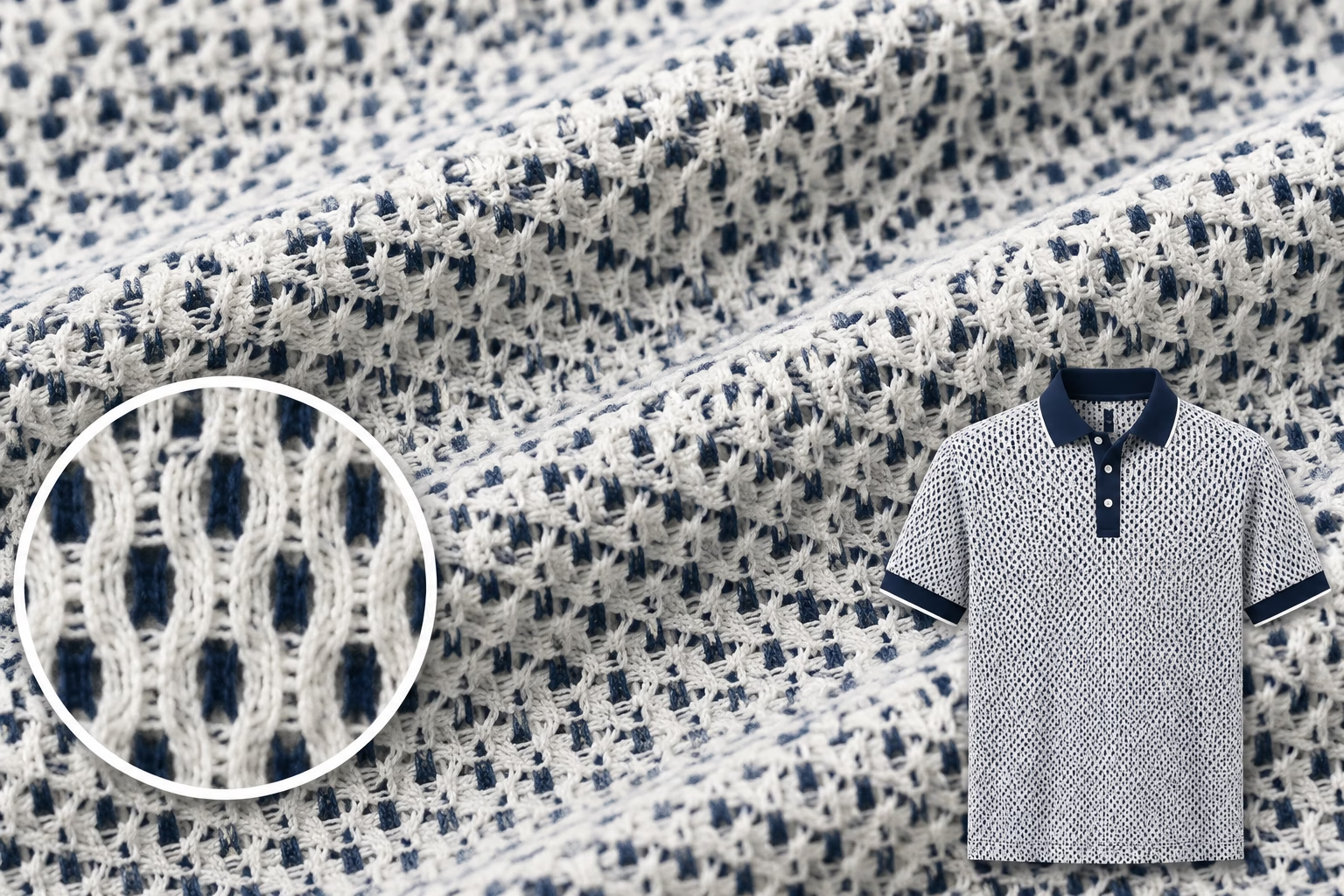
- Mesh or open knit: a more open structure that can improve airflow, while coverage and appearance should be checked in the selected placement.
Structure, composition, GSM and finishing work together, so review the complete fabric sample rather than choosing by structure name alone.
Performance Features
Performance choices should match the wearer’s climate and movement needs:
- More open knit: can improve airflow in a selected area, with coverage and appearance reviewed on the actual fabric.
- Localized ventilation: can focus an open structure on the back or underarm zone while keeping the rest of the shirt visually consistent.
- Stretch blend: can support swing movement, with recovery and fit checked after pattern development.
- Moisture-management or quick-dry direction: depends on the yarn, knit structure and finishing, so define the required evaluation before selecting it.
02 / FIT, SIZING & COLOR
Fit Options
Choose a regular fit for balanced torso room, an athletic fit for a closer body with movement allowance, or a slimmer fit for a sharper outline. The chest, shoulder and armhole should support a golf swing without excessive fabric pulling.
Review the front and back length while standing and moving. A longer back or side opening can help coverage during play, while a shorter or slimmer base pattern may look cleaner but leave less room through the torso. Confirm the base garment pattern with a size chart and sample.
Sizes
Plan the size range from your customer or team measurement data and the selected base garment pattern. Available development can cover ranges such as XS–3XL, subject to the agreed size chart and pattern.
Grading means adjusting one base pattern across sizes. Review chest, shoulder, sleeve and body-length changes across the range, then use the sample to check movement and proportion before confirming the size specification.
Color Options
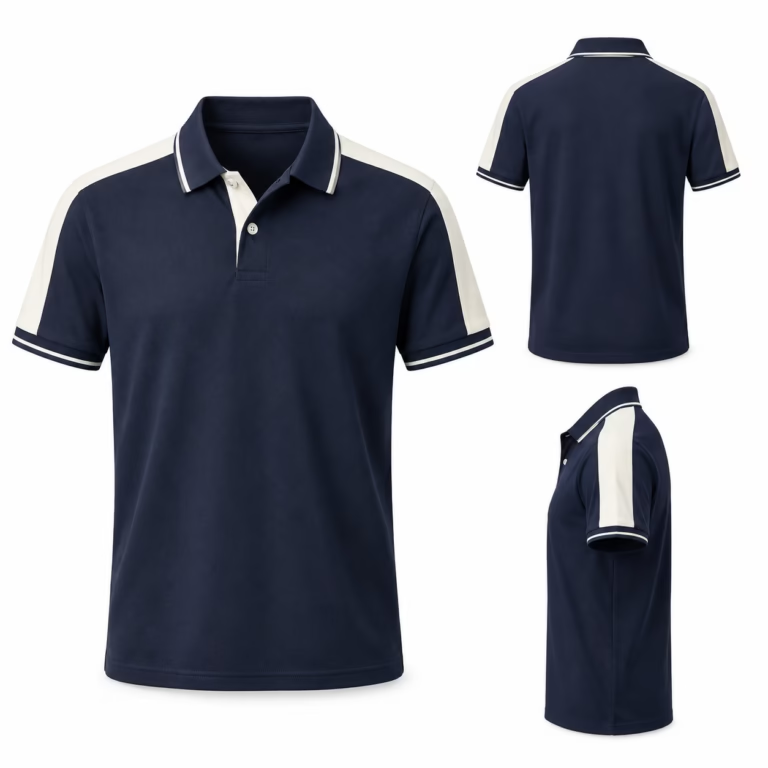
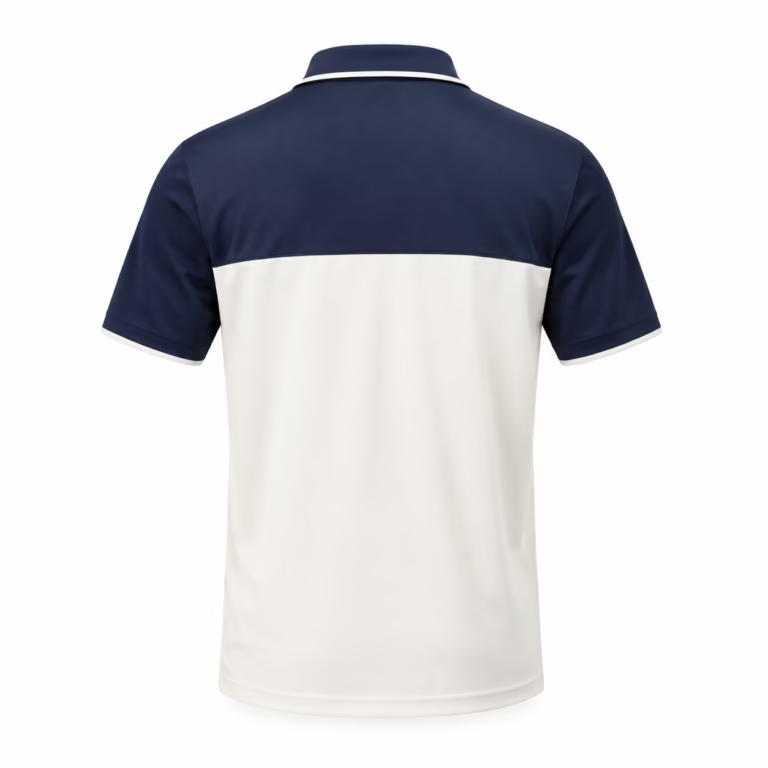
Choose a base color such as navy, black, white or gray for a coordinated team or brand program. Seasonal colors, contrast panels and Pantone-matched dyeing can be evaluated against a color reference. Confirm the color on the selected fabric because knit structure and finishing can affect the visual result.
03 / GARMENT CONSTRUCTION
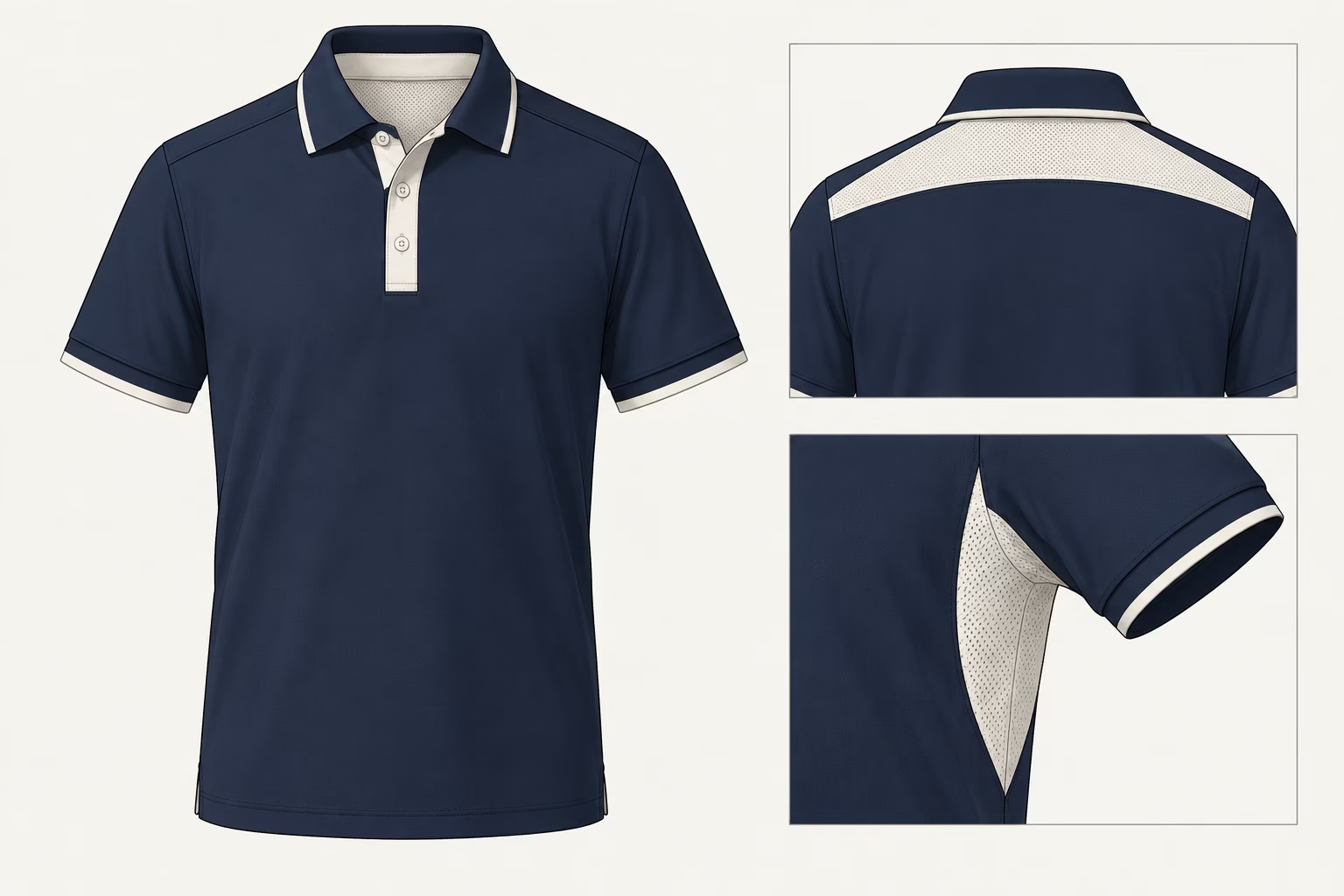
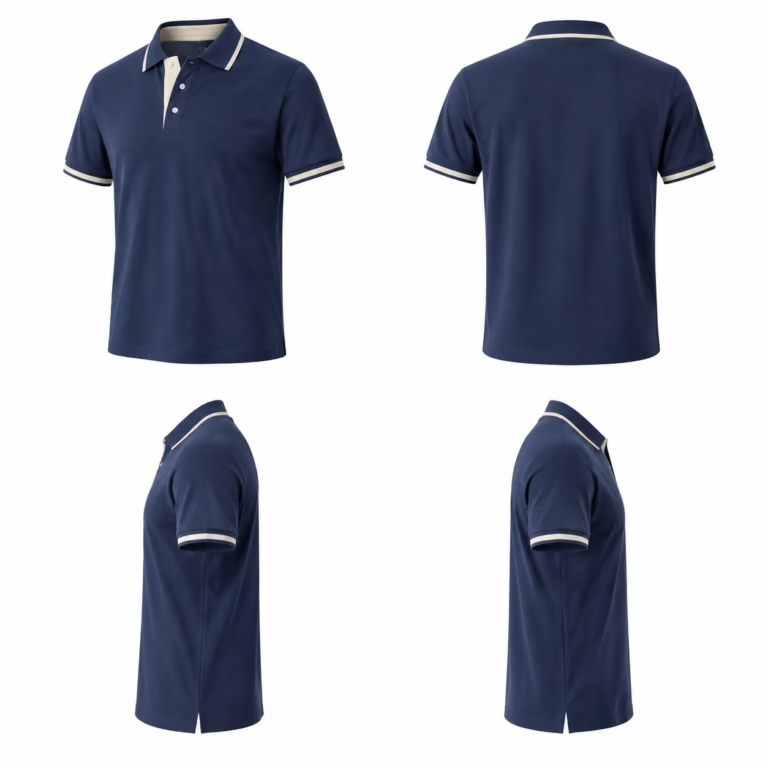
Construction concept / reference build.
Construction Details
The ventilation choice should work with the shoulder, underarm and back construction rather than sit as an isolated feature. When reviewing a sample, look at whether the open area or panel boundary follows the body naturally and whether it creates unwanted show-through or visual interruption.
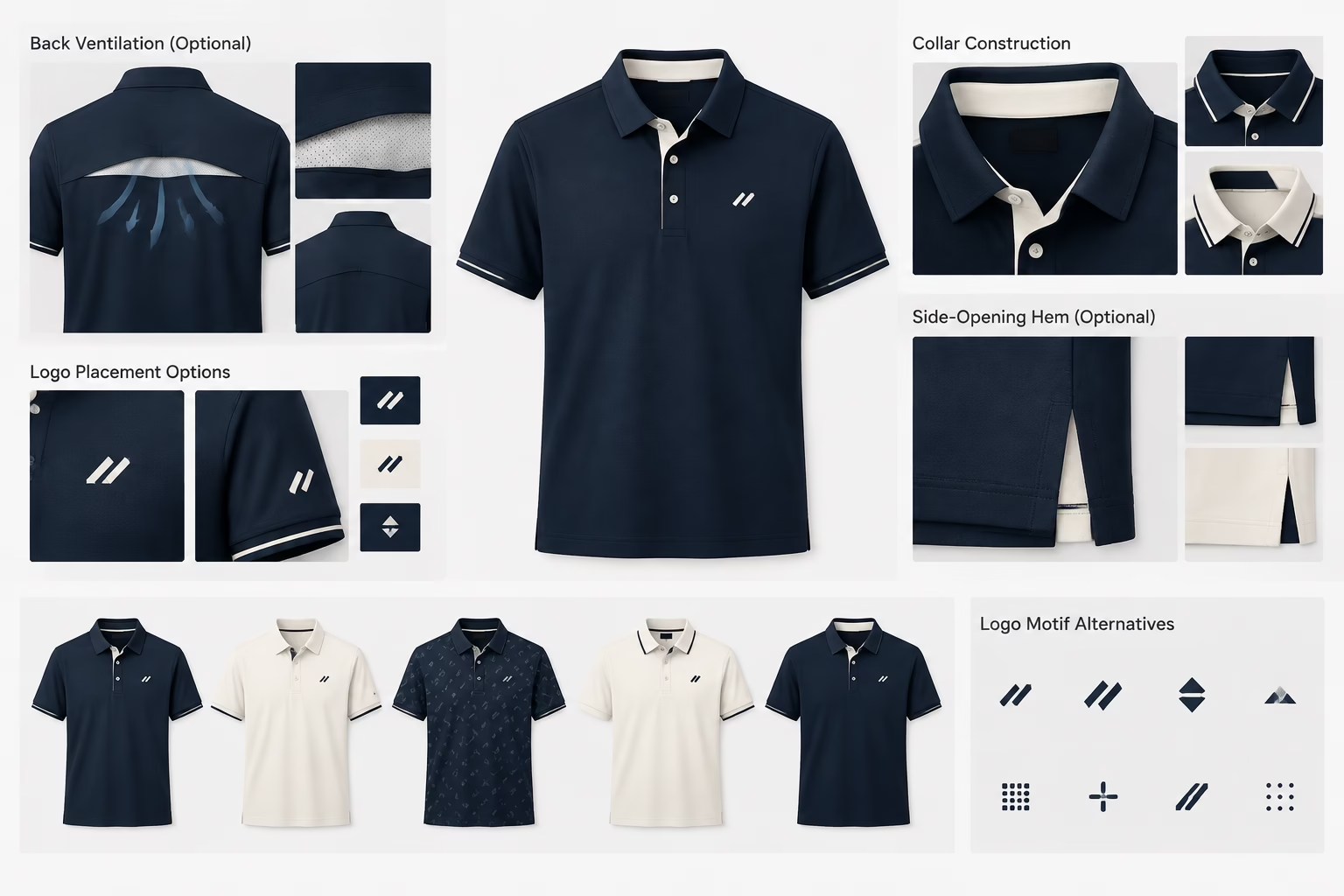
Check the neckline, placket and hem together: the collar stand or rib collar should sit evenly around the neck, the two- to four-button opening should lie flat, and the side opening or double-needle hem should remain balanced when the wearer moves.
04 / YOUR BRAND & PRODUCT SPECIFICATION
Logo Options
Choose the decoration method according to the artwork, fabric stretch and placement:
| Method | Useful when | Key review |
|---|---|---|
| Direct embroidery | The logo is compact and needs a textured stitched finish | Check stitch density, backing comfort and puckering on the chosen knit |
| Heat transfer | The artwork needs a smooth, flexible surface | Review edge definition and stretch behavior on the fabric |
| Screen print | The design uses suitable solid areas | Check print coverage and flexibility on the selected surface |
| Silicone label or woven label | A small branded detail is preferred | Review attachment position, edge comfort and scale |
Send vector artwork where available, including finished size, colors and preferred placement. Typical zones to evaluate include the left chest, sleeve or upper back. A patch is an applied piece; direct embroidery stitches into the garment, so the two options need different backing and comfort checks.
Customization Scope
Use the table to set the main garment direction. These choices are evaluated together with the selected fabric and may require separate development routes.
| Area | Choices | Purpose |
|---|---|---|
| Body ventilation | More open knit or localized ventilation area | Adjust airflow emphasis across the back or another selected zone |
| Collar | Collar stand or rib collar | Set the neckline appearance and structure |
| Front opening | Two to four buttons | Adjust the placket look and opening depth |
| Hem | Straight hem or side opening | Change movement and tucking behavior |
| Fit | Regular, athletic or slimmer base garment pattern | Balance room through the torso with a closer appearance |
05 / ORDER & DEVELOPMENT PLANNING
Minimum Order Planning
Our minimum order quantity is 300 pieces. Send your planned quantity and intended size and color breakdown so we can discuss the order details, fabric route and customization scope.
Sample Lead Time
Sample lead time is 7–10 days. Use the sample to assess the selected fabric feel and GSM, chest and back airflow structure, collar and hem balance, fit during movement, and logo placement or decoration comfort.
Bulk Lead Time
Bulk production lead time is 15–30 days. Send your desired delivery schedule with the quantity, fabric route, color plan, size specification and customization details so we can review the production timing.
06 / APPROVAL & APPLICATION
Quality & Approval Checks
Use the selected fabric, size specification and sample details as references when agreeing quality requirements for this order.
| Quality point | Reference to compare | Why it matters |
|---|---|---|
| Material composition and GSM | Selected fabric specification and approved material sample | Confirms the intended fabric basis and garment body |
| Airflow structure | Approved open-knit or localized ventilation placement | Checks that the selected structure appears in the intended zone |
| Fit and measurements | Size chart, base garment pattern and approved sample | Controls chest, shoulder, length and movement across sizes |
| Neckline and hems | Sample shape, collar attachment and hem appearance | Helps keep the polo balanced when worn and laid flat |
| Decoration | Approved artwork, size, position and backing or attachment | Checks logo clarity, comfort and placement consistency |
Suitable Bulk Buyers
- Men’s golf apparel brands: need a repeatable seasonal polo direction with controlled fabric, fit, colors and logo placement.
- Golf teams and clubs: need coordinated colors, player size planning and decoration that remains comfortable during play.
- Corporate or event golf programs: need a bulk polo with clear artwork placement, practical fit and a defined delivery schedule.
Target Markets
This polo suits warm-weather golf programs and markets where airflow, lightweight fabric choices and movement-friendly fit matter. For North American, European, UK or other destinations, provide the intended measurement system, size chart, care-label language and any market-specific labeling requirements for review.
What to Include in Your Enquiry
To begin, send your reference style, planned quantity, preferred size and color breakdown, logo artwork or a reference image, and desired delivery date. Tell us whether a more open knit or a defined back ventilation area is the priority.
Discuss Your Product Requirements
Share your reference style, estimated quantity, colors and available artwork. We can review a practical next step for your bulk project.