BULK CUSTOM GOLF APPAREL
Custom Golf Vests
Estimated customization price:
-
For apparel brands, golf clubs and team programmes. Share a reference style, quantity and available specifications to start.
01 / MATERIALS & PERFORMANCE
Fabric Composition
Compare these blend options for your preferred fabric feel, stretch and care needs. The final material specification depends on the selected fabric and any separate lining, fill or trim components.
| Shell blend | Useful application | Tradeoff |
|---|---|---|
| 100% polyester | Easy-care lightweight shell or knit for team programs. | Stable and practical, but offers less natural stretch than a blend. |
| 100% nylon | Smooth woven shell for a clean, technical appearance. | Can feel crisper and may need more careful decoration planning. |
| 90% polyester / 10% elastane | Stretch shell for swing movement and active layering. | Improves mobility, while stretch can affect logo placement and edge recovery. |
| 92% nylon / 8% elastane | Smooth stretch woven shell for a close, active fit. | Supports movement but usually costs more than a basic polyester option. |
| 95% cotton / 5% elastane rib | Optional rib trim for selected edge finishes. | Adds a softer trim feel, but its appearance differs from a technical shell. |
Fabric Weight
GSM means grams per square meter. Use it to compare fabric mass, then review the actual fabric because weight alone does not determine warmth, coverage or durability.
| Approximate shell weight | Fabric body and drape | Typical use |
|---|---|---|
| 80 g/m² | Very light with a soft, easy-draping feel. | Warm-weather layering and low-bulk movement. |
| 110 g/m² | Light body with a balanced drape. | Versatile golf layering across mild conditions. |
| 140 g/m² | More body and structure with moderate drape. | Transitional-weather vests and a more substantial appearance. |
| 170 g/m² | Heavier body with less fluid movement. | Cooler-weather or padded development, depending on the full construction. |
Any lining or fill has its own weight and should be reviewed with the shell when assessing the finished garment.
Fabric Construction
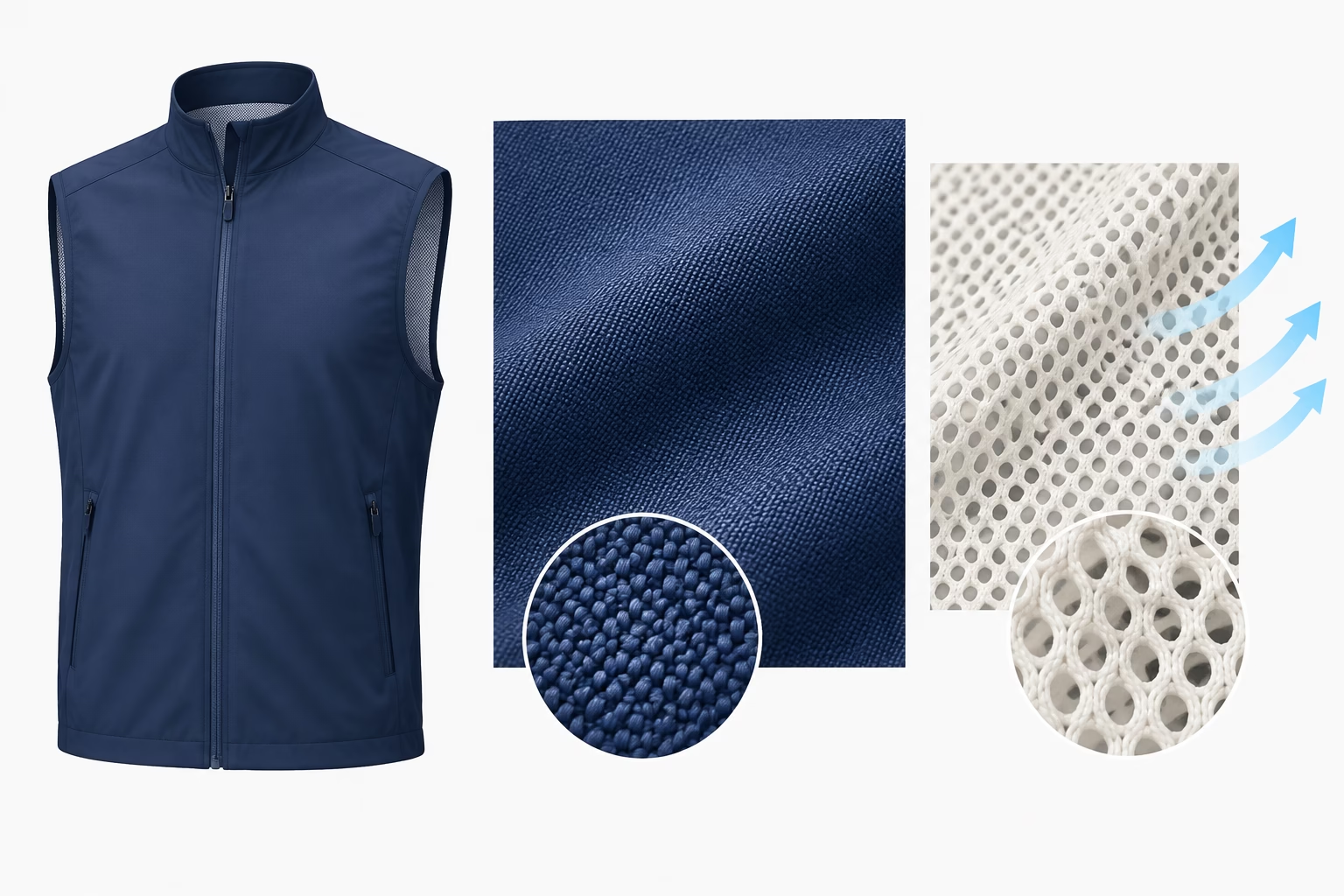
Choose the structure according to the role of the vest. A high-density plain weave gives a smooth, stable shell. A light twill adds a subtle diagonal surface and a different drape. A stretch woven structure supports movement when elastane is included. Local mesh panels can increase airflow in selected areas, while knit constructions can create a softer, more flexible layering piece. A padded version adds a shell, lining and fill decision, so it should be developed as a coordinated structure rather than treated as a single fabric choice.
Performance Features
Choose performance features according to the playing conditions and vest structure. A lightweight fabric can reduce bulk, a more open mesh panel can improve airflow, and a stretch blend can support a fuller swing. A wind-resistant woven shell may help reduce airflow through the fabric, while a water-repellent finish can help with light surface moisture; water-repellent is not the same as waterproof. These effects depend on the selected material, construction and finishing.
02 / FIT, SIZING & COLOR
Fit Options
Choose a regular fit for a straightforward layering profile or a sport fit for a closer shape during the swing. Confirm chest, shoulder, armhole and hem measurements against the size chart and intended base layer. More room improves layering comfort, while a closer fit can reduce bulk but leaves less space for a mid-layer. A sample should be reviewed in the intended golf posture to check arm movement and hem position.
Sizes
We can develop the vest against your size chart, with an example range of XS–3XL available to evaluate. Size planning should include chest, shoulder, armhole, body length and hem measurements, plus the layer worn underneath. Grading means adjusting the base garment pattern across sizes; approve the graded measurements with the sample before placing the bulk order.
Color Options
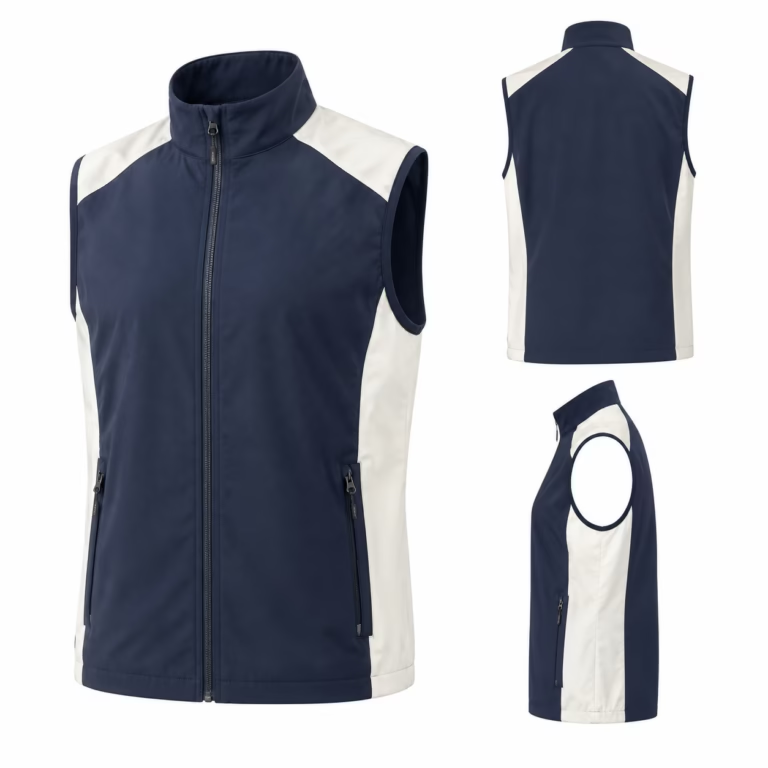
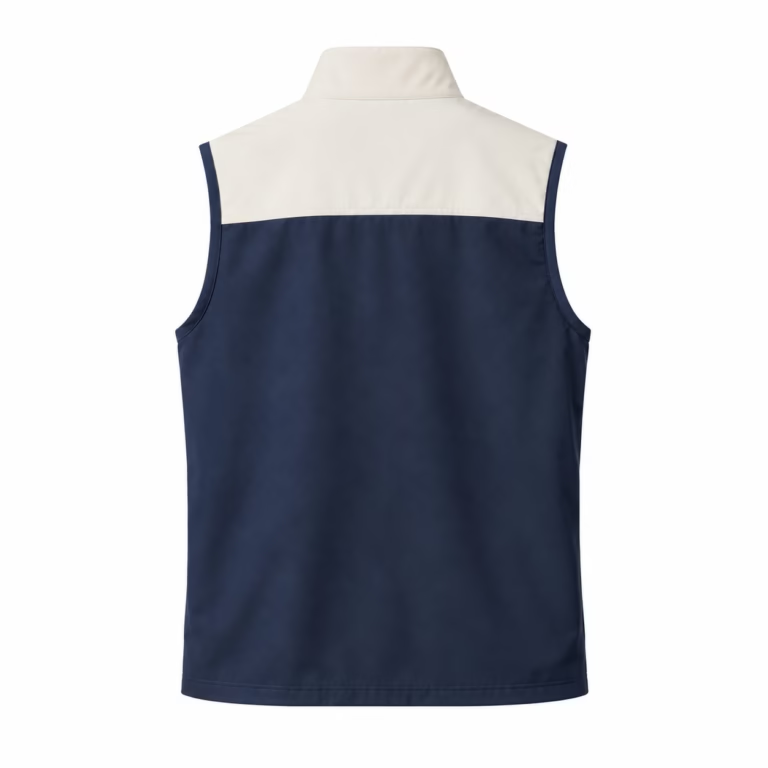
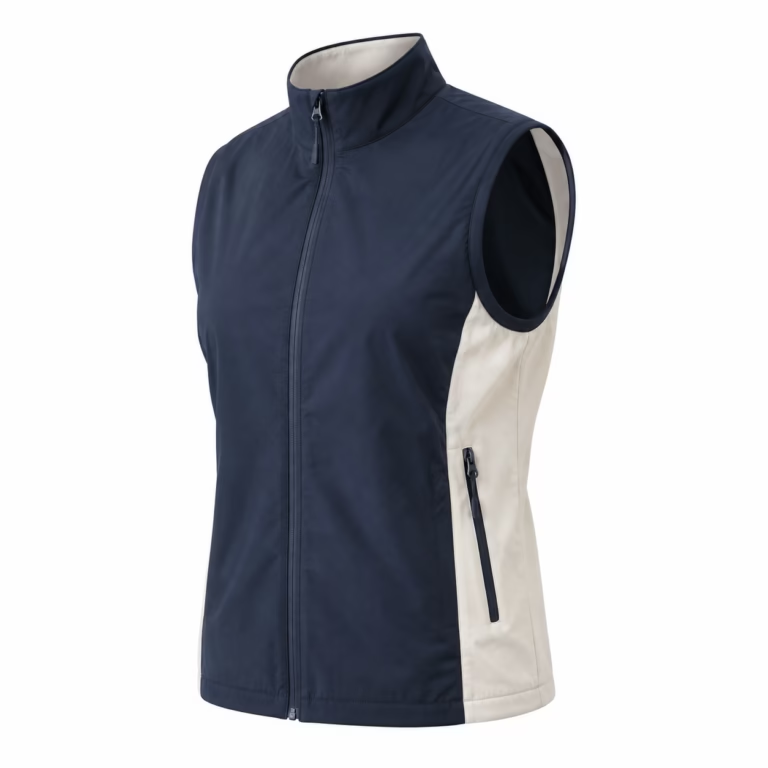
Choose a core color such as navy, black, ivory or gray for a consistent team or brand program. Seasonal colors, contrast panels and Pantone color matching can be evaluated against a color reference. Color choice should be confirmed with the selected fabric because surface structure and lining can affect the finished appearance.
03 / GARMENT CONSTRUCTION
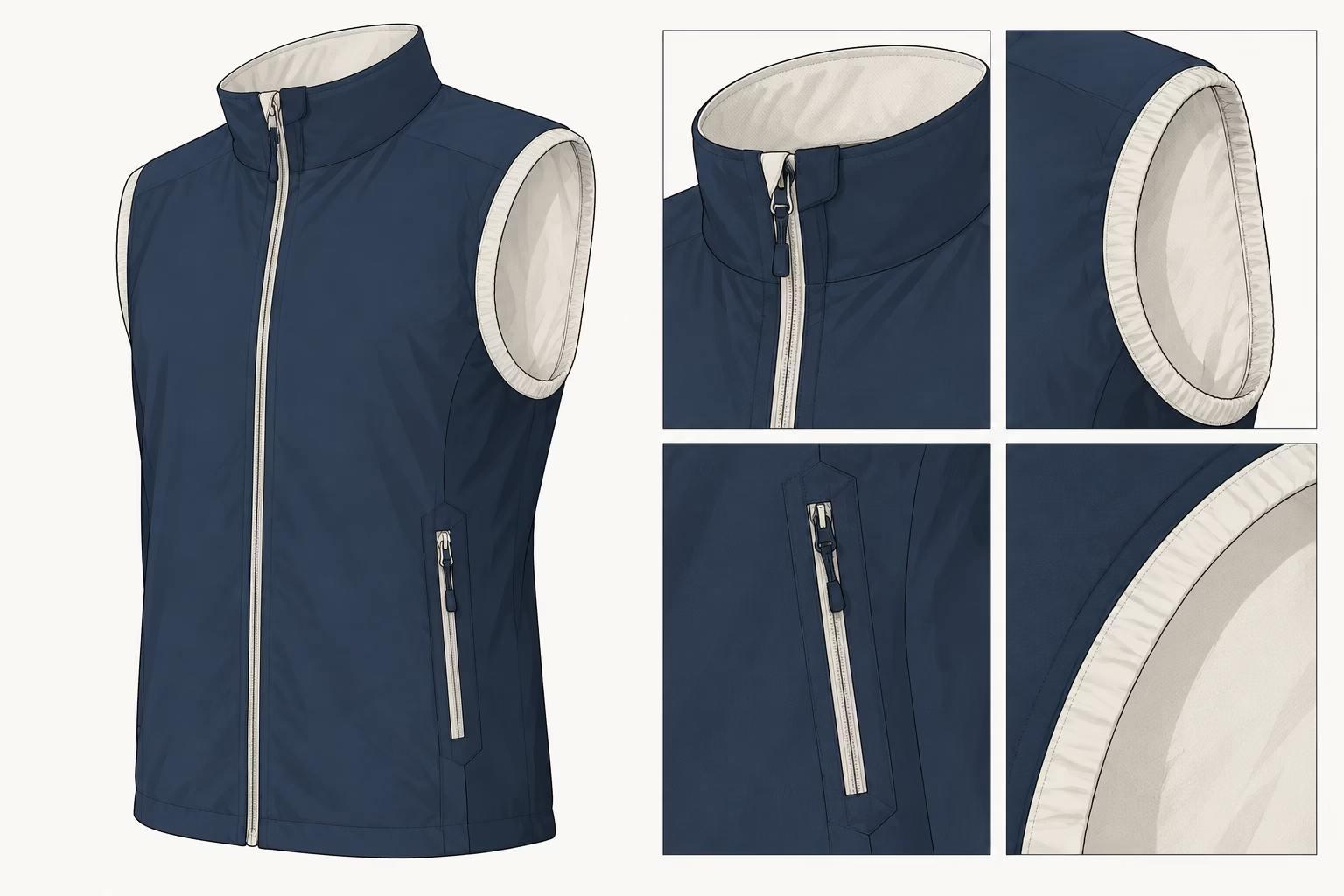
Construction concept / reference build.
Construction Details
The vest structure affects how the garment feels during a golf swing. A full-zip or pullover build changes entry and layering, while a chin guard can make the zipper area more comfortable. A mesh back or other open panel can support airflow, but it changes the appearance and coverage of that area. Elastic binding at the armhole or hem can help create a neat edge around movement zones.
When reviewing the sample, inspect whether the zipper, neckline, armhole and hem sit smoothly together without restricting the swing. Check pocket openings and reinforcement details with the intended pocket contents.
04 / YOUR BRAND & PRODUCT SPECIFICATION
Logo Options
Choose the decoration method after the shell structure and logo artwork are selected. Direct embroidery gives a raised, durable-looking surface but adds weight and can feel firm on a lightweight or stretch panel. Heat transfer suits detailed or multicolor artwork with a flatter finish, while screen printing is useful for suitable smooth surfaces and simpler graphic treatments. A silicone mark or woven label creates a distinct branded touch, subject to the selected base material and placement.
Common placement zones include the left chest, right chest, upper back and lower front pocket area. Send vector artwork when available, along with the finished logo size and preferred placement. A small sample helps assess stitch density, edge definition, adhesion or print coverage on the actual fabric.
Customization Scope
Choose the changes that support your intended use. The options below are evaluated together because a lightweight knit, a woven shell and a padded structure need different edge, pocket and closure treatments.
| Area | Choices | Purpose |
|---|---|---|
| Front opening | Full-zip or pullover | Changes entry, layering and the front appearance. |
| Neck and armhole edges | Chin guard and elastic binding | Improves comfort and gives the edges a controlled finish. |
| Back panel | Open mesh panel or main fabric | Balances airflow with coverage and a consistent surface. |
| Pockets | Zip pockets and pocket-opening reinforcement | Helps secure small items and defines the pocket finish. |

05 / ORDER & DEVELOPMENT PLANNING
Minimum Order Planning
Our minimum order quantity is 300 pieces. Send your intended quantity and preferred size and color breakdown so we can discuss the order details for your selected vest structure and decoration plan.
Sample Lead Time
Sample lead time is 7–10 days. Use the sample to assess the chosen knit, woven or padded structure, fabric feel and weight, fit over the intended base layer, and logo size and placement. Review the zipper, armhole, hem and pocket details at the same time.
Bulk Lead Time
Bulk production lead time is 15–30 days. Send your desired delivery schedule with the quantity, fabric direction, color plan and decoration requirements so we can discuss the production timeline for your order.
06 / APPROVAL & APPLICATION
Quality & Approval Checks
Use the selected fabric, size specification and sample details as references when agreeing quality requirements for this order.
| Quality point | Reference to compare | Why it matters |
|---|---|---|
| Material composition and GSM | Agreed shell, lining, fill or trim specification and fabric weight | Keeps the finished material direction consistent. |
| Fabric appearance and feel | Approved fabric swatch or sample garment | Numbers do not show surface texture, drape or comfort. |
| Size and movement | Approved size chart and sample measurements in a golf stance | Checks layering room, armhole comfort and hem position. |
| Closure, pocket and edge construction | Approved sample at the zipper, pocket opening, neckline and armhole | Shows whether key components sit cleanly and consistently. |
| Logo placement and finish | Approved artwork size, position and decoration sample | Controls visual alignment and the feel of the decoration on the selected fabric. |
Suitable Bulk Buyers
- Private-label golf brands: need a repeatable base garment with controlled fabric, color and logo choices.
- Golf teams and clubs: need coordinated colors, practical layering and clear chest or back decoration placement.
- Golf event and corporate apparel buyers: need a defined quantity, size plan and delivery schedule for a branded group order.
Target Markets
For warm destinations, prioritize lighter shells or selected mesh panels and review airflow with the intended base layer. For cooler destinations, compare a heavier shell or padded construction without losing swing room. Provide your target-market measurement chart and required fiber-content or care-label information so the garment specification matches your sales program.
What to Include in Your Enquiry
Send your reference style, target quantity, preferred size and color breakdown, logo artwork or placement idea, and desired delivery date. A reference photo is also useful when your technical specification is still developing.
Discuss Your Product Requirements
Share your reference style, estimated quantity, colors and available artwork. We can review a practical next step for your bulk project.