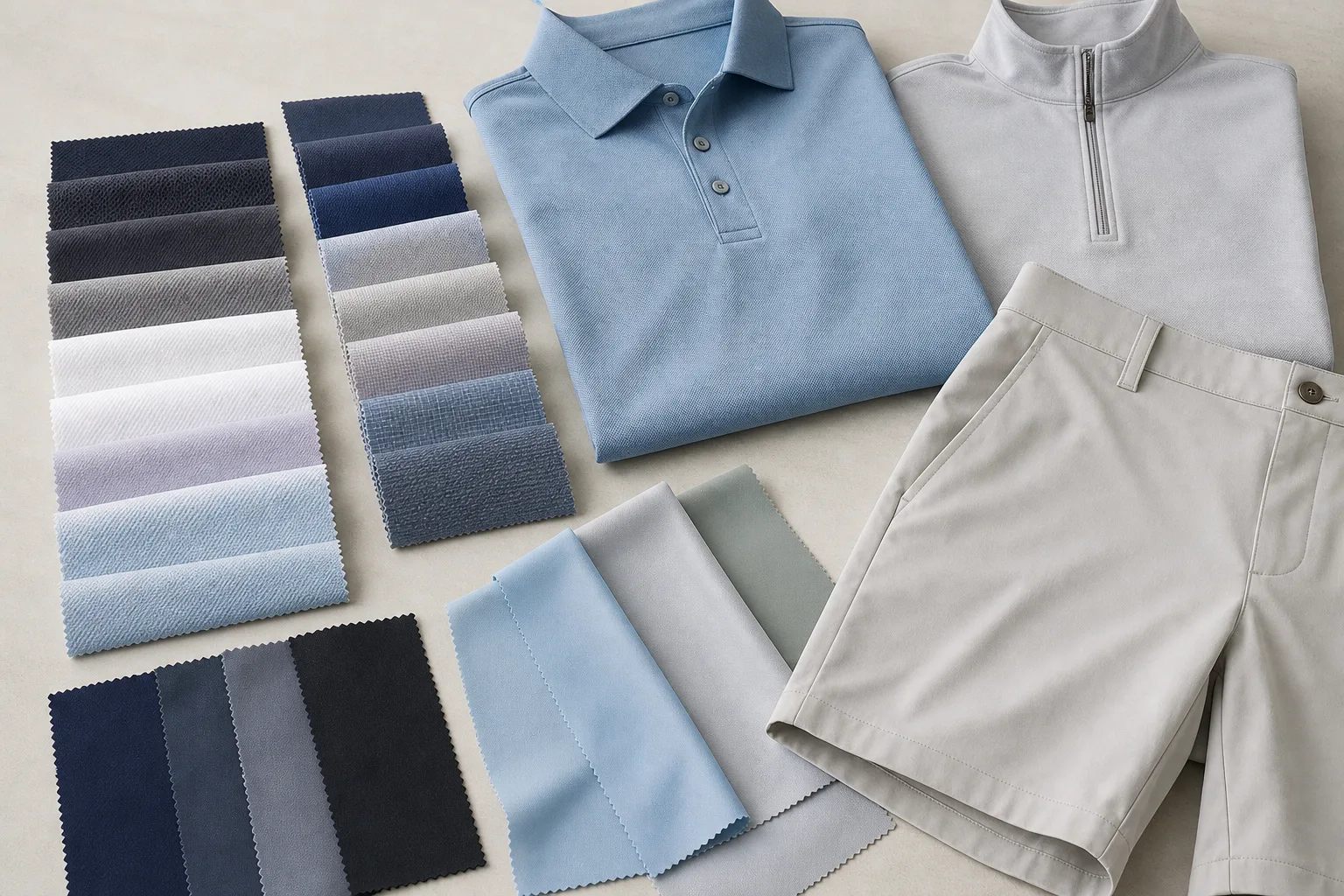
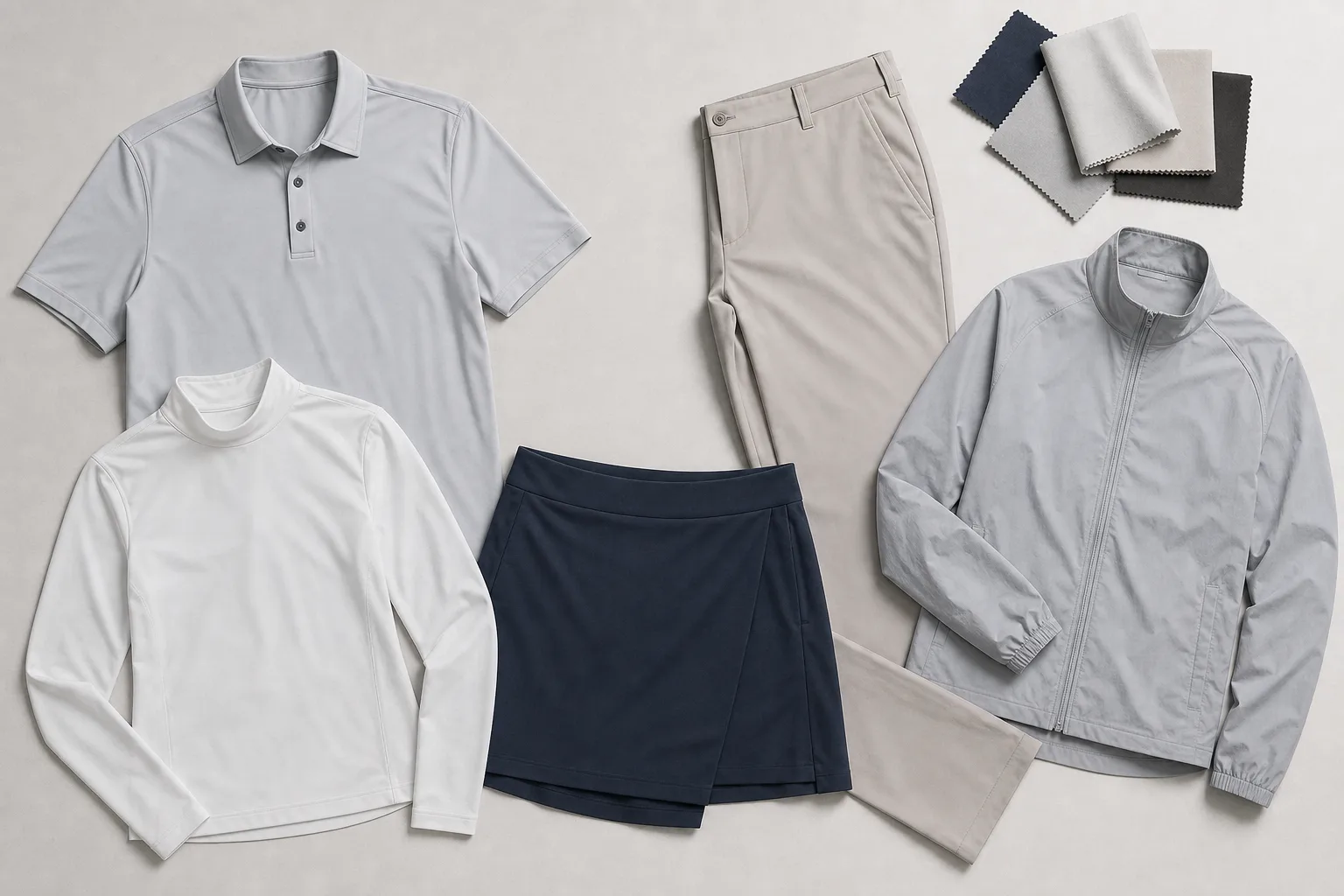
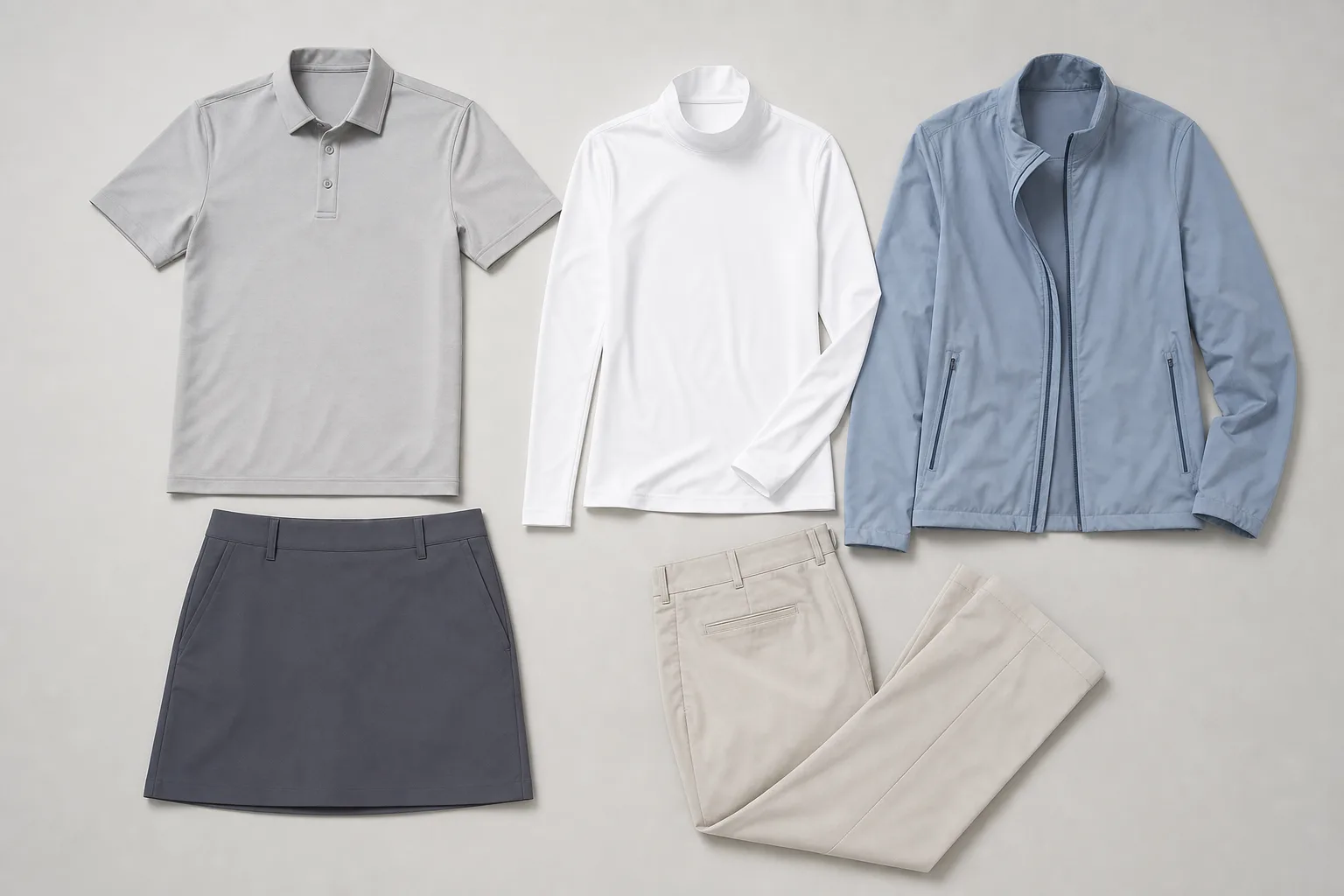
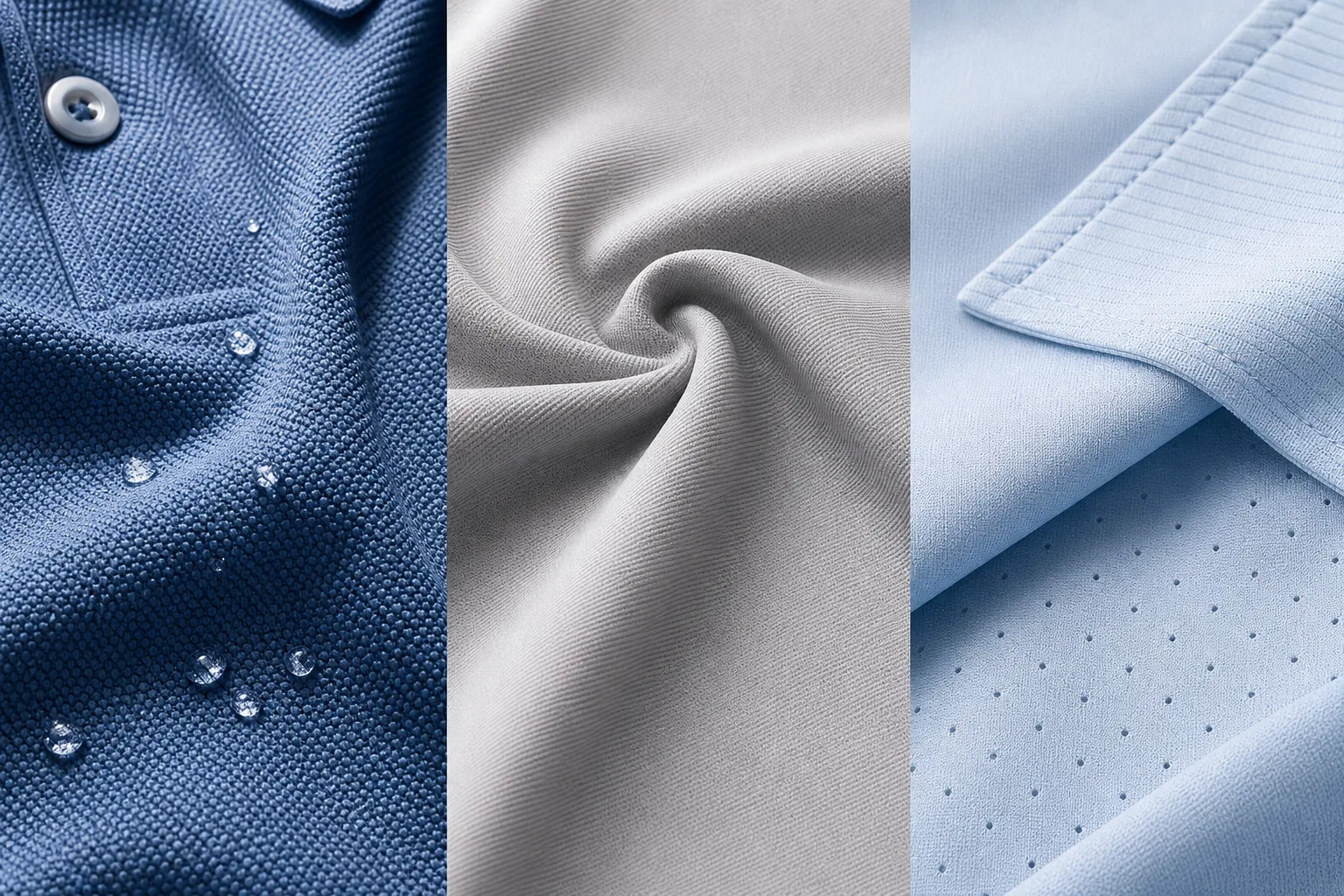
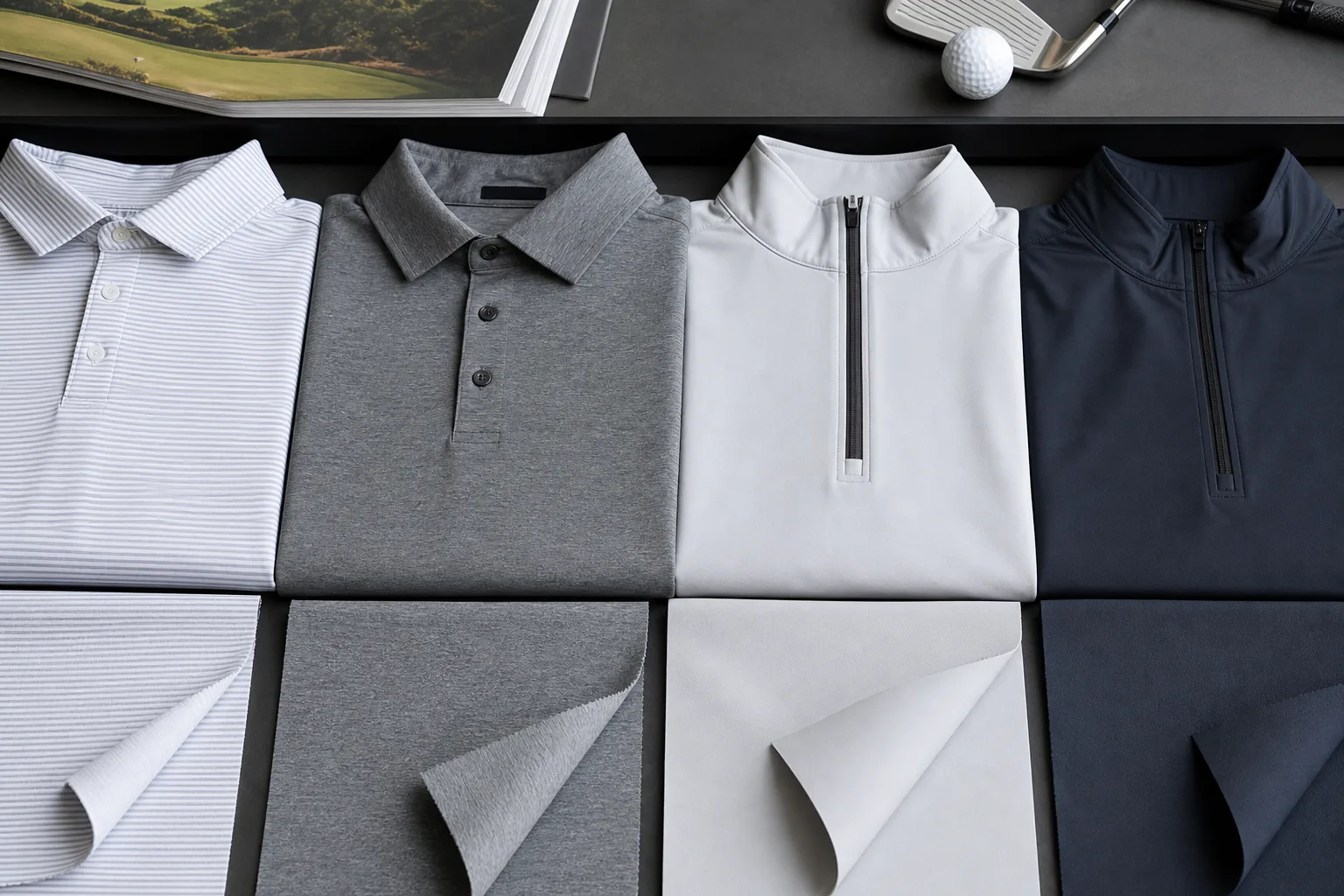
No single fabric suits every golf program. The most common directions below are often used as a starting point during product development and swatch review.
Polyester performance knits
Common for golf polos, training tops, event uniforms, and lightweight layers. They are often chosen for color consistency, moisture management potential, and practical care. Surface texture can range from smooth jersey to pique and engineered structures.
Recycled polyester options
Used when a buyer wants to include a recycled-material direction in a golf collection or club program. Suitability still depends on hand feel, weight, appearance, and available documentation for the exact fabric under review. Buyers comparing these options in more detail can also review polyester vs. recycled polyester and recycled golf fabrics.
Polyester-spandex blends
Often selected for added movement and recovery in polos, fitted tops, skorts, and performance bottoms. The blend can improve comfort, but it should be checked carefully for logo distortion, seam stability, and recovery after repeated wear.
Nylon-based performance fabrics
Useful where a smoother hand feel, denser construction, or specific outerwear and bottom applications are preferred. These materials are often reviewed for premium-feel tops, technical layers, and selected woven garments.
Cotton-blend casual fabrics
Sometimes suitable for golf lifestyle capsules, retail-driven pieces, or less technical clubhouse apparel. Buyers should weigh softness and familiar hand feel against drying speed, shape retention, and performance positioning.
Woven performance fabrics
More common in golf pants, shorts, skorts, windbreakers, and rainwear than in standard polos. Evaluation should include movement, noise level, crease behavior, and compatibility with the garment’s intended structure.