BULK CUSTOM GOLF APPAREL
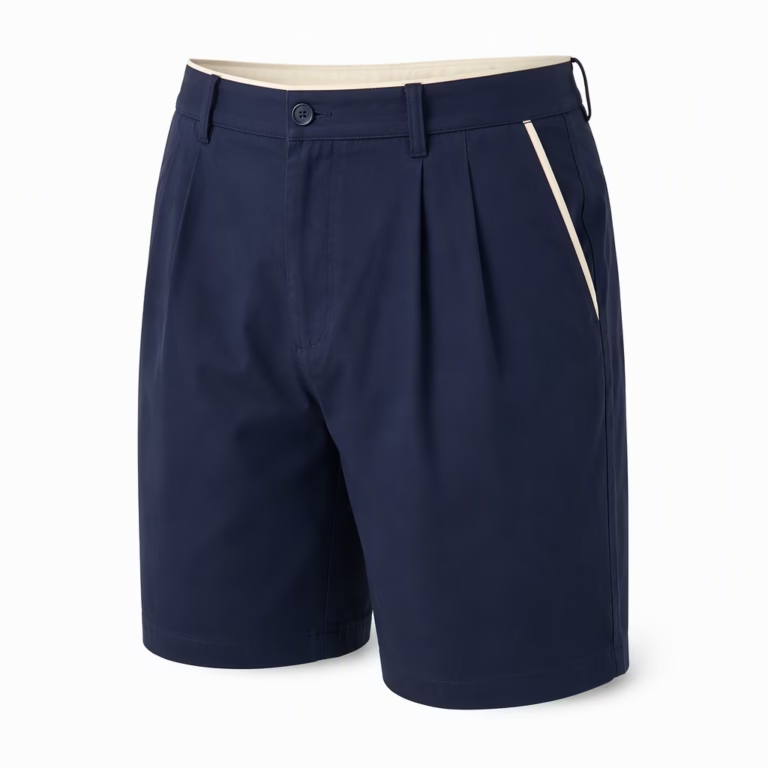
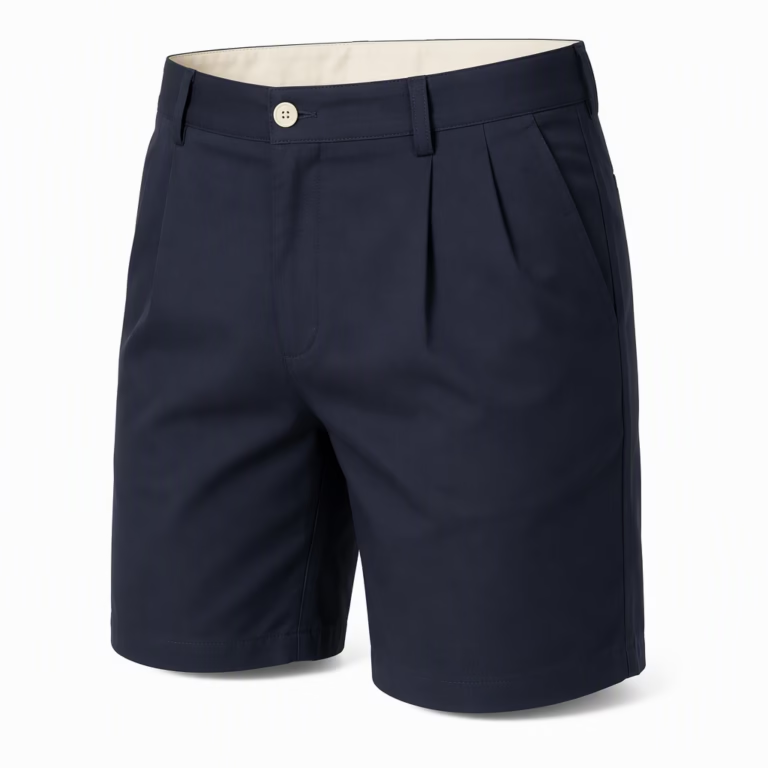
Men’s Pleated Golf Shorts
Estimated customization price:
-
For apparel brands, golf clubs and team programmes. Share a reference style, quantity and available specifications to start.
01 / MATERIALS & PERFORMANCE
Fabric Composition
Compare these blend options for your preferred fabric feel, stretch and care needs. The selected fabric determines the final material specification for the garment.
| Blend option | Useful application | Tradeoff |
|---|---|---|
| 95% polyester / 5% elastane | General golf movement with a smooth, easy-care shell | May feel less natural than a cotton blend |
| 90% polyester / 10% elastane | More stretch for bending and a closer fit | Higher stretch changes recovery, fabric feel and cost considerations |
| 92% nylon / 8% elastane | Smooth, flexible fabric for active wear | Can give a different surface feel and appearance from polyester |
| 97% cotton / 3% elastane | Cotton-led feel for a traditional casual golf short | May hold more moisture and require more care than a synthetic-led blend |
| 60% cotton / 37% polyester / 3% elastane | Balances cotton feel, shape support and moderate stretch | Offers less stretch than the higher-elastane options |
Recycled polyester or nylon can also be evaluated where the selected material route supports it. Pocket bags, waistband elastic and other components may use separate compositions.
Fabric Weight
GSM means grams per square meter and helps compare fabric weight. Use the following development targets to balance body, drape and seasonal use:
| Target weight | Fabric effect | Suitable use |
|---|---|---|
| 170 g/m² | Lighter drape with less body around the pleat | Warm-weather programs seeking a lighter feel |
| 190 g/m² | Moderate body with a balanced tailored drape | Versatile golf shorts across mild and warm conditions |
| 210 g/m² | More structure for pleat definition and a steadier leg line | Classic shorts where shape is a priority |
| 230 g/m² | Heavier body and fuller drape | Cooler conditions or a more substantial tailored feel |
Final fabric weight depends on the selected material and must be checked on the actual garment fabric or relevant component.
Fabric Construction
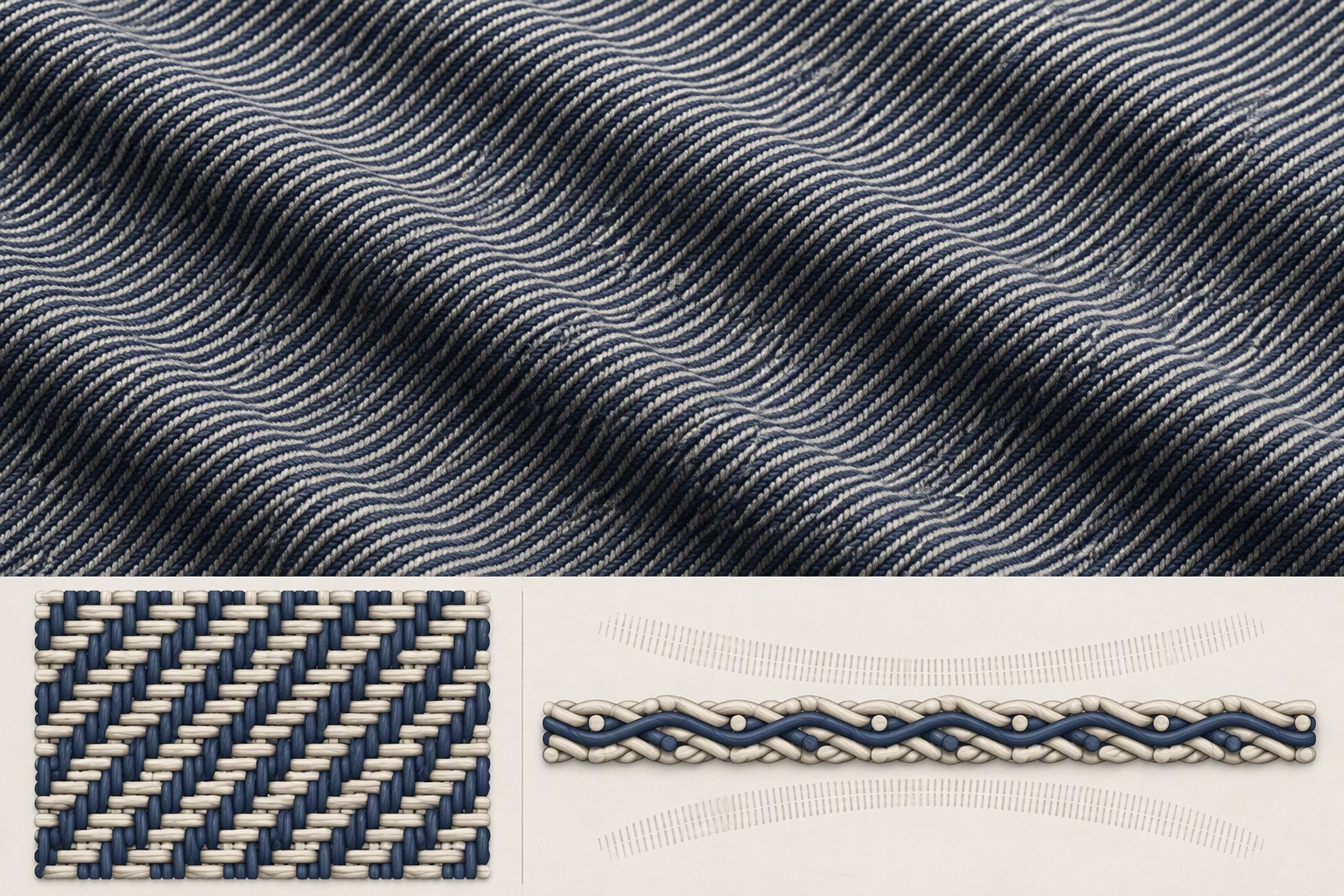
For these shorts, evaluate stretch plain weave, twill or a subtle textured woven structure. Plain weave can give a clean, even surface. Twill can add visible diagonal texture and a more structured appearance. A micro-texture can add surface interest while keeping the tailored silhouette restrained.
The weave, fiber blend, elastane level and finishing work together. Choose the construction against the pleat behavior, waistband comfort and desired leg line rather than judging composition alone.
Performance Features
Choose stretch when the wearer needs easier bending and a more active golf motion. A more open woven structure can improve airflow, while a lighter fabric can create a lighter feel in warm conditions. Moisture-management or easy-care finishes can be evaluated with the selected fiber and construction. A water-repellent finish may help with light surface moisture, but its suitability depends on the fabric and finish route. Confirm the chosen feature on the sample and in the order specification.
02 / FIT, SIZING & COLOR
Fit Options
Start with the waist and hip measurements, then set the rise, thigh room, leg opening and finished length. A regular fit balances ease and a classic outline. A slimmer fit narrows the thigh or opening and looks sharper, but leaves less room for movement. A roomier fit improves clearance through the seat and thigh, but creates a fuller leg line.
Check the shorts standing, bending and seated. The front pleat should open without pulling, the waistband should sit at the intended position, and the length should remain balanced with the chosen leg shape.
Sizes
Build the size chart around waist, hip, rise, thigh, leg opening and finished length. You can use numeric waist sizes or letter sizes, but the measurement table should define the actual garment points and desired body or garment measurements. Grading means adjusting the base garment pattern across sizes; review the larger and smaller sizes separately because pleat balance and leg shape can change as the pattern grows.
Send your intended US or customer size chart and planned size quantities. Confirm the size and color breakdown before quotation so the pattern and order plan match your program.
Color Options
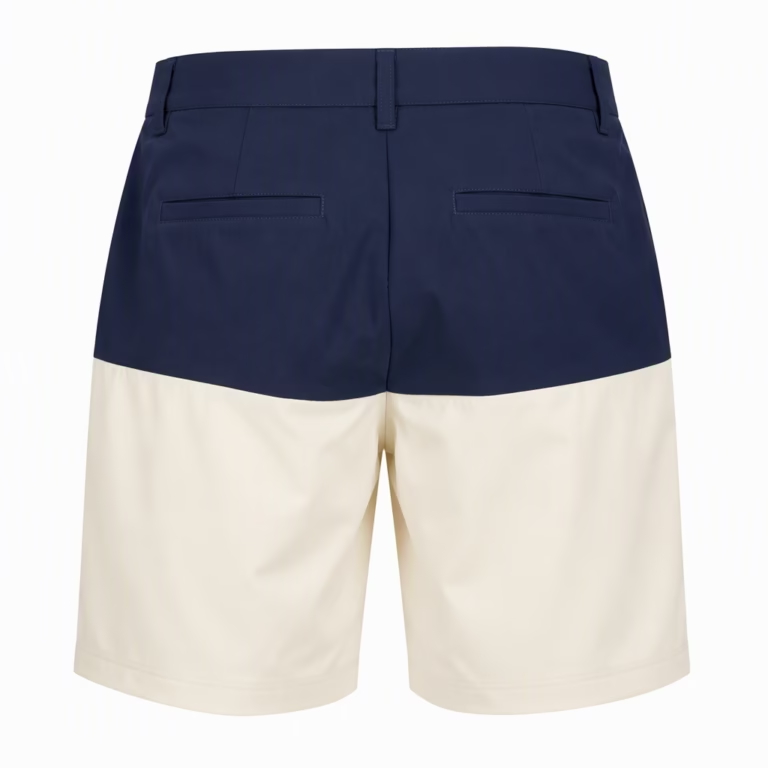
Choose black, navy, white or gray for a consistent core program, or evaluate seasonal colors and contrast panels for a more distinctive collection. Pantone color matching can be considered for a defined color target; approve the color against a physical color reference before production.
03 / GARMENT CONSTRUCTION
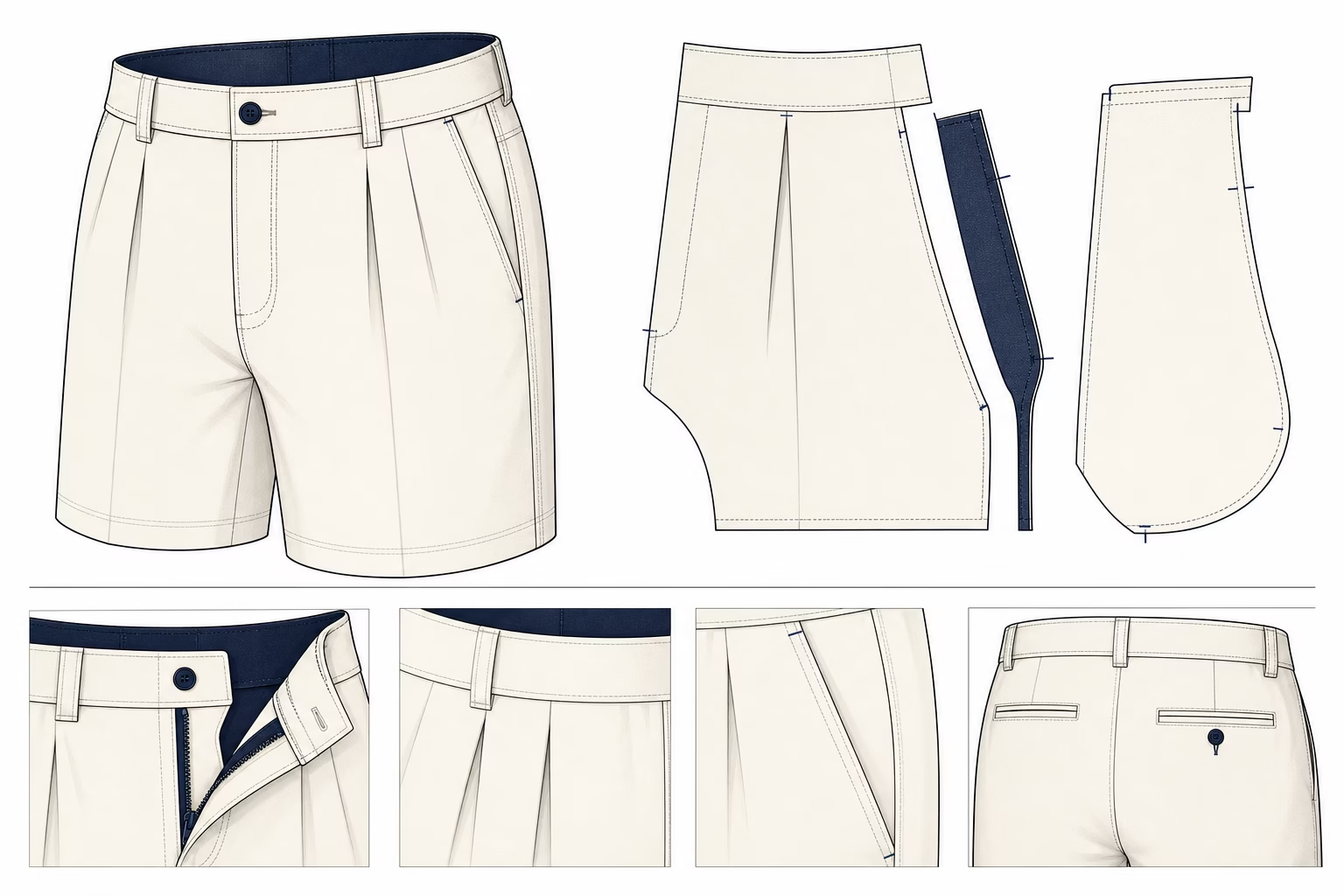
Construction concept / reference build.
Construction Details
The front pleat, waistband and pocket opening should work together as one fit system. The pleat needs to open without pulling across the waist or front rise, while the waistband should sit securely through standing, bending and a seated golf position. Pocket-mouth shape and reinforcement should be checked with the intended pocket contents so the opening does not distort the front.
Review the finished garment for even pleat registration, a smooth waist-to-hip transition, balanced left and right pocket openings, and a clean leg line. These checks help separate a classic tailored appearance from a short that feels restrictive or loses its shape visually.
04 / YOUR BRAND & PRODUCT SPECIFICATION
Logo Options
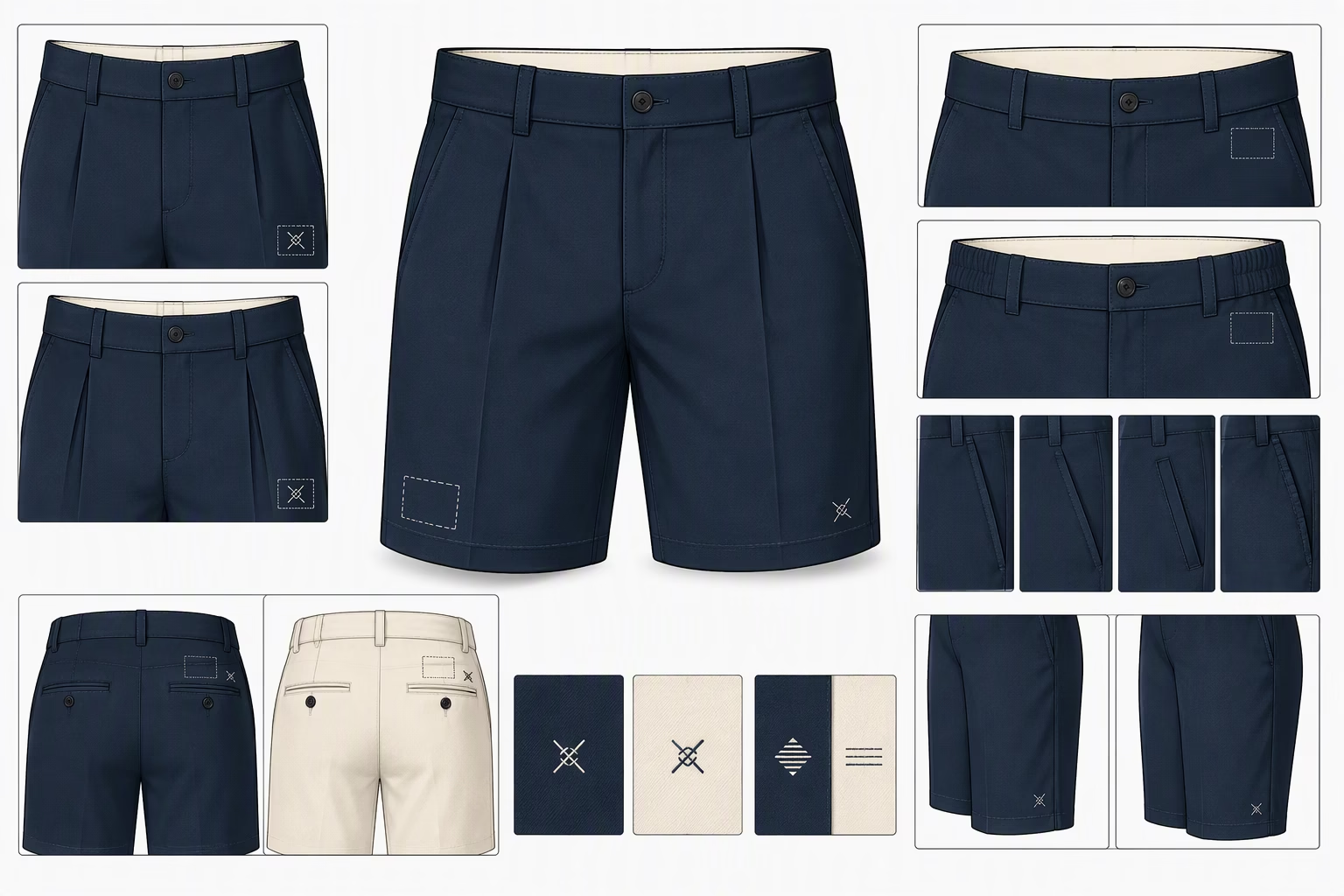
Choose the decoration method according to the shell fabric, stretch level, artwork size and desired position. Direct embroidery gives a raised stitched mark but needs careful backing and placement so the front does not feel bulky or distort around the pleat. An applied patch creates a separate decorated piece and can change the surface and weight. Heat transfer offers a smooth graphic surface, while screen printing suits simple artwork on a compatible area. Silicone marks or woven labels can provide a different texture and visual effect.
Typical areas to evaluate include the pocket area, back yoke or waistband region. Send vector artwork or a clear reference, preferred dimensions, colors and placement. Review the decoration on the actual sample, especially near stretch zones, pleats and pocket openings.
Customization Scope
Use this menu to define the base garment pattern. Select the options that support the intended fit and movement; combining every option is not required.
| Area | Choices | Purpose |
|---|---|---|
| Front | Single pleat, double pleat or limited pleat placement | Sets the classic look and front ease |
| Waist | Flat waistband or an active comfort waistband | Balances a tailored appearance with movement comfort |
| Leg shape | Regular, slimmer or roomier thigh and leg opening | Controls ease through the thigh and the visual taper |
| Length | Adjusted finished short length | Matches the intended coverage and style proportion |
| Pockets | Selected pocket-mouth shape and placement | Supports access while managing front distortion |
05 / ORDER & DEVELOPMENT PLANNING
Minimum Order Planning
Our MOQ is 300 pieces. Send your preferred quantity and intended waist-size and color breakdown so we can discuss the order details, selected fabric and customization scope.
Sample Lead Time
Sample lead time is 7–10 days. Use the sample to assess the waist and hip balance, rise and seated comfort, pleat depth and opening, thigh room and leg shape, finished length, fabric feel, and logo placement if decoration is included.
Bulk Lead Time
Bulk production lead time is 15–30 days. Send your desired delivery schedule with the quantity, fabric, color, size plan and decoration details so we can discuss the production timing for your order.
06 / APPROVAL & APPLICATION
Quality & Approval Checks
Use the selected fabric, size specification and sample details as references when agreeing quality requirements for this order.
| Quality point | Reference to compare | Why it matters |
|---|---|---|
| Material | Approved composition, construction and GSM reference | Confirms the selected fabric route and intended fabric body |
| Fit measurements | Waist, hip, rise, thigh, leg opening and finished length specification | Controls the men’s proportions and movement clearance |
| Pleat and waistband | Approved sample front and waistband appearance | Shows whether the pleat sits evenly and the waist-to-hip transition is balanced |
| Sewing and pockets | Sample seam appearance, pocket-mouth shape and component placement | Helps identify distortion, uneven alignment or an unsuitable pocket opening |
| Decoration | Approved artwork size, position and sample result | Checks that the mark is clear and does not interfere with pleats or stretch zones |
Suitable Bulk Buyers
- Traditional men’s golf brands: need a classic pleat, balanced waist-to-hip fit and consistent color program.
- Golf clubs and course programs: need a repeatable style with clear size planning and practical logo placement.
- Golf teams and event apparel buyers: need coordinated colors, decoration-ready areas and a defined delivery schedule.
Target Markets
For US programs, align the base pattern and size chart with the intended men’s measurements. For warm destinations, compare lighter weights and airflow against pleat definition; for cooler conditions, evaluate a heavier fabric with more body. Confirm color references, care wording and labeling needs against the destination market and your brand requirements.
What to Include in Your Enquiry
To prepare an inquiry, send your reference style, planned quantity, preferred waist-size and color breakdown, artwork if needed, and desired delivery date. Include a reference photo or initial idea when the technical specification is not ready.
Discuss Your Product Requirements
Share your reference style, estimated quantity, colors and available artwork. We can review a practical next step for your bulk project.