Which trim details matter most when I request a quotation?
The key inputs are trim type, placement, artwork, attachment method, color references, and whether the trim must match an existing brand standard.
Ninghow Golf applies custom trims to golf apparel programs that need clearer brand identity, better finish consistency, or tighter control over packaging details. Use this service when your trim package affects how the garment looks, fits, labels, or presents at retail, wholesale, or club distribution.
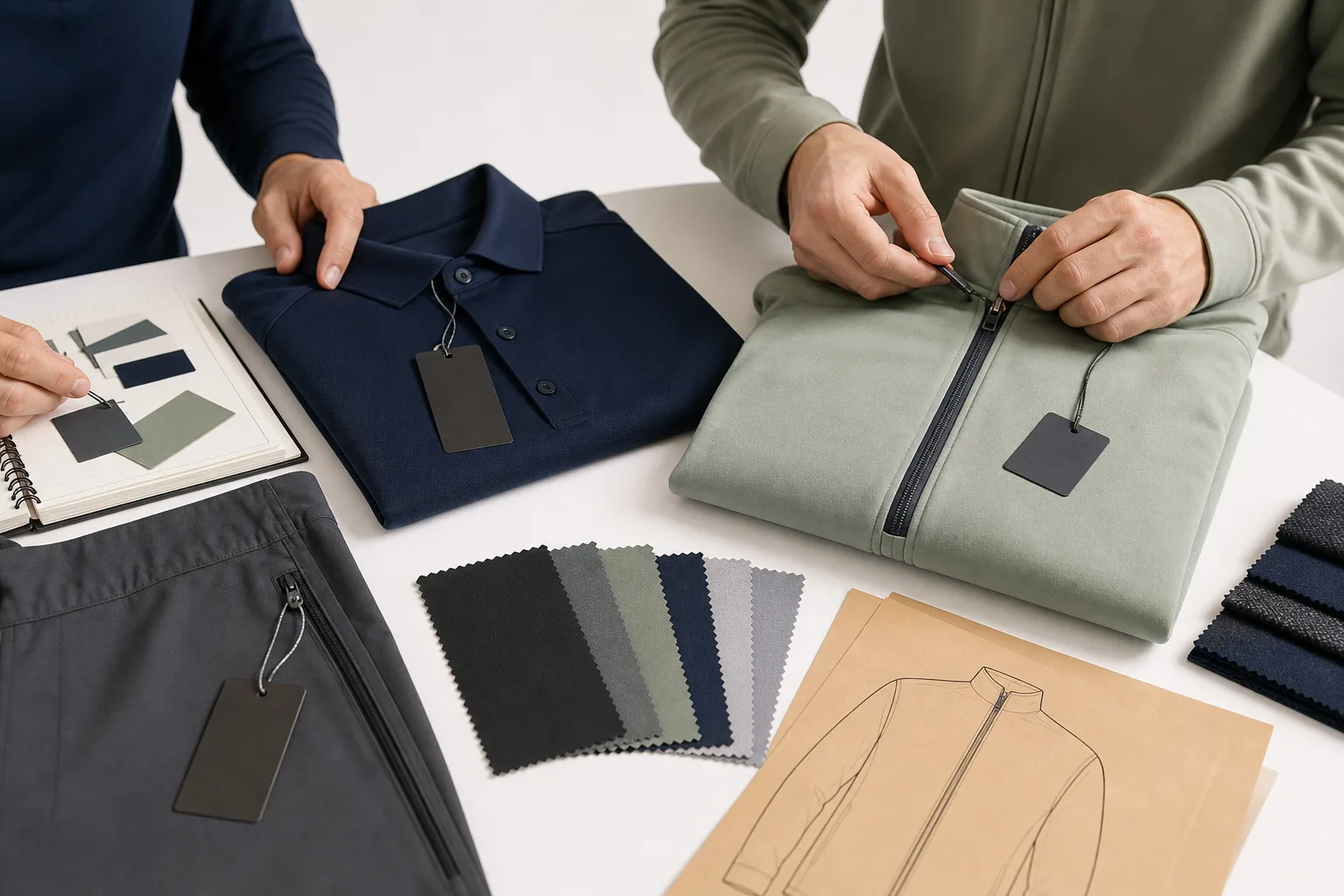
Custom trims are the parts added to a garment beyond the base fabric and sewing construction.
Trim choices should be settled early because they influence pattern planning, sample approval, material sourcing, and bulk.
Different garments use different trim structures.
Trim compatibility is not just a visual choice.
Custom trims are the parts added to a garment beyond the base fabric and sewing construction. For golf apparel, that may include hangtags, woven labels, care labels, size labels, zipper pullers, cord ends, patches, tape, binding, elastic details, and branded packaging components.
The right trim package depends on the garment type, the buyer channel, and how much brand presentation needs to happen before the product reaches the end user.
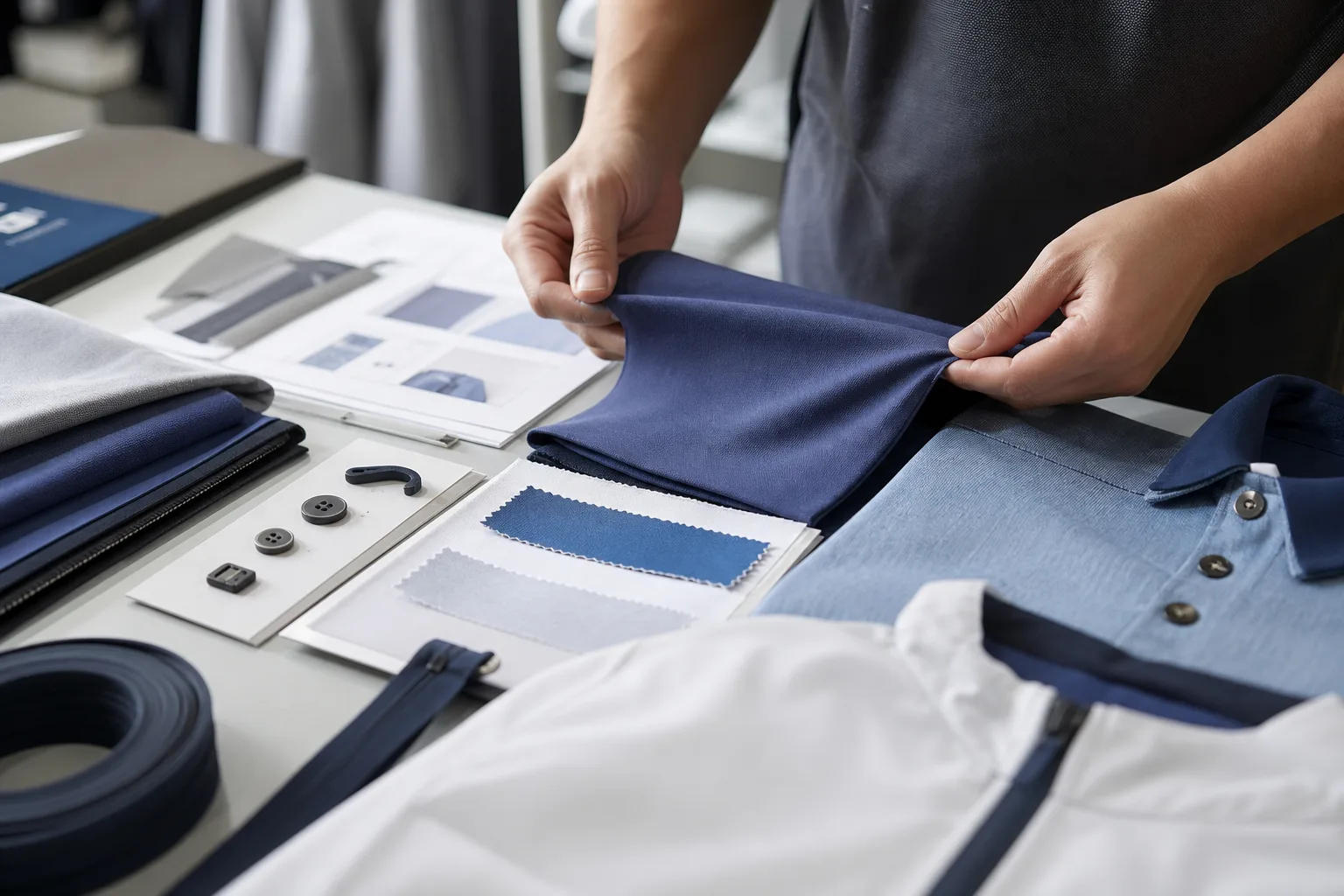
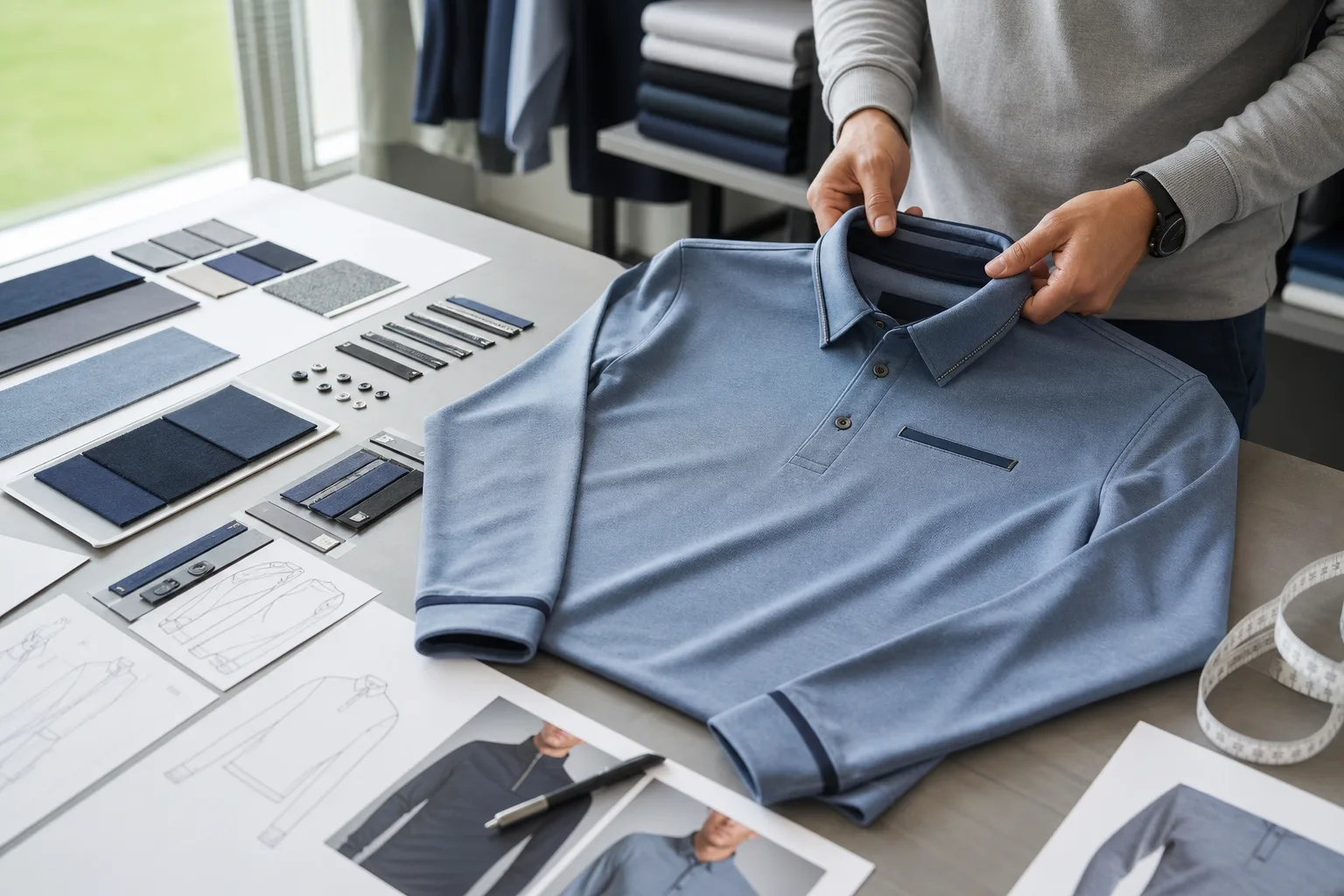
Trim choices should be settled early because they influence pattern planning, sample approval, material sourcing, and bulk production coordination. A small change in label type or closure detail can alter placement, stitch method, or component lead time.
For buyers comparing trim setups across collections, it is usually better to lock the trim spec before pre-production confirmation rather than after samples have been approved.
Different garments use different trim structures. A polo may need collar labels and button details, while outerwear may need zipper pullers, binding, and package inserts. Ninghow Golf can review the trim package against the intended garment and usage.
| Trim Area | Typical Use | Buyer Decision Point |
|---|---|---|
| Woven label | Main brand identification | Visibility, hand feel, and placement |
| Care label | Garment information and washing guidance | Content, language, and attachment method |
| Size label | Size marking for retail or team issue | Format consistency across the run |
| Hangtag | Retail presentation and branding | Artwork, paper stock, cord, and finish |
| Zipper puller | Functional branding on jackets or pullovers | Shape, durability, and logo readability |
| Patch or badge | Decorative or identity-driven marking | Placement, attachment, and edge finish |
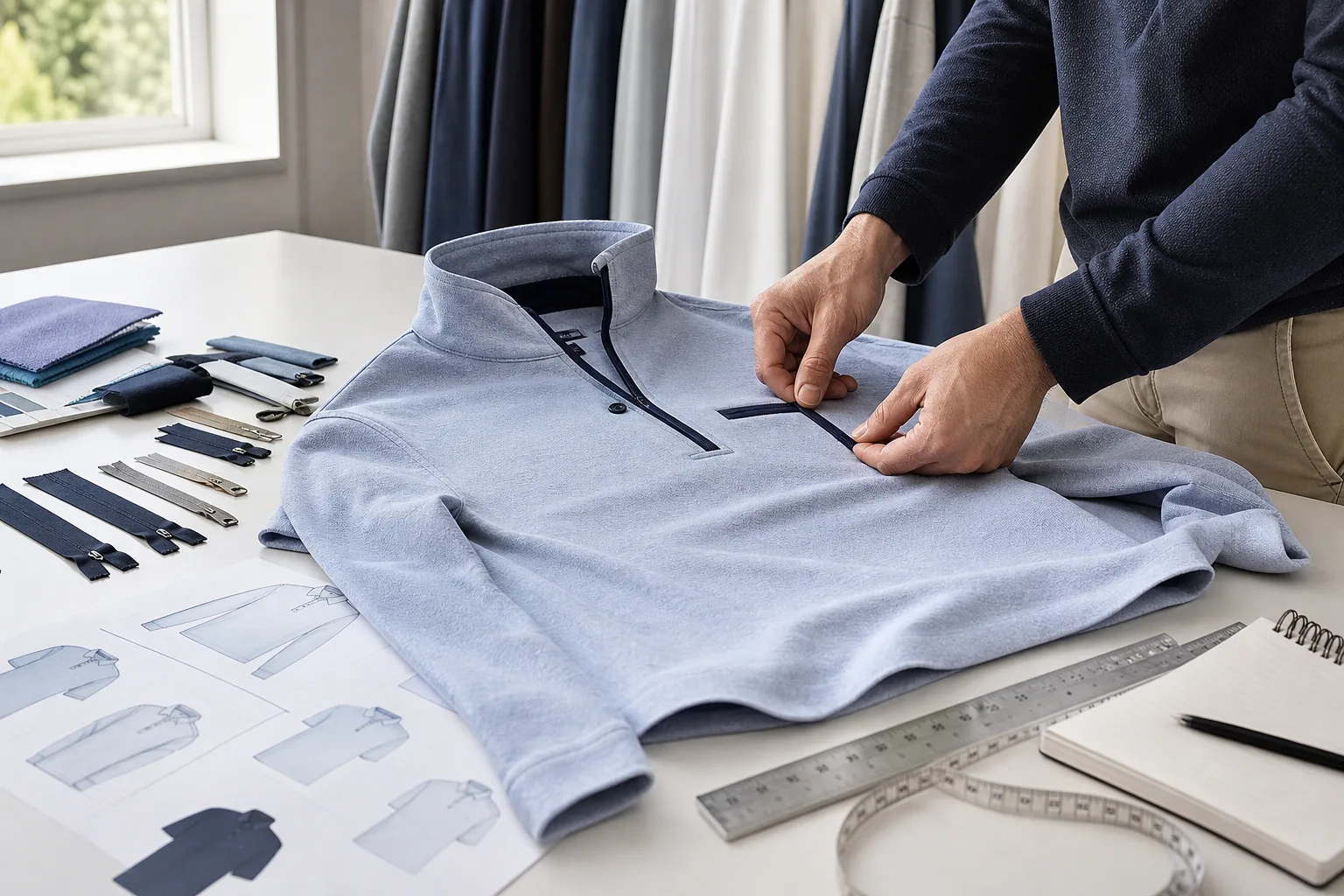
Trim compatibility is not just a visual choice. The material, attachment method, and location must work with the garment construction so the trim does not distort, curl, rub, or interfere with wear.
When a buyer provides a reference garment or inspiration image, the trim should be reviewed as a construction reference, not as a request to duplicate a protected design.
Custom trims are usually confirmed through the sample process so the buyer can review how the trim looks on the actual garment, not only as a flat artwork file. This helps catch placement issues, mismatch in finish, or unreadable labeling before bulk production begins.
Sample development timing varies by trim complexity, artwork readiness, and supply availability. Buyers should plan extra time when the trim package includes multiple components or special packaging parts.
The more specific the trim brief, the faster the review. A complete trim request should show where each trim item sits, how it attaches, and whether it must match an existing brand standard.
For broader product planning, see Custom Trims & Labels and Custom Packaging.
Trim application needs clear control at incoming material check, sample confirmation, and final inspection. If a trim component is off-spec, the issue can show up as a visible brand mismatch even when the garment itself is otherwise correct.
Ninghow operates from Shenzhen, Zhongshan, and Jiangxi, which supports development, production, and larger-order coordination. Timing and capacity remain planning references and depend on order structure, materials, and production scheduling.
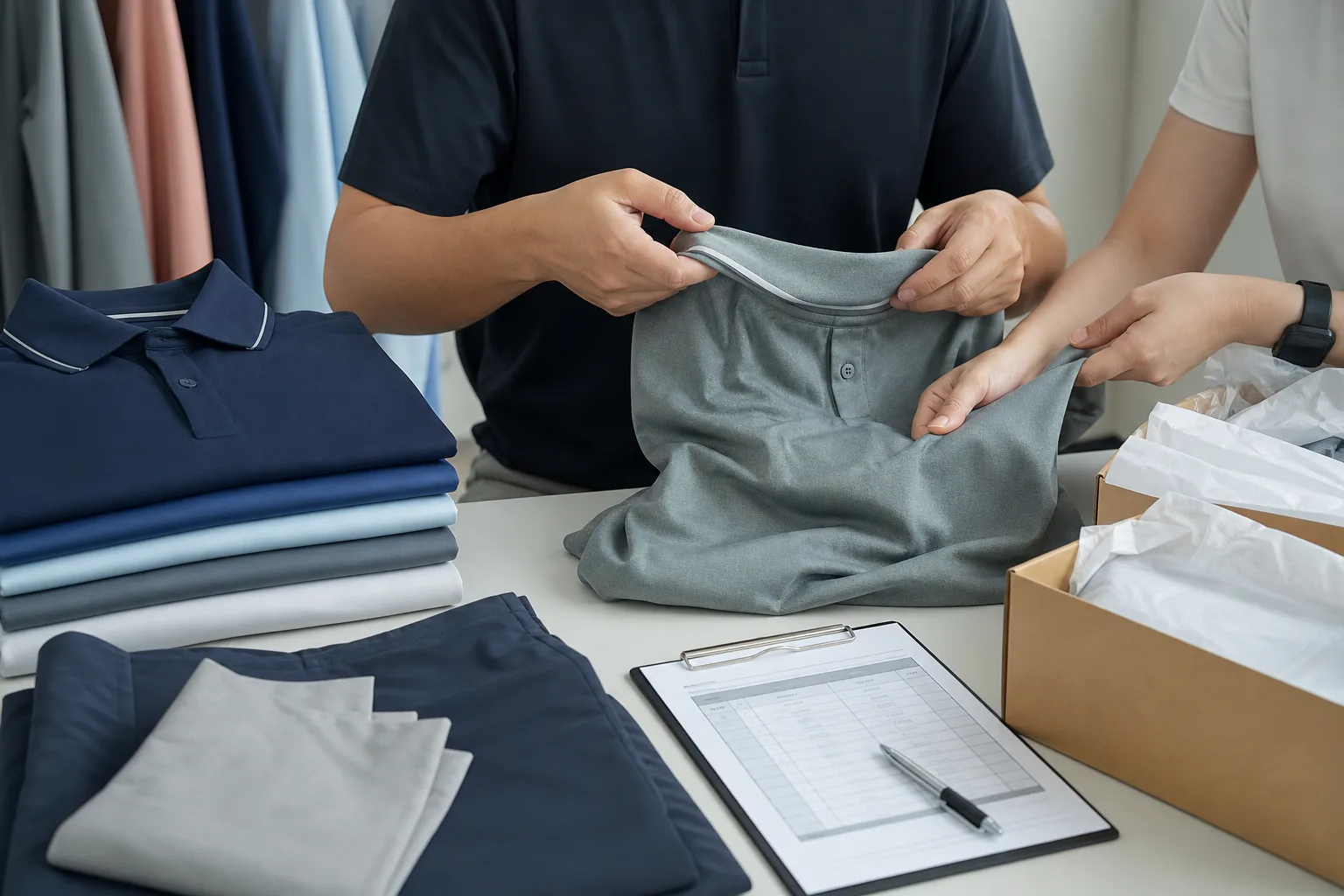
Send the trim list, artwork, garment reference, and packaging needs so Ninghow Golf can review feasibility and prepare a project-specific quotation.
Keep the project conversation practical with clear expectations around sampling, production and quotation inputs.
The key inputs are trim type, placement, artwork, attachment method, color references, and whether the trim must match an existing brand standard.
Yes. Some trims affect seam allowance, zipper planning, label placement, or finishing steps, so they should be reviewed before bulk production.
Labels are usually sewn into the garment, patches are attached as visible brand elements, and hangtags are retail presentation items that are not part of the garment structure.
Sample-garment review is safer because trim size, placement, and visual balance are easier to confirm in context than from artwork files alone.
Usually yes, if you provide a clear reference and the material, placement, and finishing requirements are feasible for the new garment.
No. Lead time depends on the trim type, material availability, artwork readiness, sampling revisions, and the overall production schedule.
Share product type, quantity, fabric direction, branding requirements and target timing so Ninghow Golf can suggest the most practical next step.