Which trims are most commonly customized for golf apparel programs?
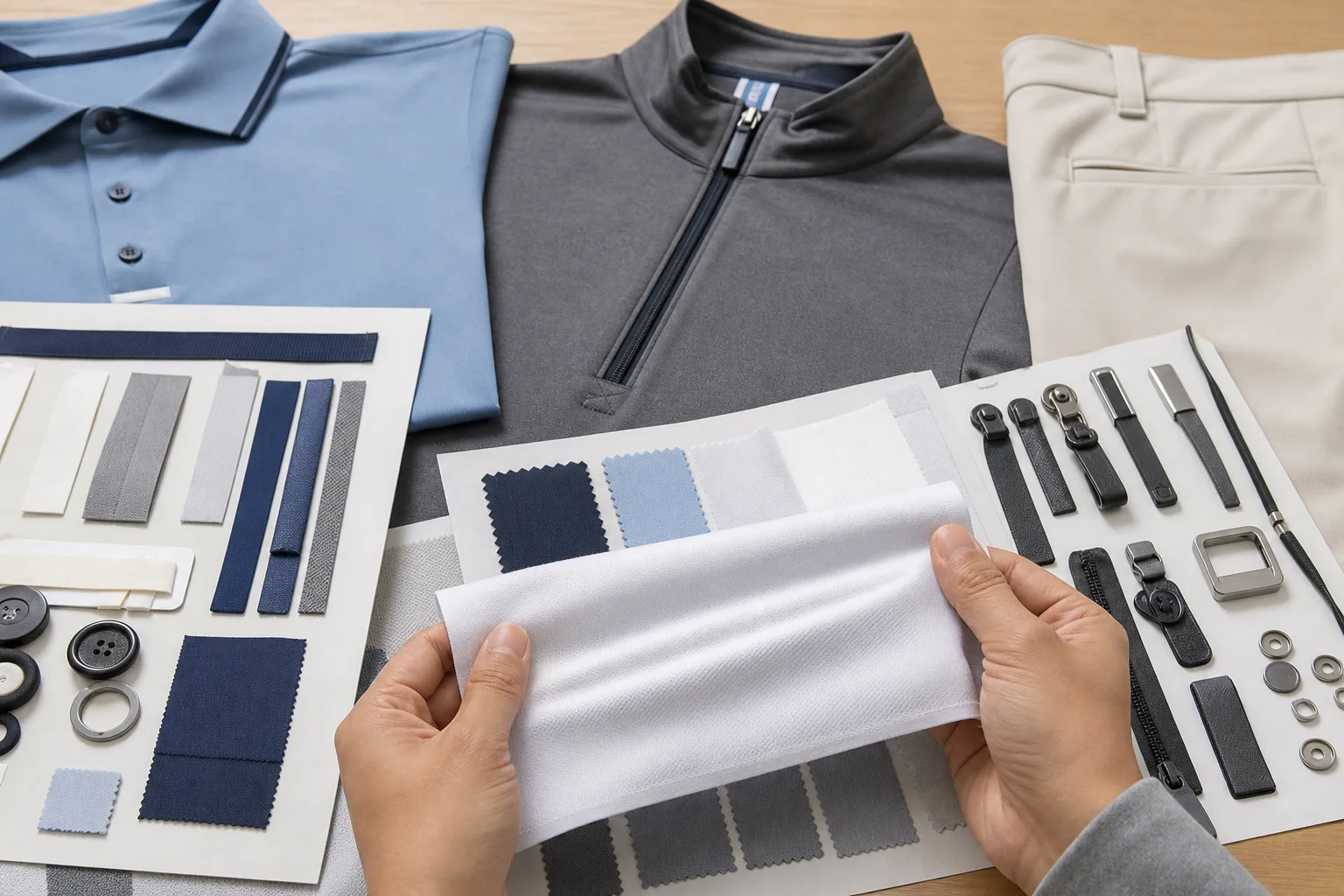
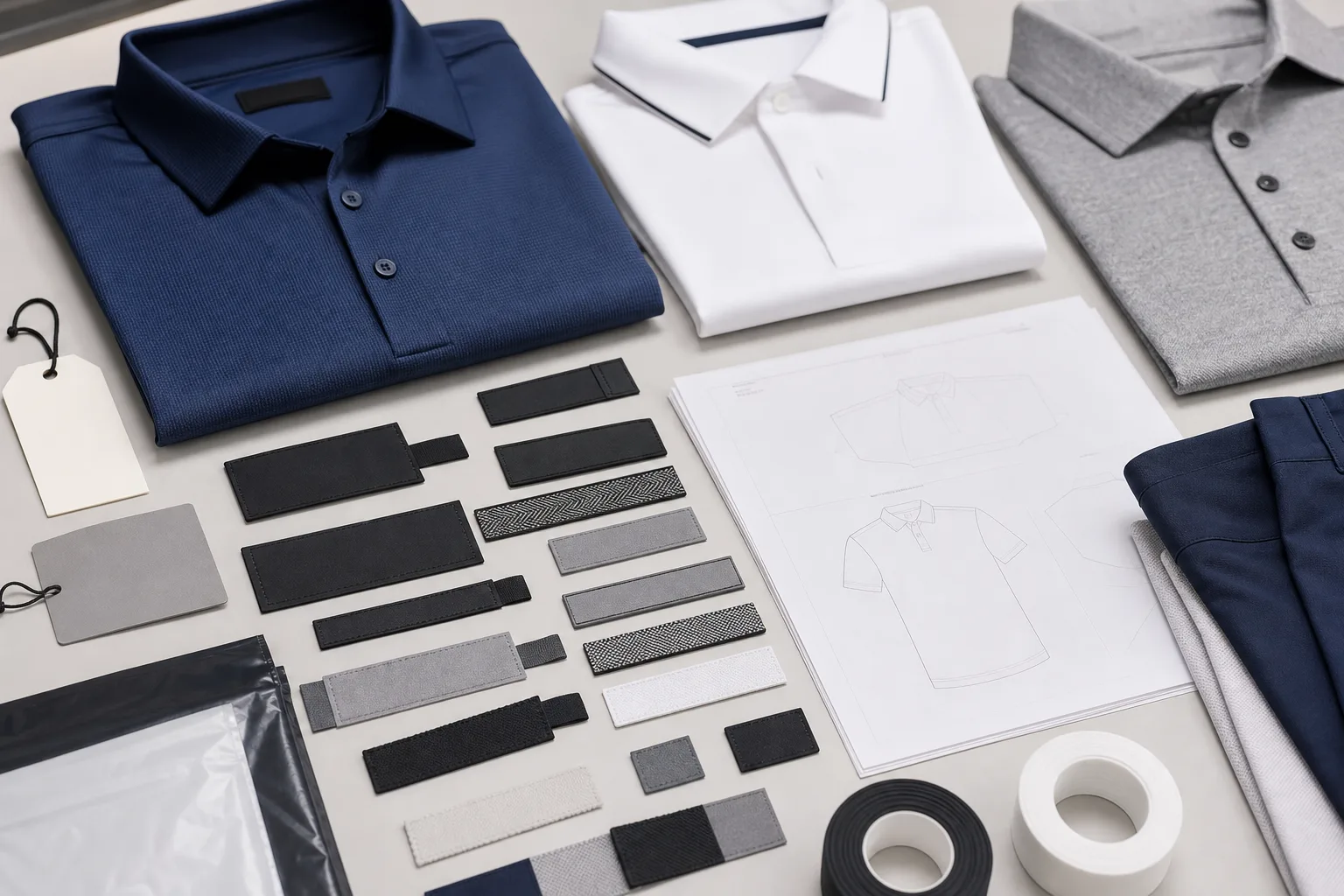
The most common items are main labels, size labels, care labels, hangtags, woven tabs, zipper pulls, rubber patches, and selected packaging-related tags or stickers. The right mix depends on the garment category, brand position, and how the products will be sold or distributed.
How do I decide between a woven neck label and a heat transfer label?
Lightweight performance garments often use heat transfer neck branding for comfort, while woven labels are more common on structured garments or programs that want a more traditional retail finish. The choice should consider fabric weight, wearer comfort, artwork detail, and wash-performance expectations.
What information is needed to quote custom trims and labels accurately?
A useful starting pack includes the garment type, trim list, artwork files, dimensions, color references, estimated quantity, attachment method, and any destination-market labeling requirements already known. Sharing whether the same trim will be used across several styles also helps.
Can trims and labels be reviewed together with garment samples?
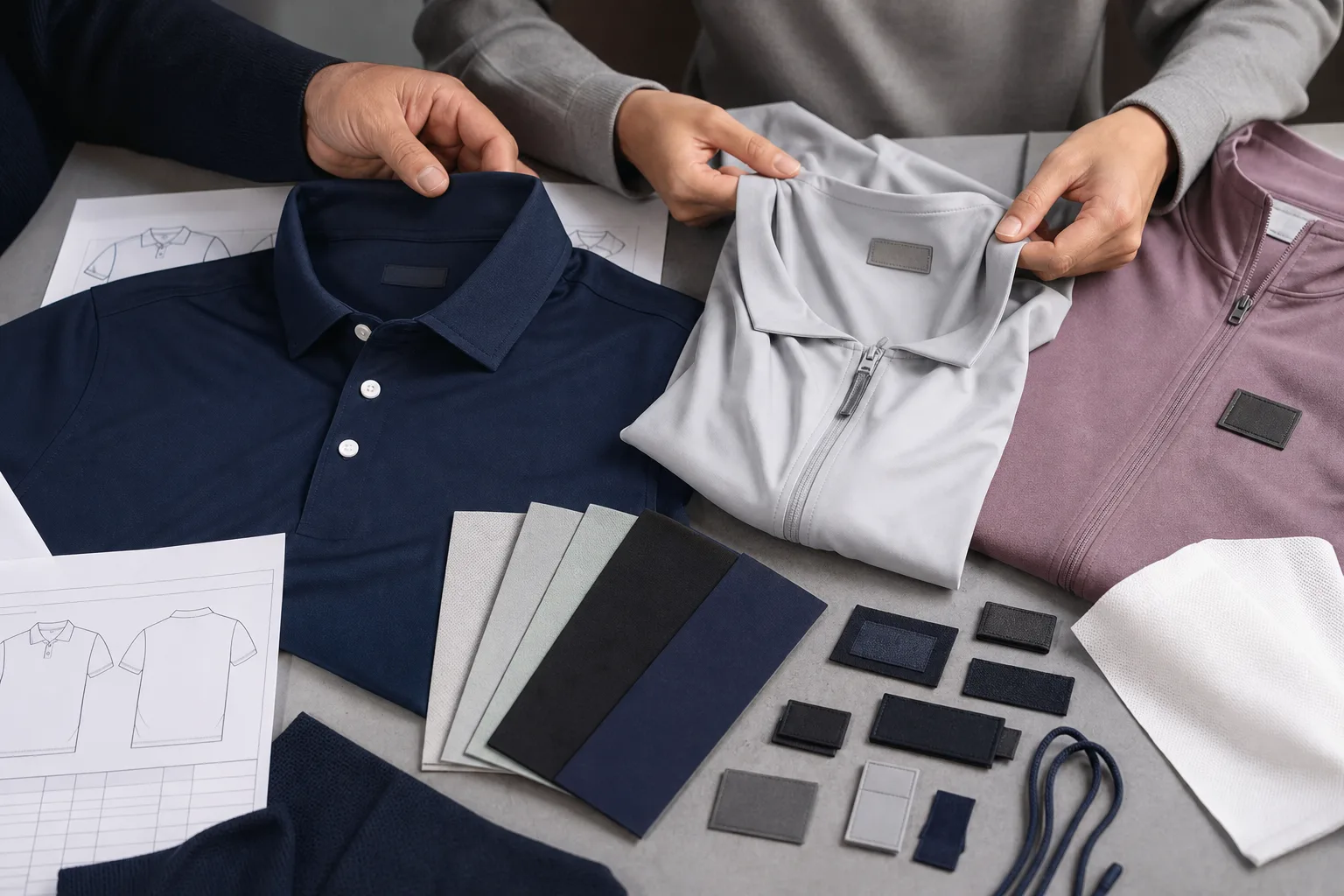
Yes. That is usually the better approach because scale, position, color, and attachment quality are easier to judge on the actual garment. Timing remains conditional and may depend on artwork approval, trim sourcing, and sample revision needs.
What usually causes delays in trim approval?
Common causes include unclear artwork, missing label text, unresolved color references, changes to garment placement after sampling, and late updates to packaging or destination labeling requirements.
Are custom trim minimums the same as garment minimums?
Not always. Minimums may vary depending on the trim type, material, number of colors, size breakdown, packaging setup, and whether the trim is shared across multiple styles or colorways.