Comparison Page

Embroidery vs Printing for Golf Shirts

Choosing between embroidery and printing affects logo appearance, garment feel, decoration cost, and production planning for custom golf shirts. For golf brands, clubs, tournaments, and private label programs, the right method depends on artwork style, fabric type, logo placement, and order structure. Ninghow Golf supports custom golf apparel programs with logo application planning, sample review, and production coordination so buyers can match decoration method to product positioning before bulk approval.

embroidery vs printingCompare embroidery vs printing for golf shirts, including logo detail, fabric impact, cost drivers, lead-time factors, and.

Product Programs

Embroidery builds the logo with thread stitched into the garment.

Buyer Types

Embroidery is commonly chosen when the golf shirt program needs a more traditional, structured, or badge-like logo.

Development Support

Printing is often the stronger choice when the artwork contains multiple colors, fine lines, tonal changes, or larger.

Resource Path

Golf shirts are often made from performance knits with stretch, moisture-management finishes, or smooth technical surfaces.

Core Comparison

How embroidery and printing differ on golf shirts

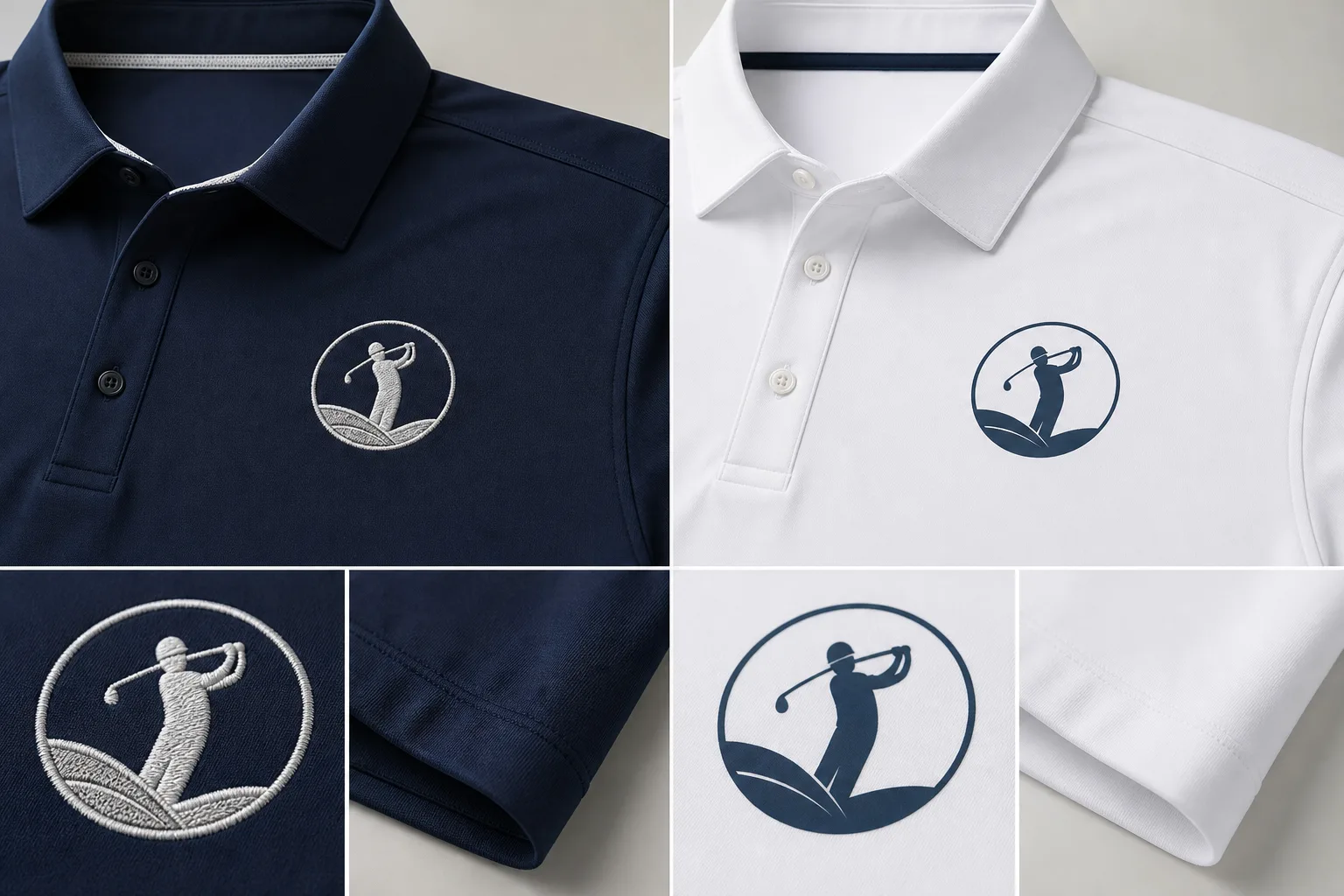
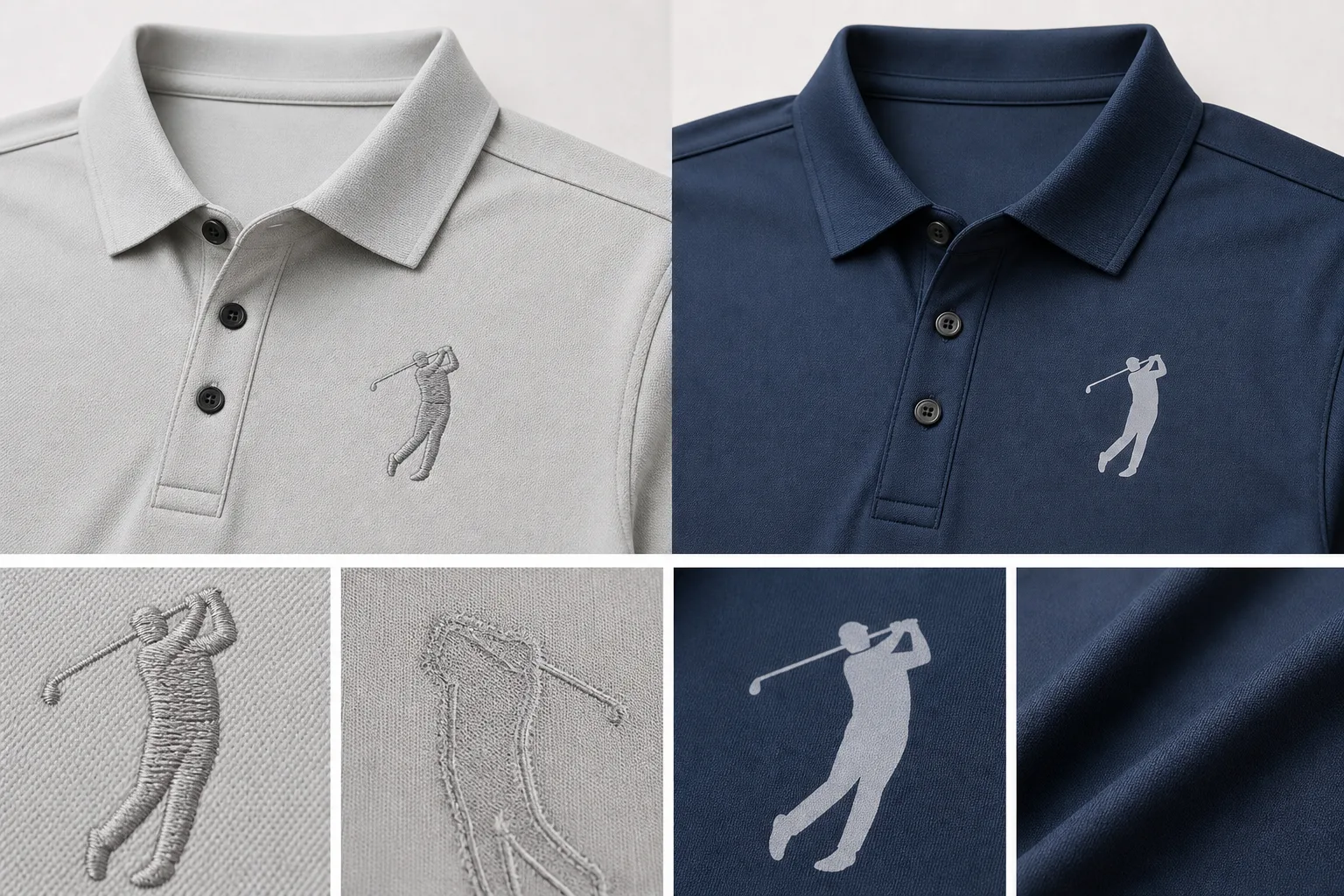
Embroidery builds the logo with thread stitched into the garment. Printing applies artwork onto the fabric surface using an appropriate print process. Both can work on golf shirts, but they create different visual and performance results.

Factor Embroidery Printing
Appearance Textured, raised, structured finish Flat, smooth, graphic surface
Best artwork style Simple logos, initials, crests, small chest marks Detailed graphics, gradients, larger designs, multi-color artwork
Fabric impact Adds weight and backing to the logo area Usually lighter hand feel when matched correctly to fabric
Typical placements Left chest, sleeve, back neck Chest, sleeve, full back, larger panel graphics
Detail limitations Very small text and fine lines may lose clarity Fine detail generally reproduces more accurately
Premium perception Often used for classic club and corporate looks Often used for modern brand graphics and promotional visuals
Golf shirt decoration samples showing embroidery and printing differences
Buyer Scenarios

When embroidery is usually the better fit

Embroidery is commonly chosen when the golf shirt program needs a more traditional, structured, or badge-like logo presentation. It is especially suitable for left-chest branding on club polos, country club staff apparel, and corporate event shirts where the mark is relatively simple and compact.

  • Club and crest logos: works well for shapes with clear borders and limited small interior detail.
  • Corporate golf apparel: supports a refined look for sponsor, host, or employee uniforms.
  • Retail polos with understated branding: suitable when the brand wants a durable, visible chest mark without large graphics.
  • Programs using thicker piques or structured knits: these fabrics often carry embroidery cleanly.

If your project focuses on premium polo construction, logo position, and collar presentation, the parent category page for custom golf polo shirts covers broader garment considerations.

Print Scenarios

When printing is usually the better fit

Printing is often the stronger choice when the artwork contains multiple colors, fine lines, tonal changes, or larger placements that embroidery cannot reproduce cleanly. It can also be preferable on lighter performance fabrics where buyers want to avoid added density at the logo area.

  • Modern brand graphics: useful for sharp logo edges, larger chest graphics, and bold promotional visuals.
  • Tournament and event shirts: suitable when multiple sponsor marks or short-run graphic layouts are involved.
  • Lightweight performance polos: may preserve stretch and drape better depending on print method and placement.
  • Large back logos or statement artwork: generally easier to execute through printing than embroidery.

For buyers comparing available decoration processes in production, apparel printing and golf apparel embroidery cover capability-specific considerations.

Golf shirt decoration samples showing embroidery and printing differences
Fabric and Wear

How fabric type changes the decoration decision

Golf shirts are often made from performance knits with stretch, moisture-management finishes, or smooth technical surfaces. The same artwork can behave differently across pique, interlock, jersey, recycled polyester blends, and spandex-rich fabrics.

Embroidery considerations on golf fabrics

  • Light or highly stretchy fabrics may show puckering if stitch density, backing, or stabilization is not matched correctly.
  • Very fine-gauge knits may not support tiny lettering as cleanly as structured piques.
  • Large embroidered areas can reduce softness and flexibility in the decorated zone.

Printing considerations on golf fabrics

  • Surface smoothness affects edge sharpness and color consistency.
  • Heat sensitivity and fabric composition influence print selection and artwork approval.
  • Dark colors, contrast requirements, and finish compatibility may affect print build and strike-off review.

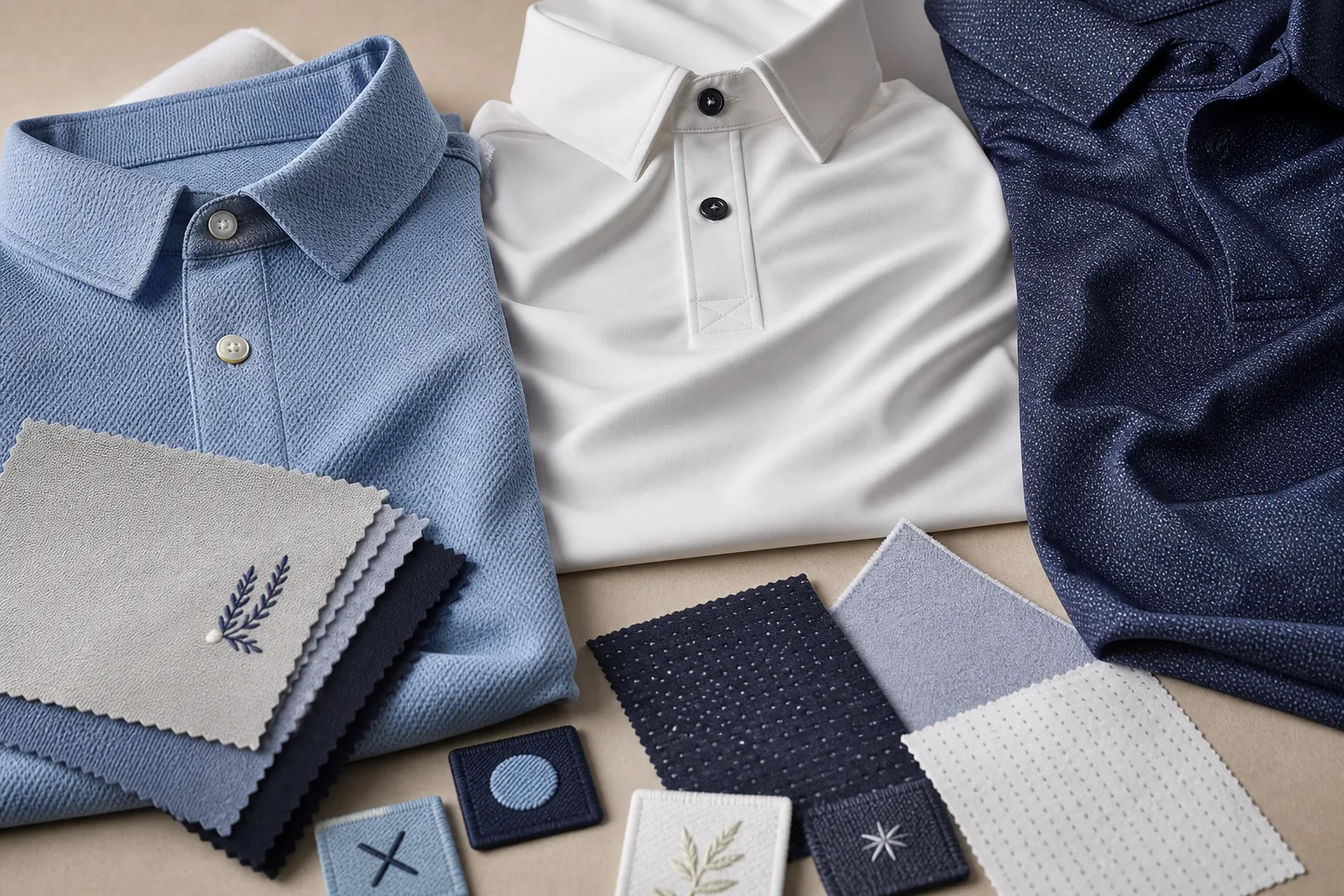
Fabric choice should be reviewed together with decoration method, especially for private label performance collections. Buyers still evaluating material options can compare sourcing considerations on golf apparel fabric guide.

Artwork Limits

Logo detail, size, and placement limits to review before sampling

The decoration method should be selected after reviewing the actual logo file, intended size, and placement map. A small left chest crest and a large center-front fashion graphic should not be evaluated the same way.

  • Small text: printing usually holds small text and thin strokes more accurately than embroidery.
  • Filled areas: large stitched fills can become heavy, while prints usually keep a flatter hand feel.
  • Sleeve logos: both methods can work, but logo width, seam position, and sleeve opening affect the result.
  • Back neck marks: embroidery suits compact marks; printing may suit finer detail or minimal feel requirements.
  • Multiple placements: method mix is possible, such as embroidery on chest with printing on sleeve or back, depending on program needs.

For file preparation and branding options across golf apparel programs, see custom logo options.

Golf shirt fabric swatches with embroidery and printing sample patches
Cost and Timing

Cost drivers and lead-time factors are not the same

Neither embroidery nor printing is always the lower-cost option. Cost depends on artwork complexity, size, number of colors, placement count, order quantity, fabric behavior, and approval requirements.

Embroidery cost drivers

  • Stitch count and logo size
  • Number of placements per garment
  • Backing, stabilization, and setup needs
  • Revision rounds after first logo sew-out

Printing cost drivers

  • Print method matched to artwork and fabric
  • Color count, coverage area, and placement size
  • Strike-off approval needs
  • Artwork complexity and exact color expectations

Development timing is also conditional. Sample review may take longer if decoration tests reveal puckering, edge issues, color adjustments, or placement changes. Buyers planning a broader sourcing program can use the custom golf apparel cost guide for additional budgeting context.

Quality Review

What buyers should inspect on sample golf shirts

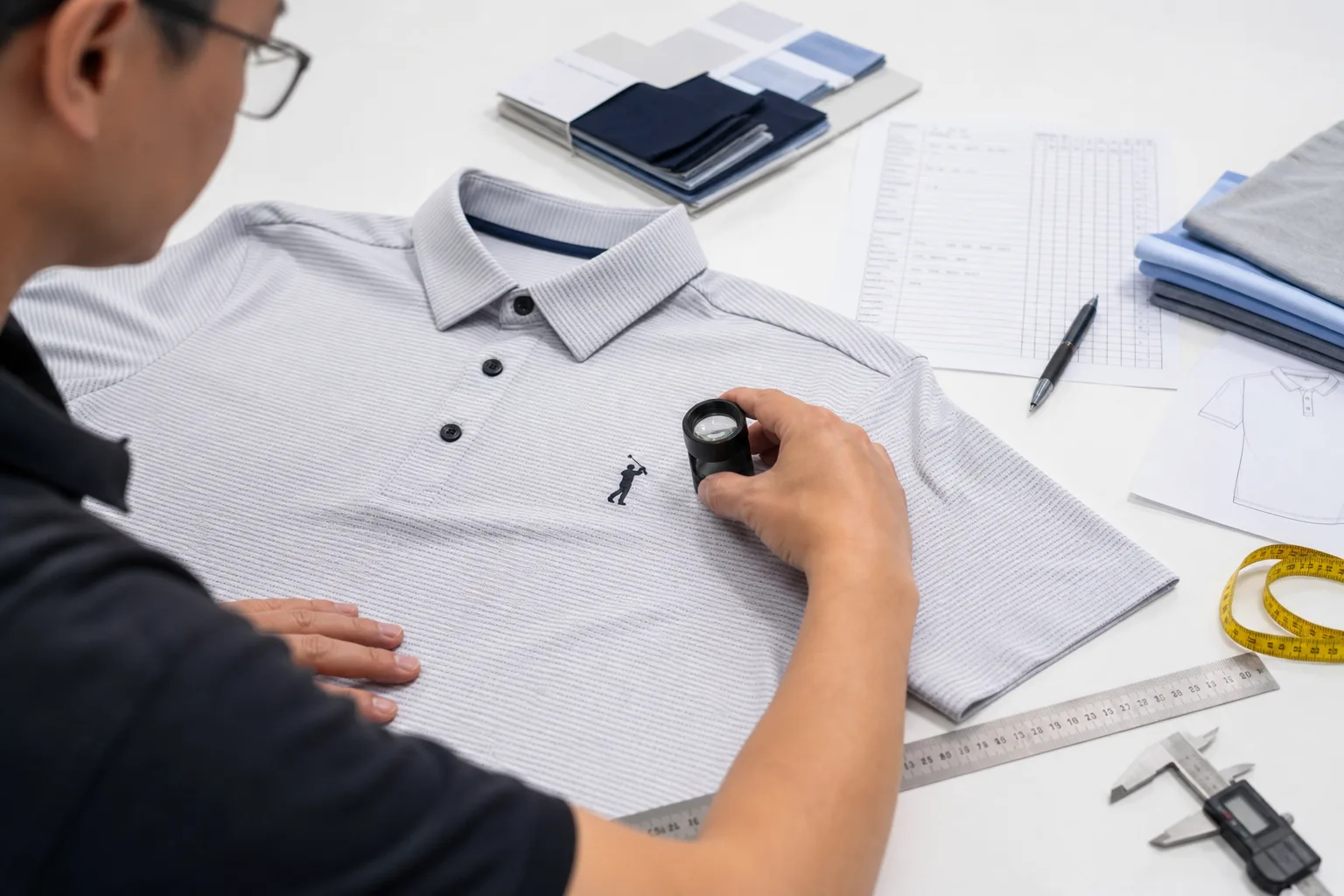
A decoration approval should not focus only on logo appearance in a flat photo. The sample should be checked on the actual garment because golf shirts need to maintain both branding quality and wearable comfort.

  • Embroidery sample checks: thread coverage, edge cleanliness, backing feel, puckering, alignment, and distortion around the decorated area.
  • Printing sample checks: line sharpness, color consistency, adhesion appearance, hand feel, placement accuracy, and reaction on stretch zones.
  • Shirt-specific checks: collar shape, placket alignment, chest placement balance, sleeve opening symmetry, and logo position consistency between sizes.

If the order requires structured pre-production approval and inspection planning, buyers can review related controls at pre-production approval and quality control process.

Golf shirt sample being checked for logo placement and print quality
Selection Guide

How to choose the right method for your golf shirt program

The best decision usually comes from matching decoration to brand intent, product tier, and actual garment construction rather than selecting a method in isolation.

  1. Start with artwork: determine whether the logo is simple and badge-like or detailed and graphic-heavy.
  2. Check fabric behavior: review whether the shirt fabric is structured enough for embroidery or better suited to a lighter print application.
  3. Confirm placement plan: small chest logos and large back graphics often point toward different methods.
  4. Review brand positioning: classic club polos often favor embroidery, while fashion-forward or event-driven graphics often favor printing.
  5. Approve a real sample: use the intended fabric, color, and garment construction before bulk confirmation.
Quote Inputs

Information to prepare before requesting decoration guidance

To compare embroidery and printing accurately for golf shirts, buyers should provide a short but usable technical brief.

  • Logo artwork file or clear reference image
  • Expected logo size and placement
  • Golf shirt fabric type or target material
  • Estimated order quantity and colorways
  • Target buyer group, such as club, retail, tournament, or corporate use
  • Any preference for premium look, soft hand feel, or larger visual impact

Request a Quote for method comparison based on your shirt specifications, or Upload Your Tech Pack if your artwork, measurements, and placements are already defined.

Golf shirt decoration samples showing embroidery and printing differences
Common Questions

Answers buyers usually need before starting

Keep the project conversation practical with clear expectations around sampling, production and quotation inputs.

Is embroidery always better for golf shirt logos?

No. Embroidery often suits small, simple, premium-looking logos, but printing can be the better option for fine detail, larger graphics, lightweight fabrics, or designs that need a smoother hand feel.

What kind of golf shirt artwork is difficult to embroider?

Very small text, thin lines, gradients, and highly detailed multi-color artwork can be difficult to reproduce cleanly in embroidery, especially at small chest-logo size.

Can one golf shirt use both embroidery and printing?

Yes. Some programs use embroidery for a left-chest logo and printing for a sleeve mark or back graphic. Suitability depends on fabric, placement, artwork, and the overall product positioning.

Does printing affect stretch and comfort less than embroidery?

In many cases, printing can keep a lighter feel than dense embroidery, especially on stretch performance fabrics, but the result depends on print method, coverage area, and fabric composition.

What should be submitted for an accurate embroidery vs printing recommendation?

Provide the logo artwork, target shirt fabric, decoration size, placement, expected quantity, colorways, and any preference for classic premium appearance versus lighter graphic presentation.
Start a Project

Build your next golf clothing program with a clearer production path.

Share product type, quantity, fabric direction, branding requirements and target timing so Ninghow Golf can suggest the most practical next step.

Scroll to Top