Product Category Page

Custom Golf Windbreakers

Develop golf windbreakers for changing course conditions, team programs, retail collections, and branded event apparel. Ninghow Golf supports custom cut-and-sew production, material sourcing, logo application, and private label development for B2B golf apparel programs. If you are comparing lightweight outerwear options, preparing a seasonal launch, or building a uniform range that layers over polos and base layers, share your requirements and move into sampling with a clearer product brief.

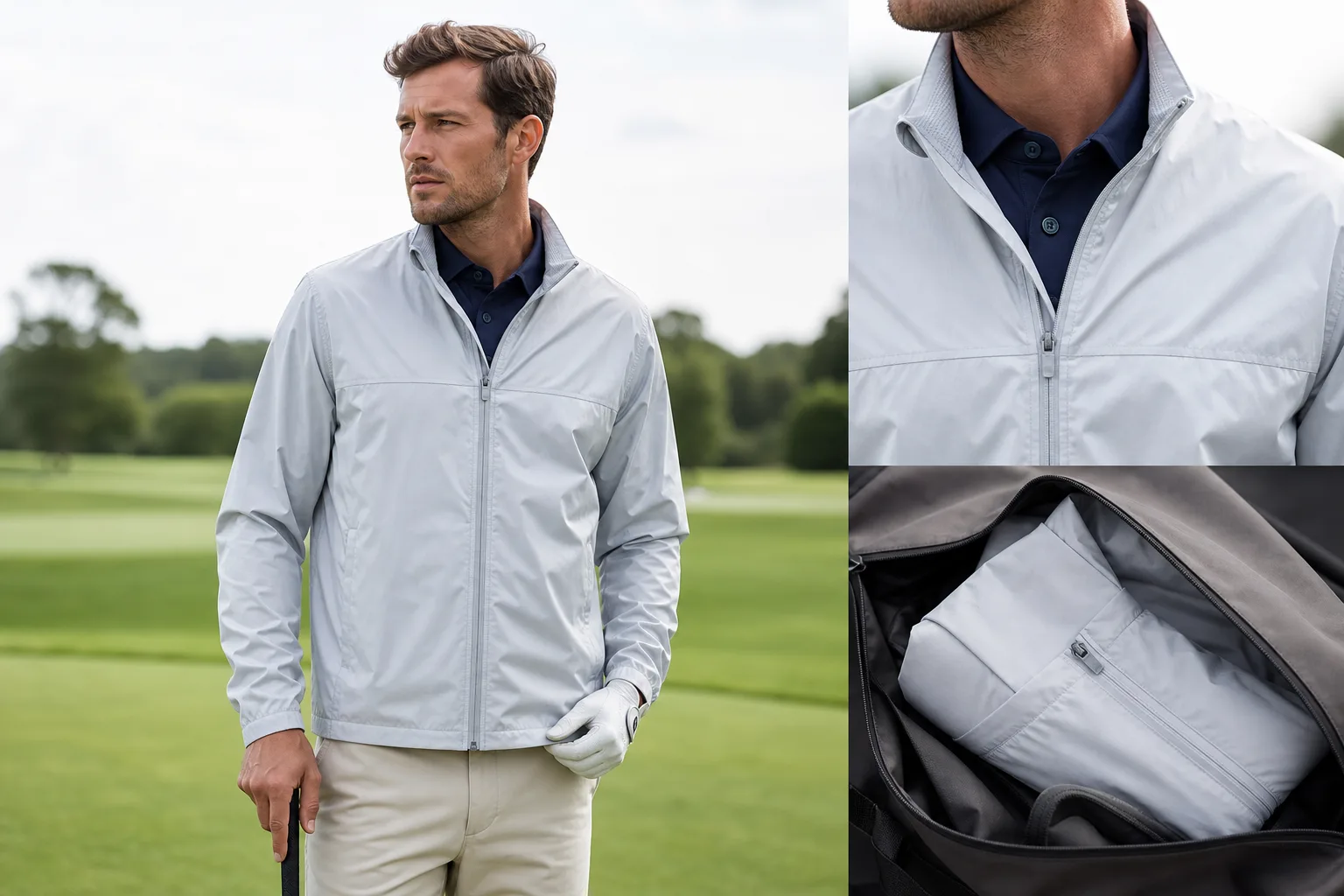
Custom golf windbreakers worn on a golf course in lightweight styles
golf windbreakersDevelop custom golf windbreakers with lightweight fabrics, branding options, fit planning, and OEM support for clubs,.

Product Programs

Golf windbreakers are designed for players and staff who need lightweight weather protection without the heavier structure.

Buyer Types

The right golf windbreaker depends on how the garment is expected to move during a swing, how much weather exposure it will.

Resource Path

Windbreaker fabric decisions are not only about blocking wind.

Project Planning

Golf windbreakers often sit between fashion outerwear and team uniform needs.

Product Role

Built for golf layering, wind protection, and packable use

Golf windbreakers are designed for players and staff who need lightweight weather protection without the heavier structure of insulated jackets. They are commonly used for breezy tee times, shoulder-season club programs, tournament kits, travel apparel, and promotional outerwear that needs to pack easily.

Compared with heavier golf jackets, windbreakers usually prioritize lower weight, easier movement, and simple layering. Buyers often choose this product when they need a clean branded outerwear piece that works over polos, base layers, or quarter-zips without adding too much bulk.

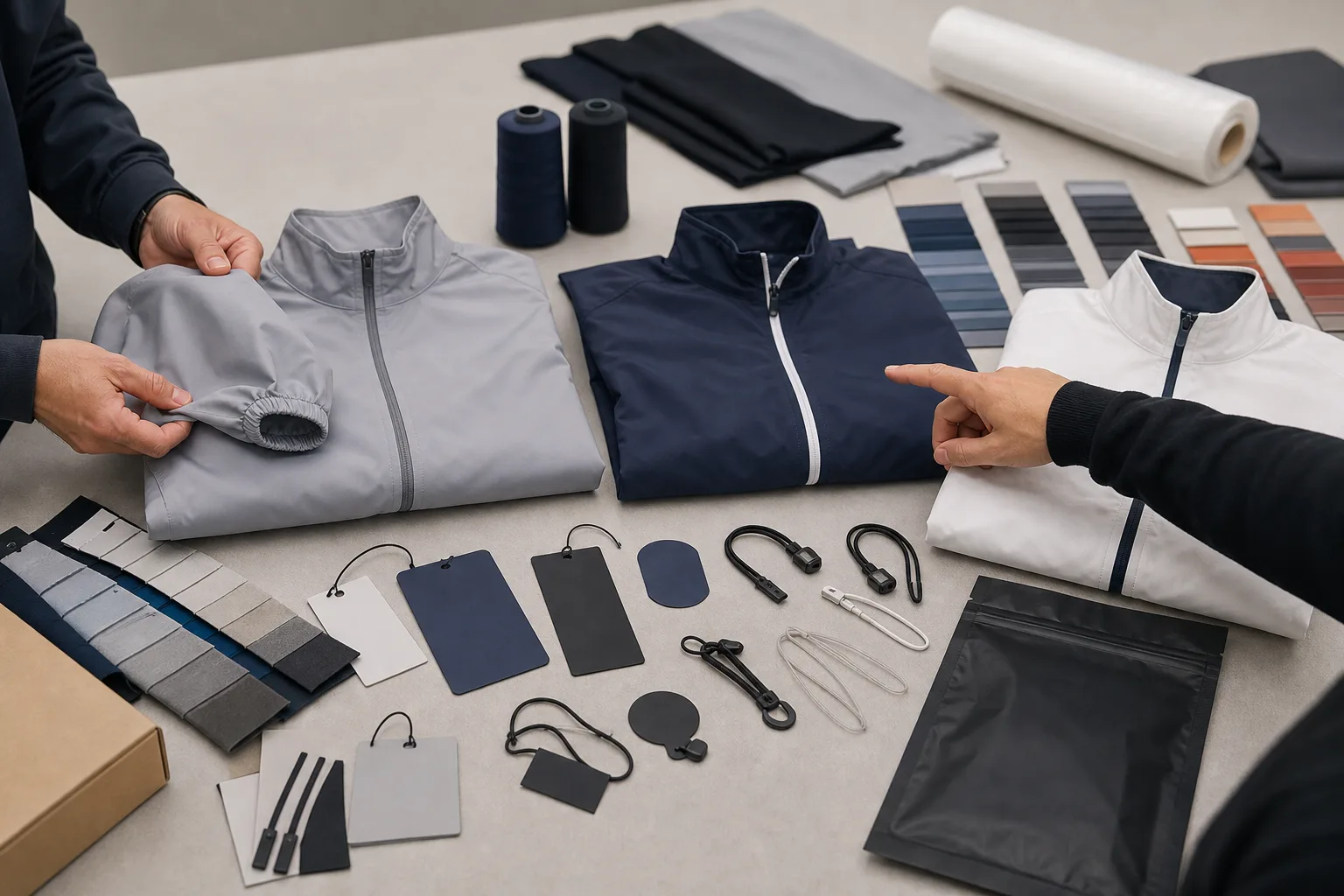
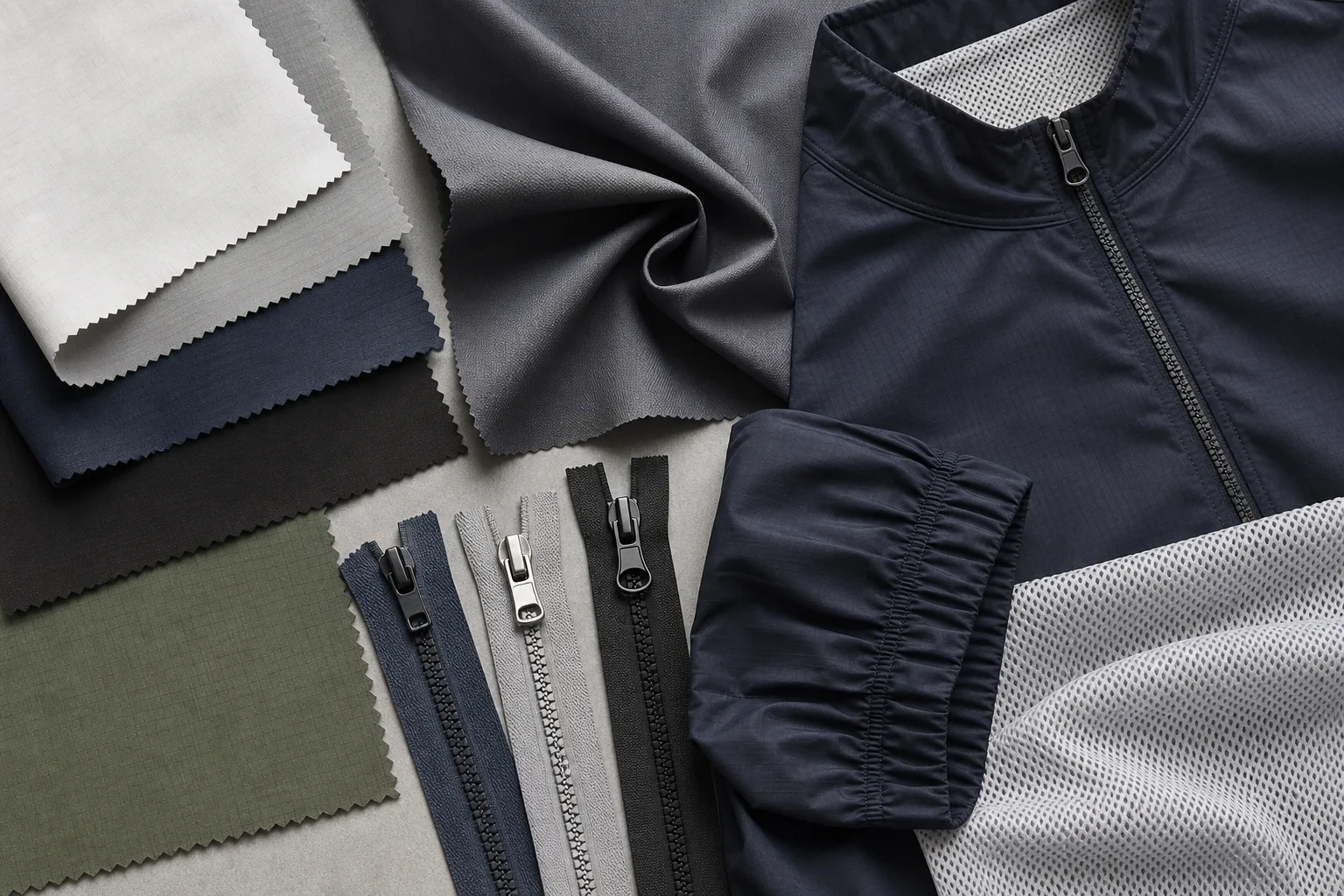
Golf windbreaker fabric swatches, zipper samples, and trim details laid out neatly
Construction Options

Construction choices that change comfort and on-course performance

The right golf windbreaker depends on how the garment is expected to move during a swing, how much weather exposure it will handle, and how visible the branding needs to be.

Common build directions

  • Full-zip windbreakers for easy on-off use and broad logo visibility.
  • Half-zip or pullover styles for lighter, sport-driven silhouettes.
  • Stand-collar designs for a cleaner golf look with reduced hood bulk.
  • Hooded styles for travel, practice, and promotional programs where casual crossover matters.
  • Mesh-lined versions for added structure and comfort in cooler wind.
  • Unlined packable versions for lightweight retail or event kits.

Construction details such as raglan sleeves, action backs, elastic binding, adjustable hems, zipper garages, and secure pockets can all be reviewed during development based on target use and cost position.

Fabric Selection

How fabric selection affects hand feel, sound, drape, and branding

Windbreaker fabric decisions are not only about blocking wind. Buyers usually compare surface appearance, movement noise, wrinkle behavior, print response, and how the garment feels over a golf polo.

  • Lightweight woven polyester suits many mainstream golf and promotional programs.
  • Stretch woven blends support improved swing mobility and a softer athletic feel.
  • Micro-ripstop fabrics add texture and a technical outerwear appearance.
  • Matte-finish fabrics fit understated club, resort, or premium private label styling.
  • Recycled material options may be considered for selected projects; exact material documents should be confirmed for the fabric chosen.

Fabric weight, lining choice, finish, and decoration method should be reviewed together. A fabric that prints well may drape differently from one that is better for embroidery, and a very lightweight shell may require added attention around seam puckering and zipper balance. Buyers comparing broader material options can also review performance fabric sourcing support.

Lightweight golf windbreaker layered over a polo on the golf course
Fit and Range Planning

Fit planning for brands, clubs, tournaments, and staff programs

Golf windbreakers often sit between fashion outerwear and team uniform needs. That means fit planning should start with the actual use case rather than a generic size chart.

  • Retail-focused collections may need a cleaner silhouette and sharper hem finish.
  • Golf club programs often prioritize easy layering across broader member size ranges.
  • Tournament or corporate orders usually need forgiving fit and straightforward size breakdowns.
  • Staff wear may require extra mobility, longer wear comfort, and simple reordering consistency.

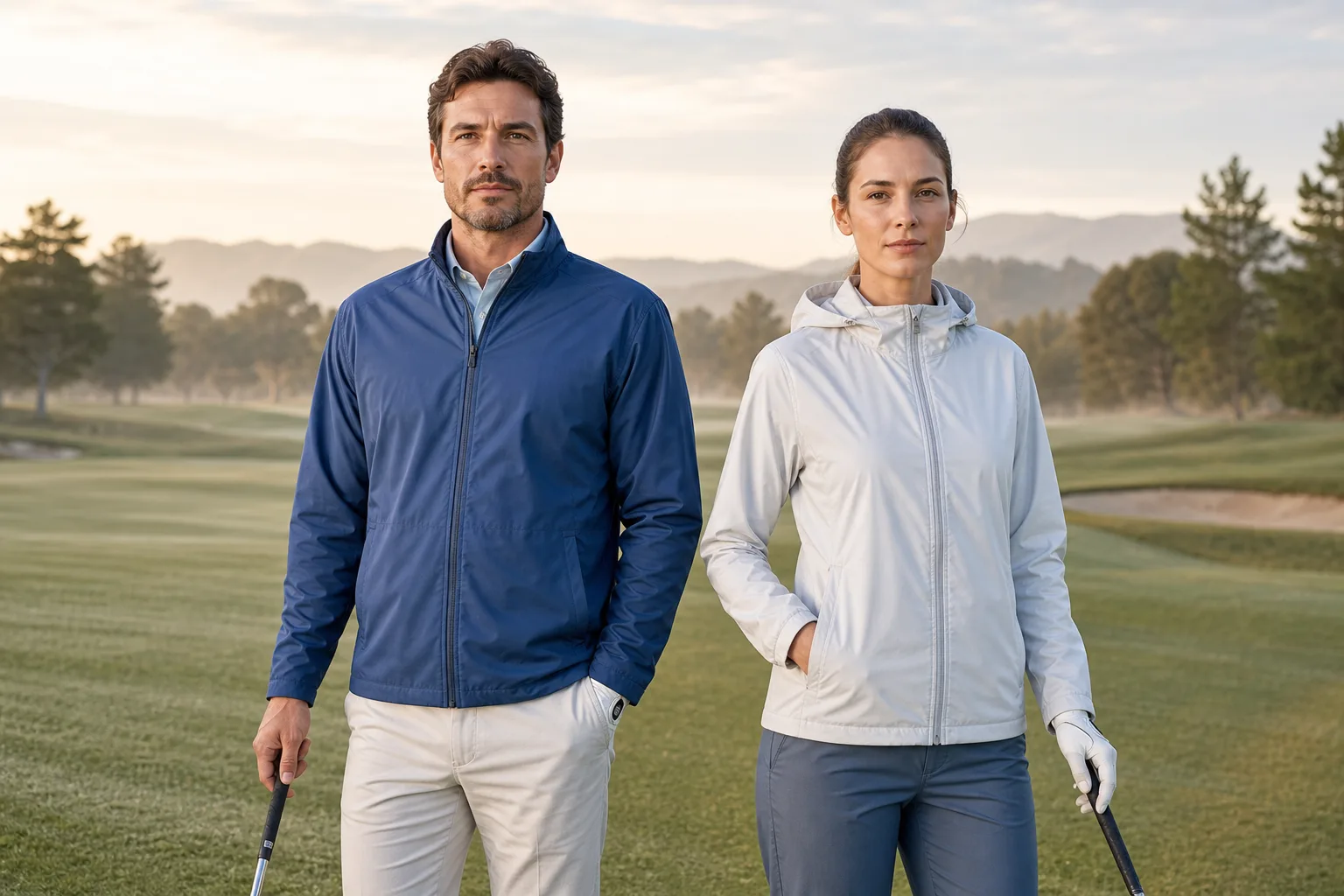
Men's, women's, and junior fit requirements should be separated early when relevant. Related category pages for men's golf apparel, women's golf apparel, and junior golf apparel can help guide assortment planning.

Branding Compatibility

Logo placement and private label details for lightweight shells

Because windbreaker shells can be thin, smooth, or lightly textured, branding method selection should account for appearance, distortion risk, and hand feel.

  • Embroidery works for chest, sleeve, and back-neck branding when fabric weight and backing are suitable.
  • Heat transfer or print applications can support lighter shells where embroidery may feel too heavy.
  • Woven labels, neck labels, and hangtags support private label presentation.
  • Zipper pulls, elastic tapes, and packaging can be customized for more developed brand programs.

If your project requires a branded retail presentation, Ninghow Golf can coordinate relevant support for private label golf clothing, custom logo options, and custom packaging.

Golf windbreaker fabric swatches, zipper samples, and trim details laid out neatly
Private label branding preparation for golf clothing manufacturing buyers
Product-Specific Quality Focus

Key quality checkpoints for golf windbreaker production

Golf windbreakers need product-specific inspection beyond standard apparel checks. Lightweight woven shells can show issues quickly if construction and finishing are not reviewed carefully.

  • Zipper alignment to confirm smooth front closure and clean placket balance.
  • Collar and hood symmetry so the garment sits evenly when zipped and worn in motion.
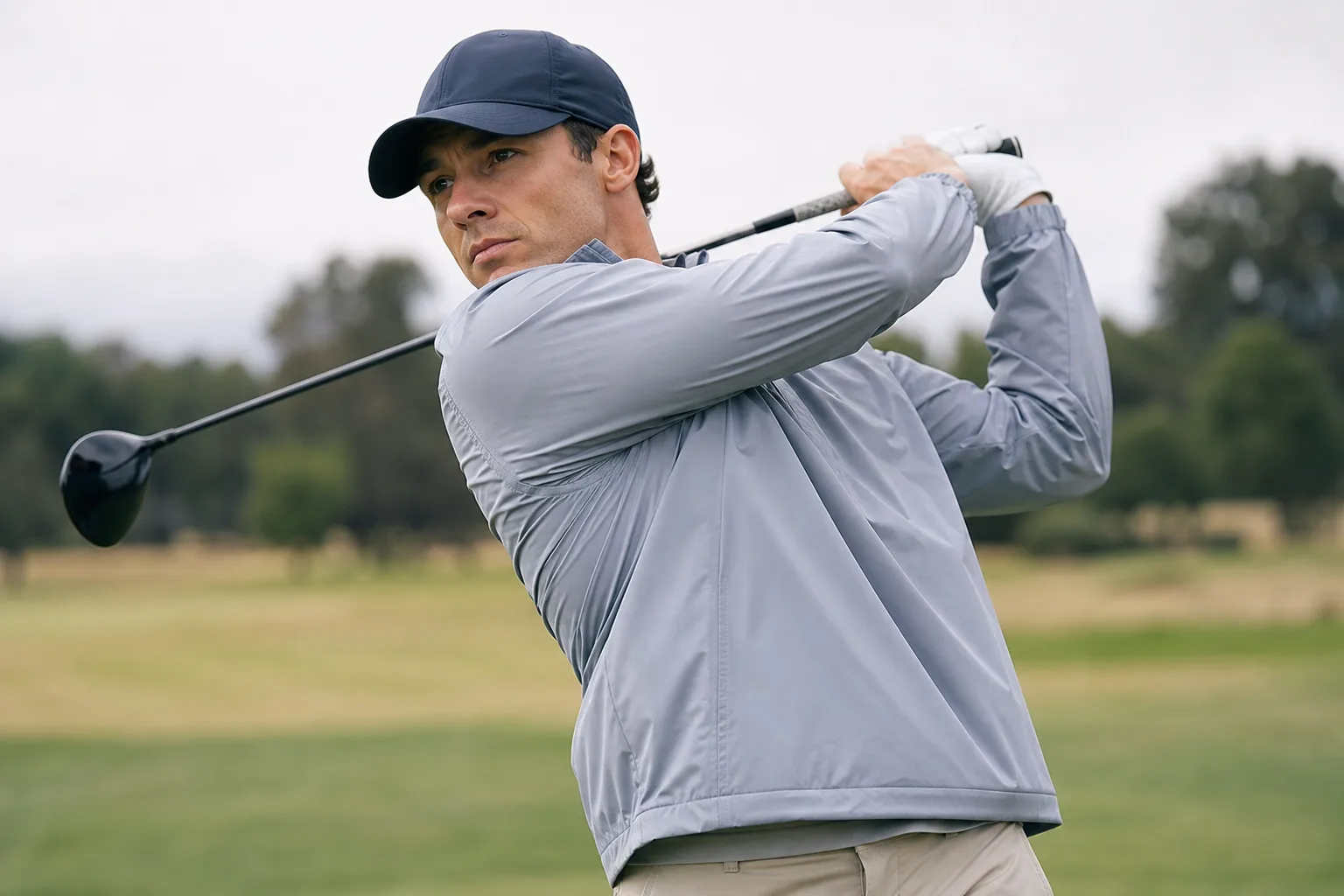
  • Shoulder and sleeve movement to reduce pulling during the swing.
  • Hem and cuff consistency especially on elastic or adjustable constructions.
  • Pocket placement and opening shape for appearance and daily usability.
  • Logo stability on lightweight fabric to check puckering, tunneling, or distortion after application.

When required, buyers may also discuss broader inspection and testing arrangements through the quality control process and fabric and performance testing pages. Applicable testing or inspection scope should always be confirmed for the exact style, fabric, and order requirement.

Best-Fit Buyer Programs

Where custom golf windbreakers fit best in a product line

Buyer Program Why Windbreakers Fit Typical Development Focus
Golf clubs and country clubs Useful for member layering, pro shop outerwear, and event merchandise Logo placement, size range, color matching, and reorder continuity
Golf apparel brands Adds a lightweight outerwear option without moving into heavier jackets Fabric hand feel, silhouette, trims, and private label presentation
Tournament organizers Practical branded layer for changing weather and participant kits Deadline planning, size breakdown, and packaging coordination
Corporate and promotional buyers Easy-to-pack outerwear with visible branding opportunities Decoration method, cost structure, and broad fit tolerance

Use-case pages for golf club apparel, tournament apparel, and corporate golf apparel can help align product choices with program structure.

Golfer mid-swing wearing a lightweight windbreaker to show mobility
Lightweight golf windbreaker layered over a polo on the golf course
Quote Inputs

What to prepare before requesting a golf windbreaker quote

A faster quotation usually starts with a clearer outerwear brief. For golf windbreakers, the most useful inputs are:

  • Target style: full-zip, pullover, hooded, lined, or packable
  • Shell fabric preference, weight direction, and finish expectations
  • Intended use: retail, club uniform, tournament, staff, or promotion
  • Estimated quantity by size range and colorway
  • Logo method and placement areas
  • Packaging or private label requirements

If you already have technical files or reference garments, you can also upload your tech pack for review before sampling.

Development Support

Support from brief to sample approval

Ninghow Golf can support product development for custom golf windbreaker programs through requirement review, fabric and trim sourcing, pattern development, sample coordination, and production follow-up. Standard sample development is often referenced around 5-7 days, while more complex outerwear developments may take longer depending on fabric availability, construction details, artwork approval, and revision rounds.

For buyers who need a more structured development path before bulk production, related support is available for prototype and sampling and pre-production approval.

Common Questions

Answers buyers usually need before starting

Keep the project conversation practical with clear expectations around sampling, production and quotation inputs.

What details affect a golf windbreaker quotation most?

The biggest factors are style type, shell fabric, lining or unlined construction, quantity by color, size range, logo method, trim details, and packaging needs. A packable pullover and a lined full-zip windbreaker can require very different costing and development steps.

How should buyers choose between a golf windbreaker and a heavier golf jacket?

Golf windbreakers usually suit lighter weather protection, easier packing, and less bulk over polos or base layers. Heavier golf jackets are more suitable when extra structure, warmth, or broader weather coverage is required.

What can extend sample development for custom golf windbreakers?

Timing can extend when the style includes special fabrics, lining, multiple logo applications, custom trims, revised fit changes, or pending artwork and color approvals. Development timing should be confirmed against the exact style brief.

Is embroidery always suitable for windbreaker fabric?

Not always. Lightweight shell fabrics may show puckering or feel too stiff after embroidery. In some cases, transfer or print methods are more suitable. The right method depends on fabric weight, texture, logo size, and placement.

Can golf windbreakers be developed for both retail and uniform programs?

Yes, but the spec direction is usually different. Retail programs may focus more on silhouette, trim identity, and label details, while club, staff, or event programs often prioritize fit tolerance, reorder consistency, and practical decoration choices.
Start a Project

Build your next golf clothing program with a clearer production path.

Share product type, quantity, fabric direction, branding requirements and target timing so Ninghow Golf can suggest the most practical next step.

Scroll to Top