Customization Page

Golf Apparel Color and Size Customization

Ninghow Golf supports custom golf apparel programs that need controlled color matching, practical size ranges, and production-ready approval points before sampling and bulk orders. This service fits golf apparel brands, clubs, teams, retailers, and private label buyers managing multiple styles, colorways, or fit requirements. Buyers can align brand colors, choose garment size structures, review grading direction, and prepare clear approval standards for polos, outerwear, bottoms, and coordinated collections.

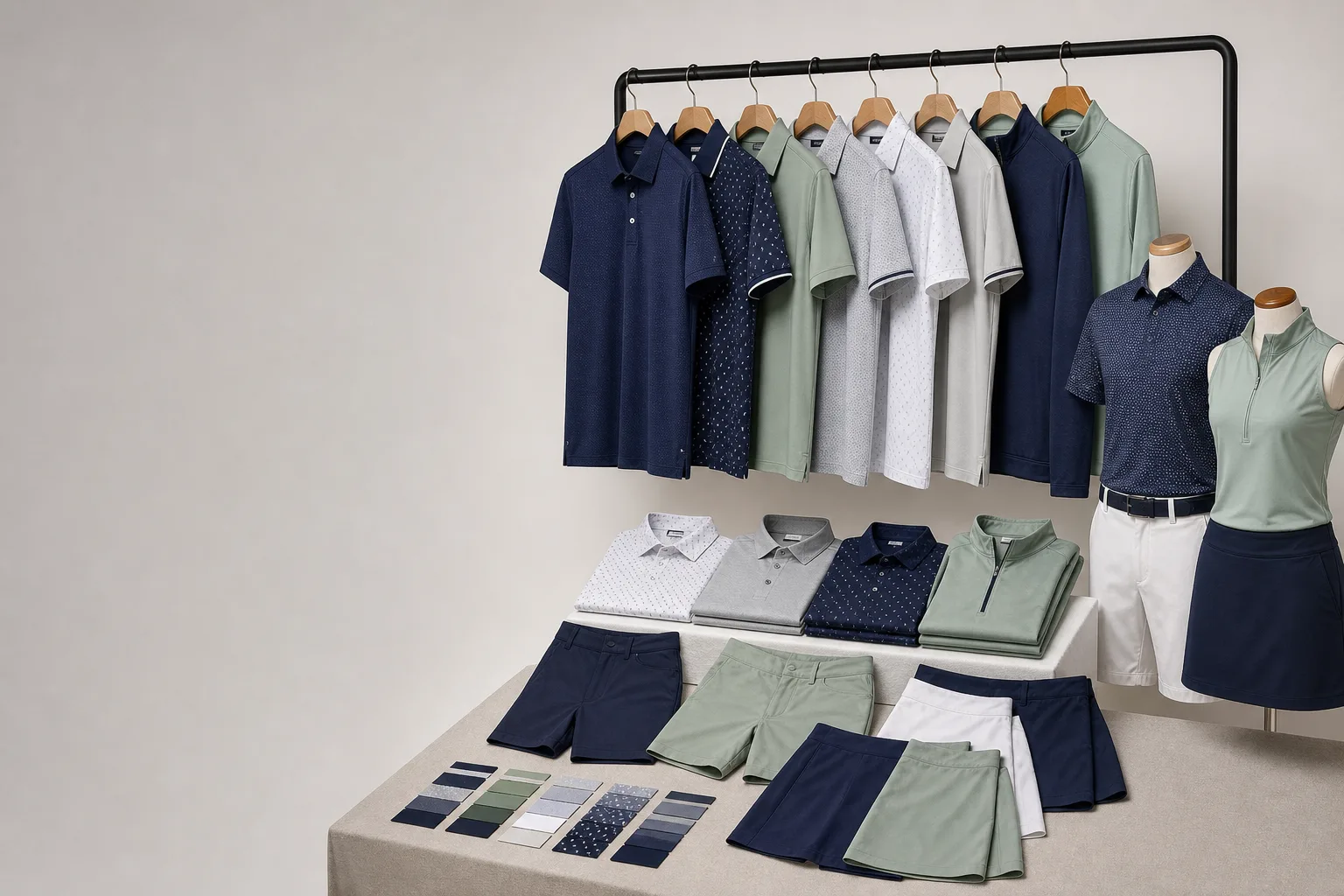
Coordinated golf apparel displayed in multiple colorways and size options
golf apparel colorPlan golf apparel color and size customization for private label, club, team, and retail programs with practical guidance.

Product Programs

Golf programs usually require more than choosing a fabric shade from a basic chart.

Buyer Types

Size customization should start from the wearer group and sales or distribution model.

Execution Control

Not every product reacts the same way to color and size customization.

Development Support

Color and size customization moves faster when the buyer sends clear source information at the start.

Color Customization

How color customization is typically handled

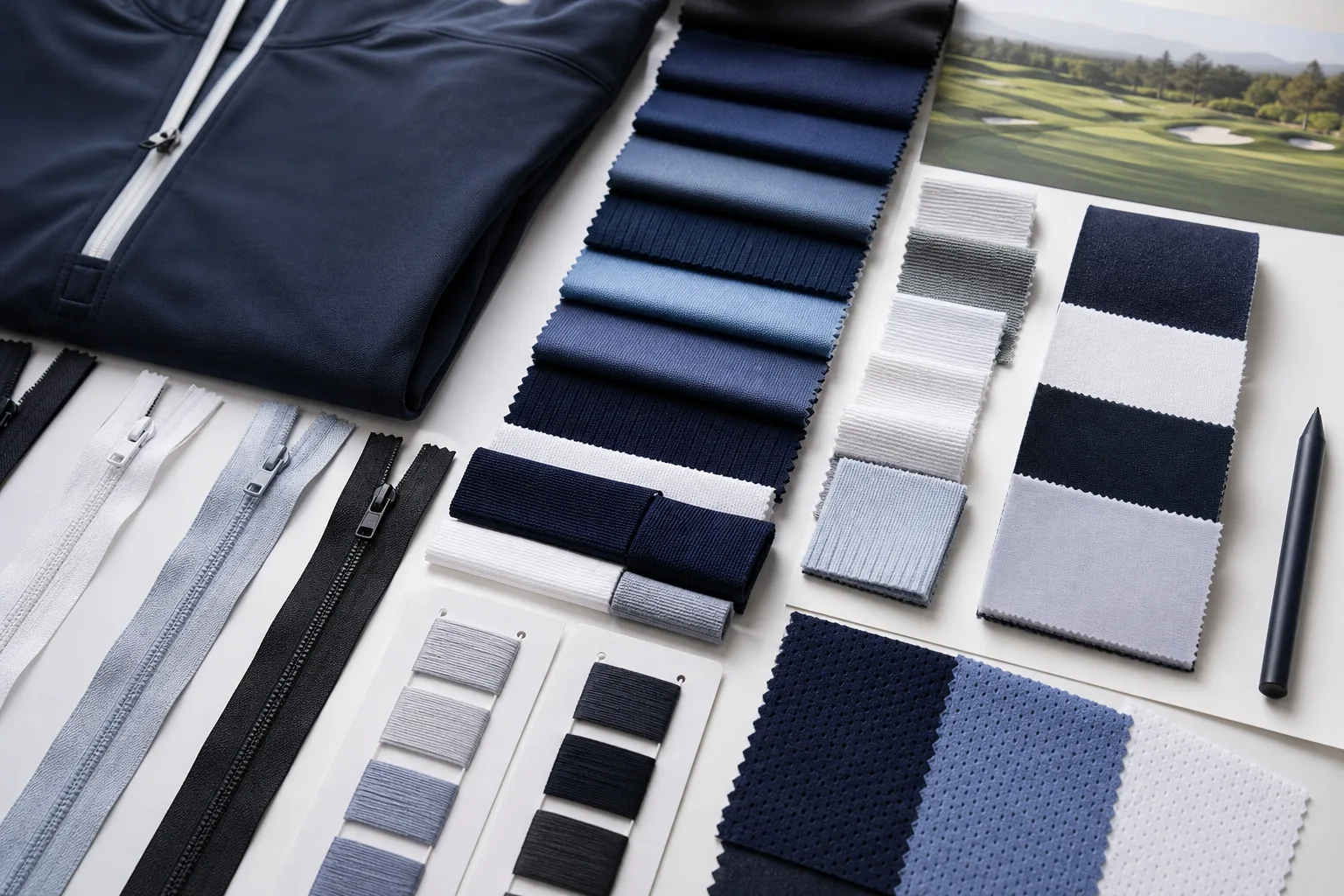
Golf programs usually require more than choosing a fabric shade from a basic chart. Buyers may need club colors, retail collection palettes, seasonal updates, or coordinated trims across polo shirts, jackets, pullovers, and bottoms. Color review should be handled against the actual material and end-use construction whenever possible.

Common color approval methods

  • Buyer-provided color reference such as Pantone guidance or approved physical swatch
  • Lab dip or fabric swatch review before sample confirmation when the fabric program requires it
  • Garment sample approval for styles where fabric texture, print, stretch, or finishing changes the visual result
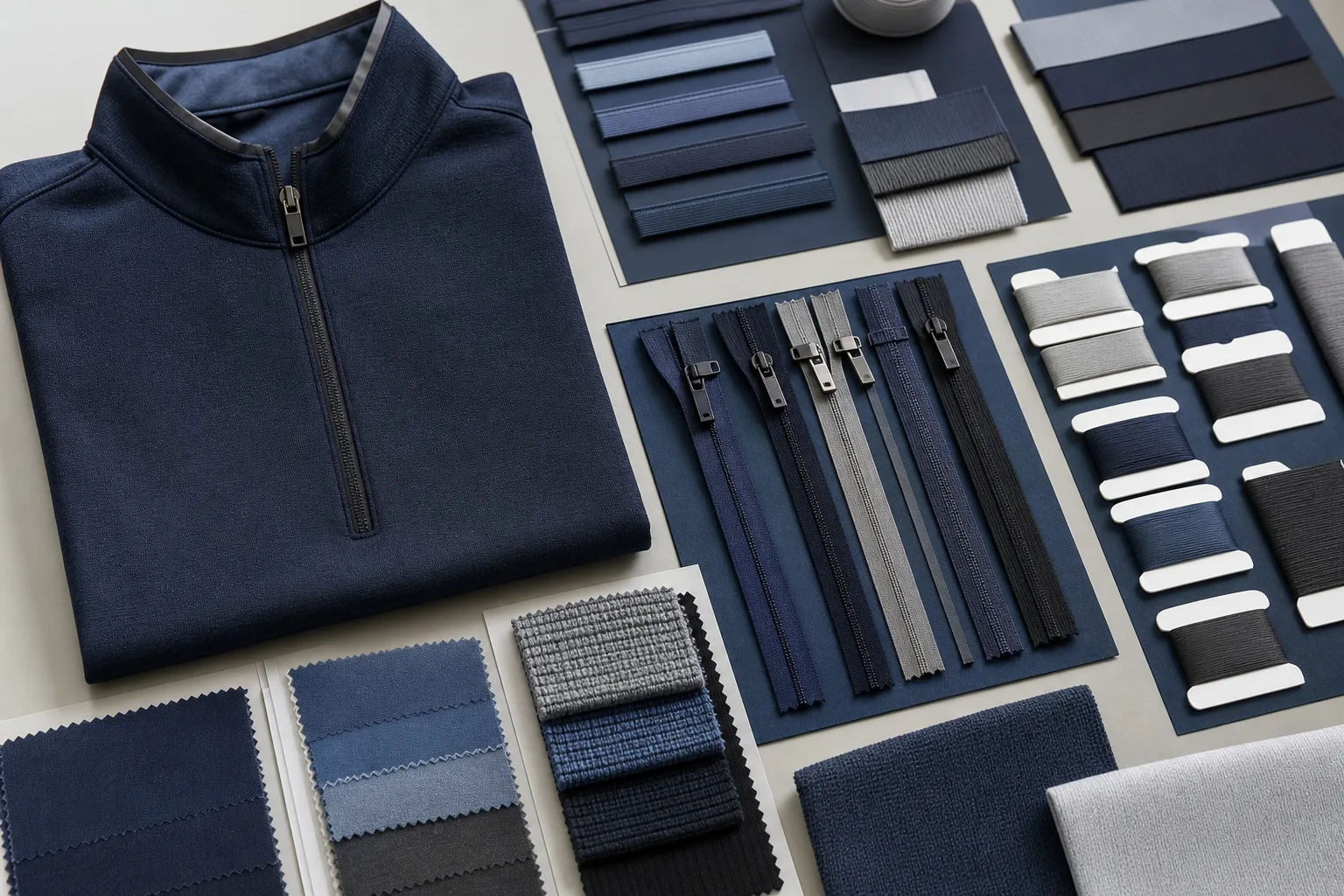
  • Trim and decoration color review for collars, zippers, labels, embroidery threads, or heat transfer artwork

Color appearance can shift based on fabric composition, knit structure, brushing, coating, recycled-content variation, and decoration method. For that reason, the safest approval path is to confirm color on the intended material family rather than relying only on digital artwork.

Buyers comparing base fabric options can review performance fabric sourcing before locking color decisions.

Fabric and trim swatches arranged for golf apparel color matching review
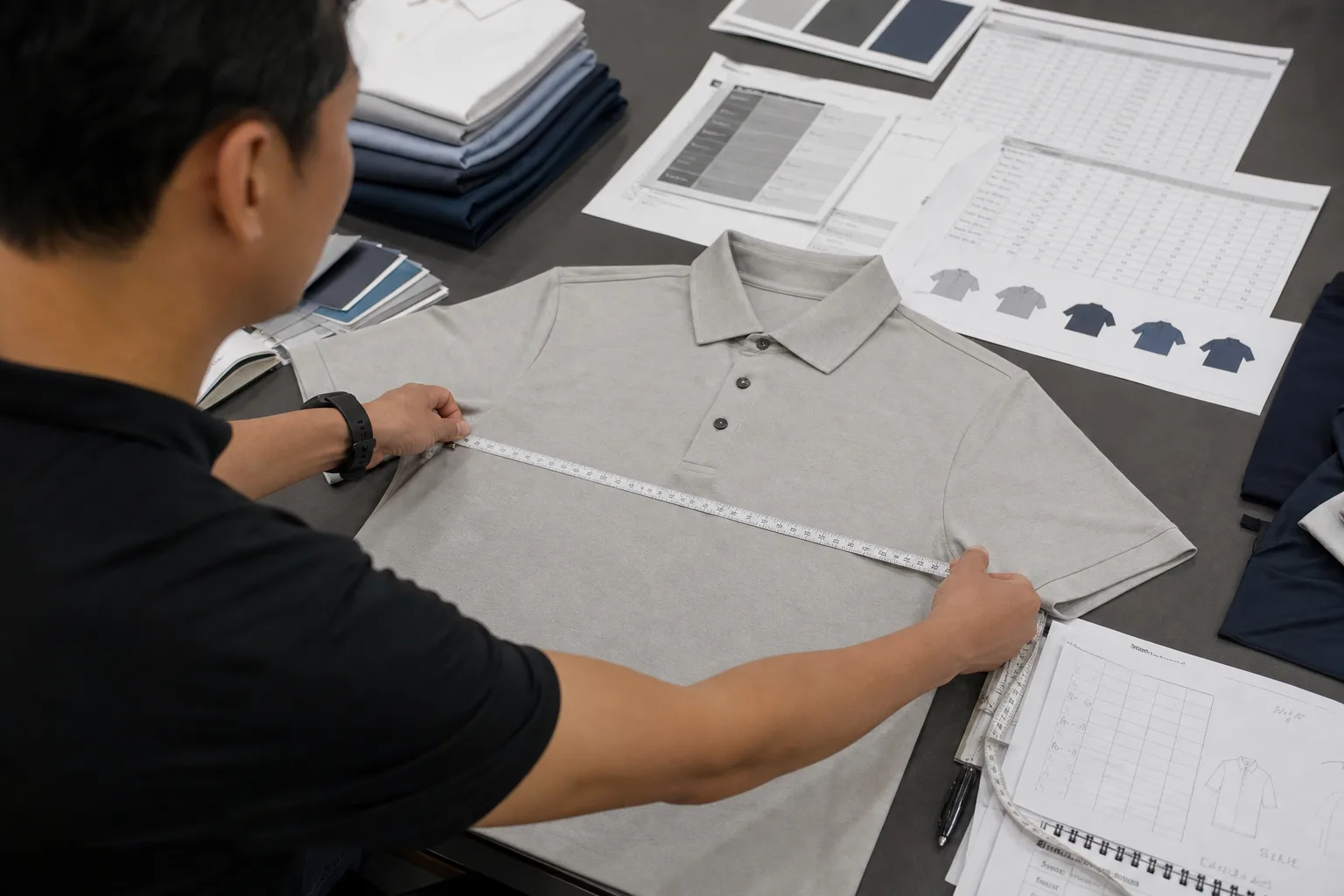
Sample golf shirt being measured for custom size planning
Size Planning

Size range planning for clubs, brands, and team programs

Size customization should start from the wearer group and sales or distribution model. A golf retail brand may need a graded size run built around fit consistency and returns control. A club uniform program may need broader size coverage with simpler ordering logic. Tournament or staff apparel may require balanced pack ratios for event distribution.

Typical size planning inputs

  • Target wearer group such as men, women, junior, staff, or mixed teams
  • Fit direction such as athletic, regular, relaxed, or layering-friendly
  • Core measurements that matter most for the product, such as chest, waist, hip, body length, sleeve length, inseam, or rise
  • Expected use with base layers, outerwear layering, or warm-weather wear
  • Regional market expectations for labeling and fit interpretation

When a buyer needs custom fit foundations rather than basic size relabeling, the development path should connect to prototype and sampling so measurements, grading, and wear feedback can be reviewed before bulk production.

Product-Specific Considerations

Where color and size choices behave differently by product type

Not every product reacts the same way to color and size customization. Golf polos, quarter-zips, outerwear, and bottoms each carry different approval risks. Grouping these correctly early can reduce avoidable revisions.

Product Type Color Focus Size Focus Typical Review Risk
Polo shirts Body shade, collar and cuff matching, placket contrast, logo visibility Chest, body length, sleeve opening, collar proportion Color contrast looks different between knit body and rib collar
Quarter-zips and jackets Shell color, zipper tape, panel matching, lining coordination Shoulder movement, sleeve length, layering ease, hem balance Multiple components may create visible shade variation
Pants and shorts Main fabric tone, pocketing visibility, stitch appearance Waist, hip, rise, inseam, thigh and leg opening Fit problems become clear quickly across a wider size range
Skorts and dresses Outer fabric and inner-short coordination, trim placement Waist balance, movement coverage, body length, inner-short fit Coverage and fit must work together through movement

For garment-specific development, buyers can move into relevant product pages such as custom golf polo shirts, quarter-zip pullovers, and golf pants.

Fabric and trim swatches arranged for golf apparel color matching review
Artwork, Files, and Approval Inputs

What buyers should prepare before sampling

Color and size customization moves faster when the buyer sends clear source information at the start. A short but specific brief is usually more useful than a large set of unstructured references.

  • Target product list and intended wearer group
  • Preferred color references, approved swatches, or palette guidance
  • Size range requirement and any market-specific labeling direction
  • Measurement chart, reference garment, or fit comments if custom grading is needed
  • Decoration layout that may influence perceived color balance or sizing
  • Pack ratio expectations by size if the order is for event, team, or retail distribution

If your program already has structured specifications, use Upload Your Tech Pack. If branding placement still needs review, pair this step with custom logo options.

Sampling and Approval

How sample review reduces color and grading mistakes

Sample development is the stage where color interpretation and size intent become measurable. Standard sample development is often planned around approximately 5 to 7 days, while more complex sample work may take approximately 7 to 10 days, depending on fabric availability, colorways, revisions, and approval speed. These are planning references rather than guarantees.

For color and size approval, buyers usually benefit from checking:

  • Whether the approved shade still reads correctly under the intended fabric texture and finish
  • Whether contrast parts such as collars, cuffs, panels, or zippers stay visually aligned
  • Whether measurement points match the intended fit direction for the size set
  • Whether logo placement remains balanced across different garment sizes
  • Whether pack labeling and size marks follow the required market format

When the program has several body types or a broad size run, a size set sample may be more useful than a single showroom sample. For broader production timing context, buyers can compare with sampling and production lead times.

Fabric and trim swatches arranged for golf apparel color matching review
Sample golf shirt being measured for custom size planning
Bulk Production Control

Controls that matter after approvals are locked

Once color references and size standards are approved, bulk execution depends on keeping those references stable across material lots, grading, decoration, and packing. Ninghow Golf can coordinate this through its development and production workflow, with actual scheduling depending on order quantity, color count, fabric availability, packaging, and production planning.

Operational checks often include color checking against approved references, measurement review by size point, sewing inspection at sensitive fit areas, and packaging review for size labeling accuracy. Buyers needing a broader view of inspection stages can review the quality control process.

For repeat programs, it helps to archive approved swatches, graded specs, and size pack structures so future orders are based on the same references instead of restarting from informal notes.
Best Fit by Buyer Type

How different buyers usually use this service

  • Golf apparel brands: maintain collection color consistency and fit logic across multiple styles.
  • Private label businesses: build custom size charts and retail-ready size labeling for their own brand program.
  • Golf clubs and country clubs: coordinate member, staff, and event apparel colors with practical size coverage.
  • Teams and tournament organizers: simplify pack ratios and reduce distribution issues across mixed wearer groups.
  • Retailers and e-commerce brands: reduce fit confusion by aligning measurement standards before bulk ordering.

If your project combines sizing, branding, trims, and packaging under one launch plan, a broader starting point may be Start a Private Label Project.

Quality control and packing for golf clothing manufacturing buyers
Common Questions

Answers buyers usually need before starting

Keep the project conversation practical with clear expectations around sampling, production and quotation inputs.

Can you match our brand or club colors exactly?

Color matching can usually be developed around buyer-supplied references such as Pantone guidance, physical swatches, or approved samples, but the final appearance may vary by fabric type, texture, finish, and decoration method. Color approval should be confirmed on the intended material whenever possible.

Can we create our own size chart instead of using a standard one?

Yes, a program can be developed from buyer measurements, a reference garment, or fit comments. The amount of customization may depend on the product type, grading complexity, size range, and whether a new pattern adjustment is required.

What usually causes delays in color or size approval?

The most common causes are incomplete measurement charts, unclear fit direction, multiple color revisions, trim mismatches, fabric availability changes, and waiting for artwork or sample confirmation. Programs with many colorways or broad size runs usually need more review points.

How should we plan size ratios for a club or event order?

Start with the wearer mix, product type, and distribution method. A club uniform order may need a broader range with simpler pack planning, while an event order may need more balanced ratios by expected attendance profile. Size ratios should be discussed before bulk packing is finalized.

Do color and size customization affect MOQ?

In many cases, yes. MOQ can depend on the garment type, fabric source, number of colors, size range, decoration method, packaging setup, and how the order is split across styles or variants. It should be reviewed against the exact project structure rather than assumed as a fixed number.

Start a Project

Build your next golf clothing program with a clearer production path.

Share product type, quantity, fabric direction, branding requirements and target timing so Ninghow Golf can suggest the most practical next step.

Scroll to Top