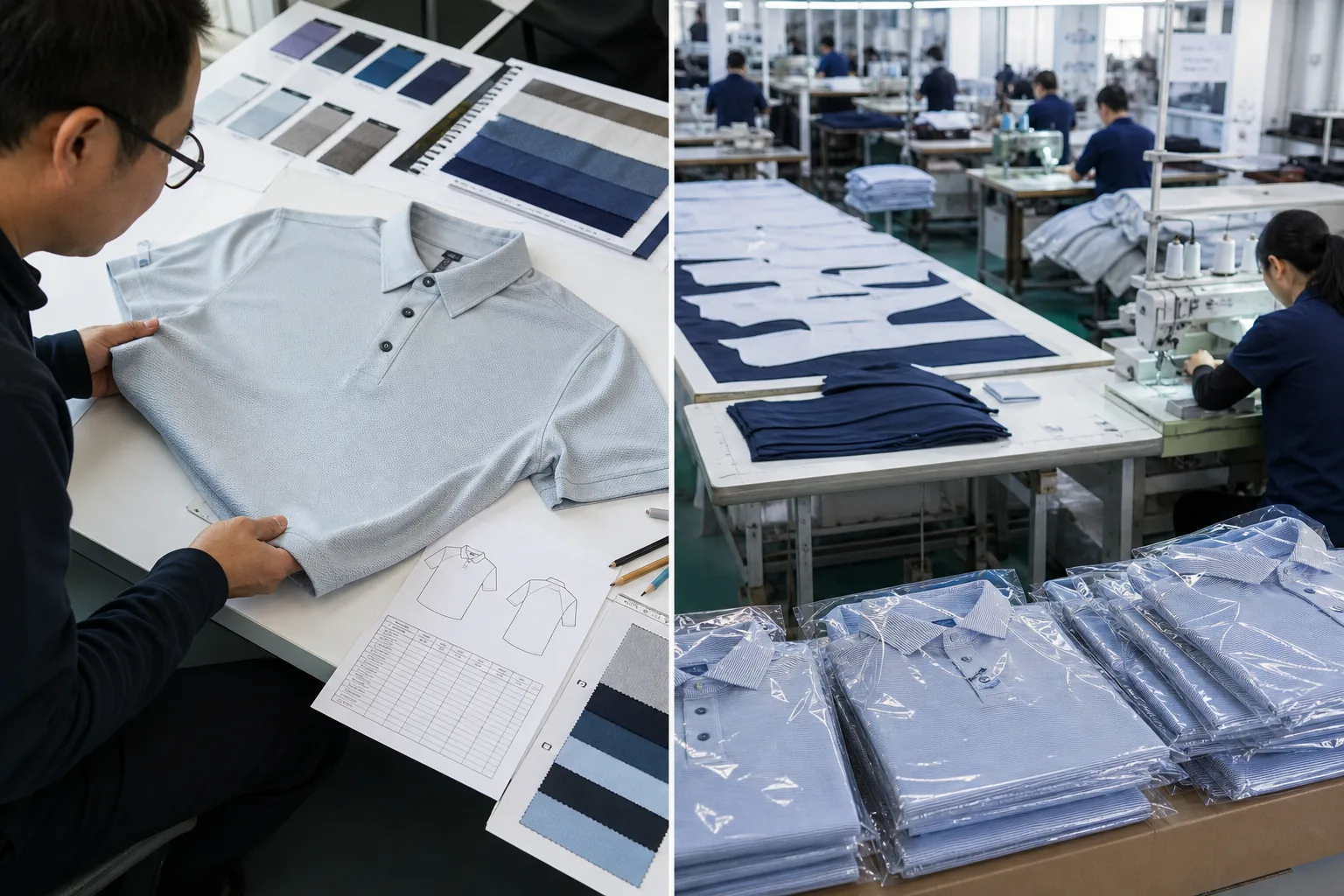
Manufacturing Capability Page

Sampling & Production Lead Times

Ninghow Golf supports custom golf apparel programs from sample development through bulk production. Buyers can use these planning ranges to set realistic schedules, understand approval checkpoints, and see what can speed up or slow down an order. Typical references are approximately 5-7 days for standard samples, 7-10 days for more complex sample development, and 20-35 days for bulk production after approvals. These are working references only, not fixed guarantees, because timing depends on the product, materials, revisions, order structure, and shipment requirements.

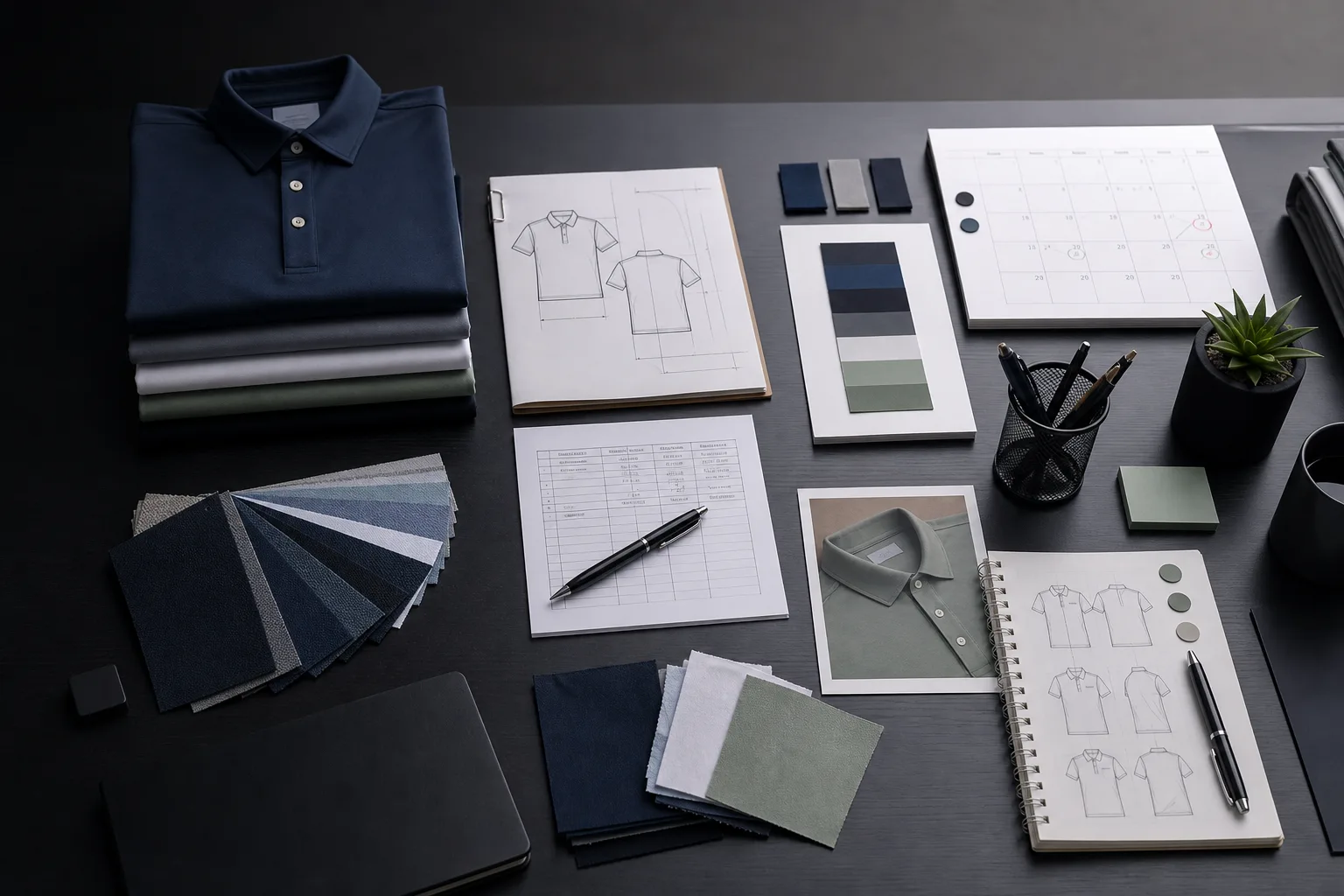
Golf apparel samples and planning materials arranged on a clean production desk
Delivery Timelineconfirm sampling and production lead times for custom golf apparel, including planning ranges, delay factors, approval.

Product Programs

Lead time planning starts with the type of garment, the level of customization, and how complete the buyer inputs are at.

Development Support

Sample timing is often influenced more by preparation quality than by sewing time alone.

Buyer Types

Bulk production timing begins only after the key approvals are complete.

Quality Checks

The fastest production schedules usually come from fewer approval gaps, not from skipping control points.

Lead Time Overview

Typical Lead Time References for Custom Golf Apparel

Lead time planning starts with the type of garment, the level of customization, and how complete the buyer inputs are at the start of the project. A simple golf polo with approved fabric and decoration details usually moves faster than a jacket with lining, multiple trims, packaging requirements, and repeated sample revisions.

Project Stage Typical Planning Reference What Usually Affects It
Standard sample development Approximately 5–7 days Ready tech pack, available fabric, simple logo application, limited revisions
Complex sample development Approximately 7–10 days Special trims, outerwear construction, fit changes, custom dyeing, multiple approvals
Bulk production Approximately 20–35 days Order quantity, colorways, fabric lead time, production scheduling, packaging, inspection

If your program includes staged approvals, size-set sampling, fabric testing, or market-launch coordination, the full project calendar should be planned beyond these core production references.

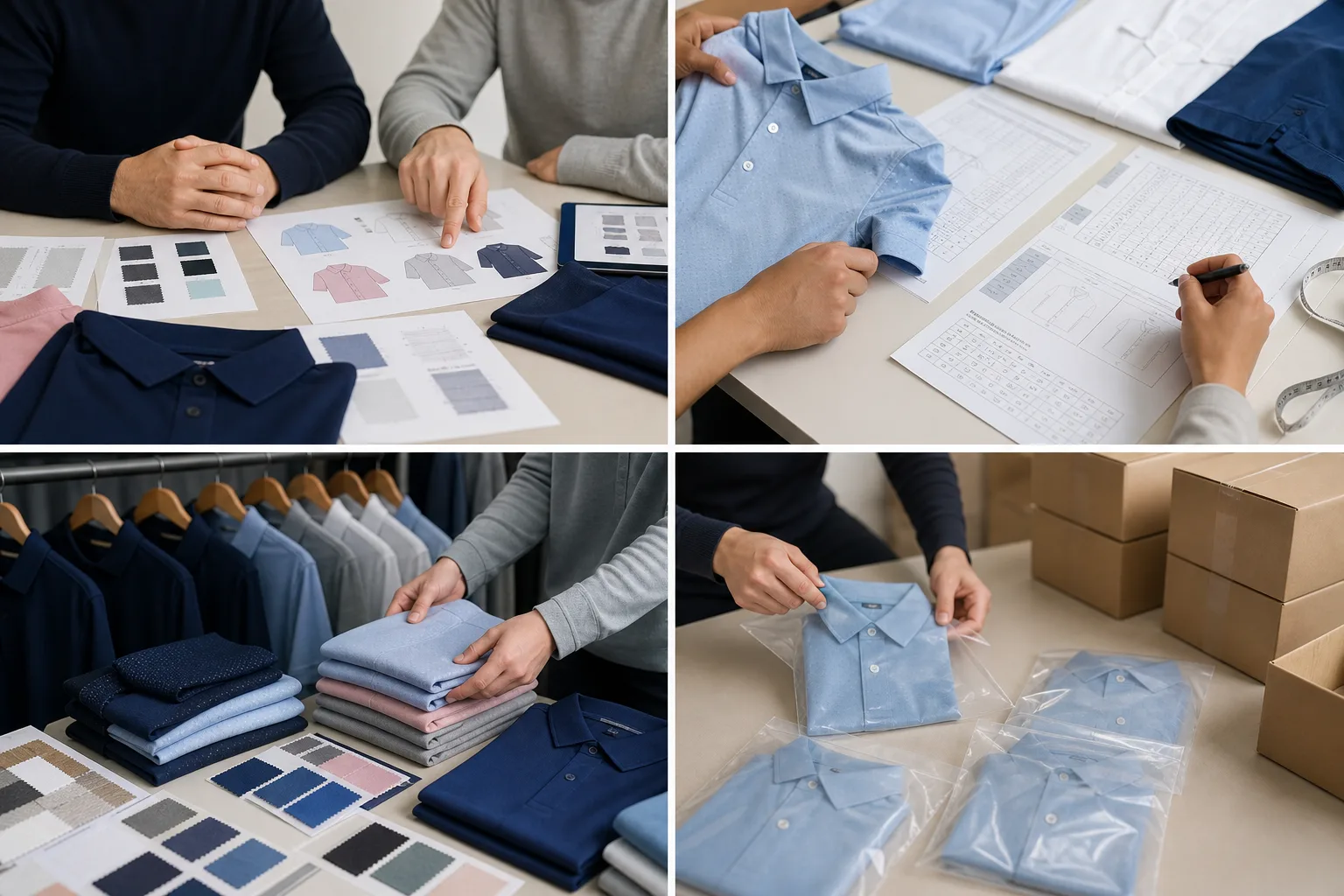
Fabric and fit review for golf clothing manufacturing buyers
Apparel developer reviewing a golf polo sample beside a production workflow
Sample Timing Factors

What Affects Sample Development Timing

Sample timing is often influenced more by preparation quality than by sewing time alone. Buyers can shorten the process by submitting complete specifications early and reducing avoidable back-and-forth.

Inputs that usually help samples move faster

  • Clear technical files: tech pack, measurement chart, artwork, placement details, and construction notes
  • Defined fabric direction: approved material, target weight, stretch, finish, or performance expectations
  • Decoration clarity: embroidery, printing, label, trim, and packaging requirements confirmed before sampling starts
  • Fit reference: buyer-supplied sample, reference garment, or block comments that reduce interpretation risk

Common reasons sample development takes longer

  • Fabric or trim sourcing still under discussion
  • Artwork files need correction or resizing
  • Construction details are incomplete or inconsistent
  • New color approvals are pending
  • Multiple rounds of fit comments are required

If your program is still in the development stage, it may help to review prototype and sampling support before finalizing the timeline.

Bulk Production Timing Factors

What Affects Bulk Production Lead Time

Bulk production timing begins only after the key approvals are complete. For most golf apparel programs, the major timing risks happen before cutting starts, not during final sewing alone.

  • Fabric readiness: in-stock fabric usually moves faster than custom-developed material
  • Order size and mix: larger quantities, many SKUs, or wide size ranges can require more planning
  • Colorway count: more colors can mean more coordination in fabric, trims, and packing
  • Decoration method: embroidery, heat transfer, screen print, woven labels, and hangtags each add process steps
  • Packaging format: barcode labels, size stickers, assortments, and retailer packing instructions can extend finishing time
  • Inspection and release timing: internal review, buyer approval, or third-party inspection scheduling may affect ship date readiness

For buyers managing multiple replenishment cycles or launch windows, production timing should be reviewed together with order management and packaging and logistics planning.

Quality control and packing for golf clothing manufacturing buyers
Four planning scenarios with golf apparel samples, calendars, and packaging notes
Approval Checkpoints

Approvals That Usually Determine the Real Calendar

The fastest production schedules usually come from fewer approval gaps, not from skipping control points. A realistic calendar normally includes several decision moments that should be built into the plan from the start.

  1. Development review: specification check, fabric direction, logo method, and construction feasibility
  2. Sample review: fit comments, measurement tolerance review, style confirmation, and visual corrections
  3. Pre-production confirmation: final material, size range, colorway, artwork, labels, and packing details locked
  4. Bulk production release: only after all production-critical points are approved
  5. Inspection and shipment release: final packing and export coordination follow the approved order structure

If you need more detail on the approval stage between sample sign-off and bulk cutting, see pre-production approval.

Planning by Buyer Type

How Different Buyers Should Plan Their Timeline

Not every buyer works from the same calendar. A private label launch, a club uniform order, and a retailer replenishment order each require a different timing approach.

Private label and startup collections

Allow more development time for fit approval, branding details, trims, labels, and packaging. First orders usually need more review than repeat styles.

Golf clubs, teams, and tournaments

Work backward from the wear date, not the ship date. Build in time for logo approval, roster or size collection, and replacement planning for size adjustments.

Retail and e-commerce programs

Account for color assortment, packaging consistency, launch photography timing, and inbound logistics after production is complete.

Repeat-order programs

Approved materials, stable measurements, and existing trims can often improve planning efficiency, although final timing still depends on current scheduling and material availability.
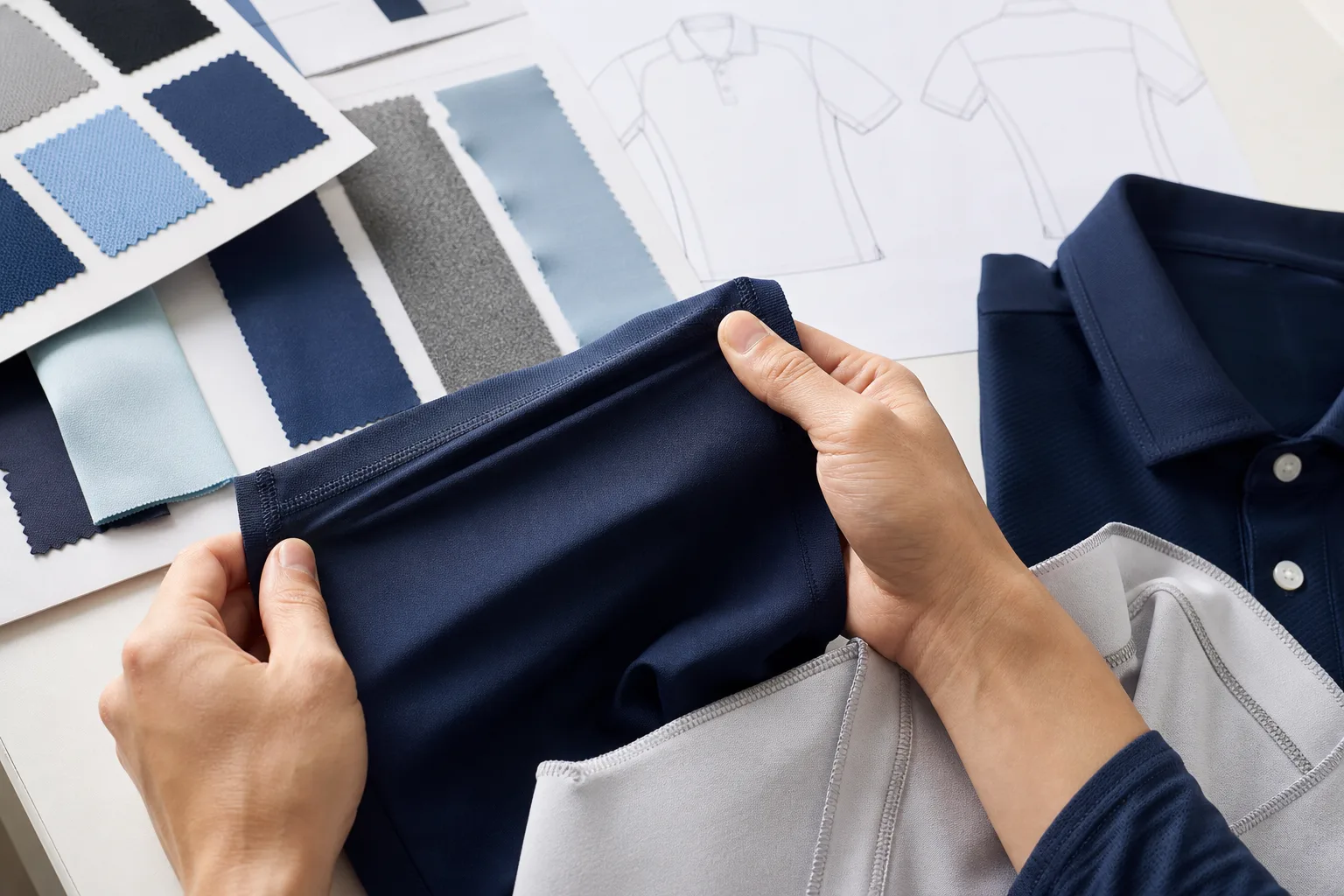
Fabric and fit review for golf clothing manufacturing buyers
Apparel developer reviewing a golf polo sample beside a production workflow
How to Reduce Delays

How Buyers Can Help Keep a Project on Schedule

Many timeline issues are preventable when the project starts with clean information and clear approvals.

  • Submit one master specification set instead of scattered comments from multiple files
  • Confirm artwork sizes and file formats before sampling begins
  • Reduce mid-process style changes after sample approval
  • Approve colorways, labels, and packing details before bulk release
  • Flag any fixed launch date, event date, or shipment deadline early
  • Discuss fabric alternatives if a preferred material may create sourcing delays

Buyers still comparing development readiness may also use how to create a golf apparel tech pack to prepare cleaner inputs.

What to Send for Timeline Review

Information Needed to Estimate a Realistic Lead Time

A useful timeline estimate depends on project details, not only garment name and quantity. For the fastest review, prepare:

  • Garment type and intended use, such as polos, outerwear, pants, or team uniforms
  • Expected quantity and size breakdown
  • Number of colorways and decoration methods
  • Fabric preference or performance requirement
  • Target sample date, production date, or launch date
  • Packaging and shipment requirements if already known

Ninghow Golf coordinates development and production planning through Ninghow’s apparel support structure in China, with sample coordination and merchandising support handled from Shenzhen and bulk production support arranged according to project needs.

Quality control and packing for golf clothing manufacturing buyers
Common Questions

Answers buyers usually need before starting

Keep the project conversation practical with clear expectations around sampling, production and quotation inputs.

Are your sample lead times counted from the day we send an inquiry?

Not usually. Sample timing is more accurate after key inputs are received, such as the tech pack, artwork, measurement details, fabric direction, and decoration requirements. If sourcing or specification clarification is still in progress, the calendar may start later.

What usually makes a golf apparel sample fall into the 7-10 day range instead of 5-7 days?

More complex styles often need extra time for pattern adjustment, special trims, lining, multiple logo applications, outerwear construction, custom color confirmation, or more detailed fit review. Revisions after the first sample can also extend the schedule.

Does bulk production start while sample comments are still being discussed?

Bulk production should normally begin after production-critical points are approved. Starting too early can increase the risk of rework, material loss, or inconsistent packing, especially for branded golf apparel programs.

How should a club or tournament buyer plan around a fixed event date?

Plan backward from the wear date and leave time for sample approval, logo confirmation, size collection, bulk production, packaging, shipment, and any possible correction window. Event-driven orders should be discussed early because the usable production window may be shorter than expected.

Can repeat orders move faster than first-time developments?

In many cases, yes, because approved measurements, materials, labels, and packaging may already exist. However, timing still depends on fabric availability, quantity, color changes, production scheduling, and any updates requested for the repeat order.

Start a Project

Build your next golf clothing program with a clearer production path.

Share product type, quantity, fabric direction, branding requirements and target timing so Ninghow Golf can suggest the most practical next step.

Scroll to Top