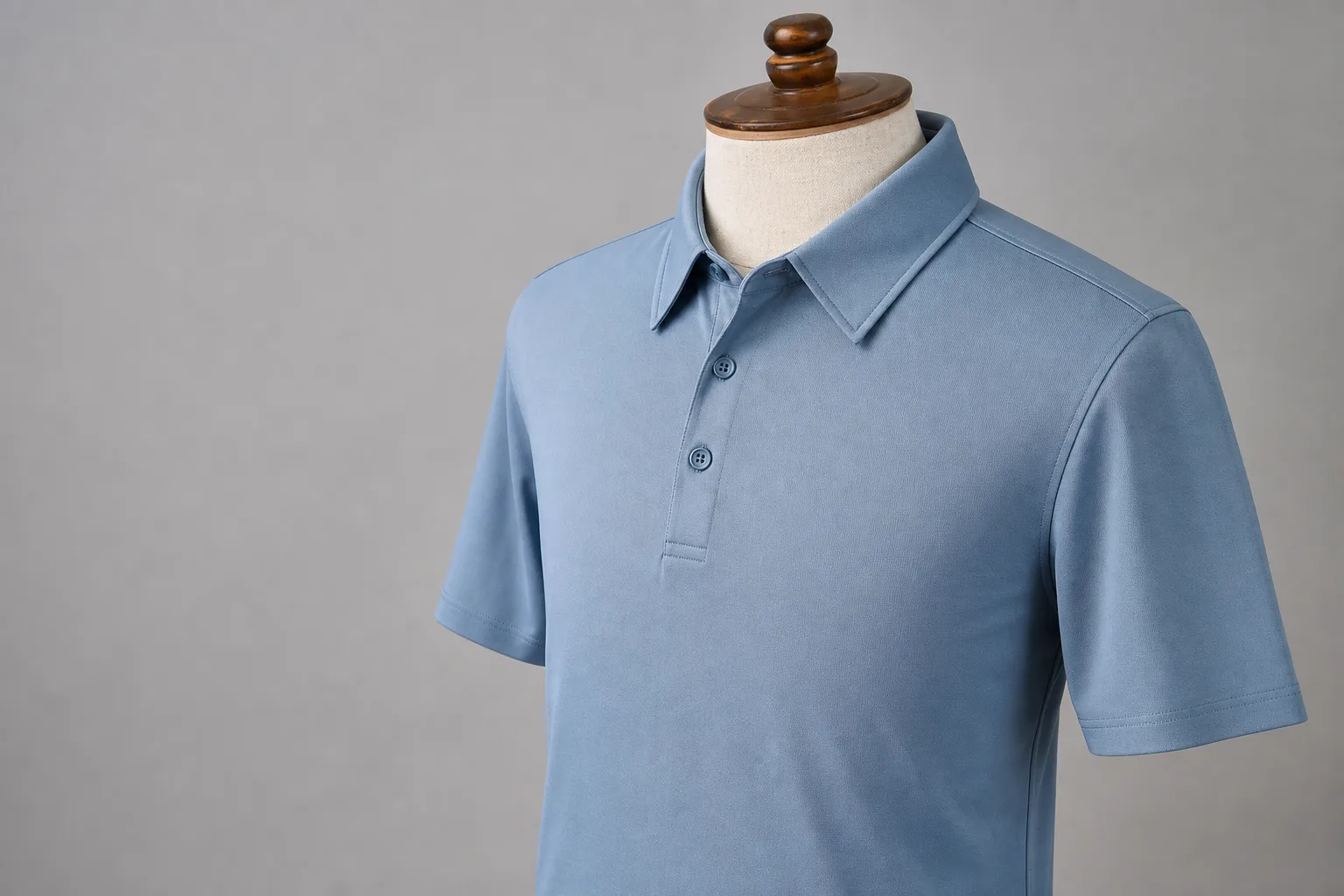
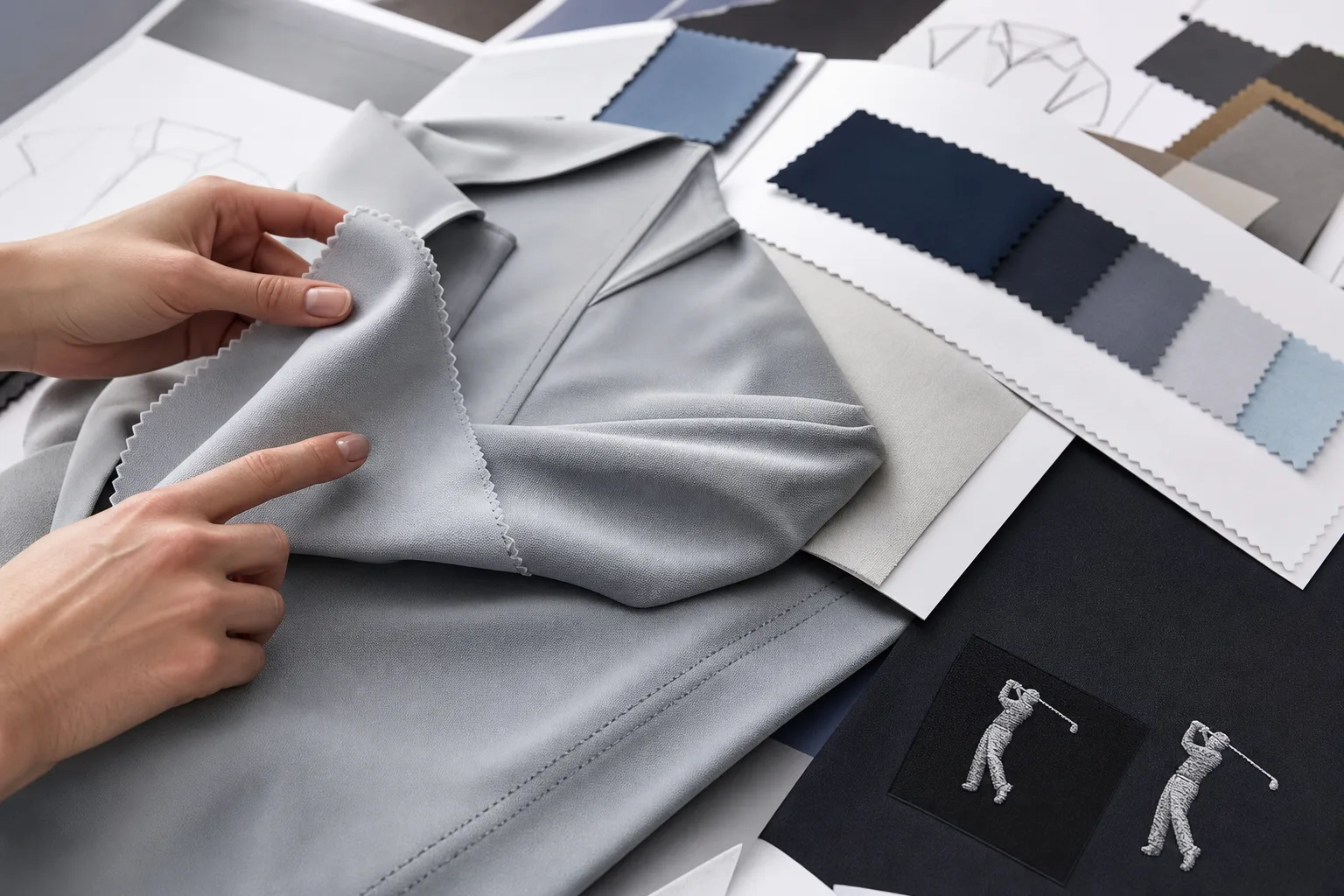
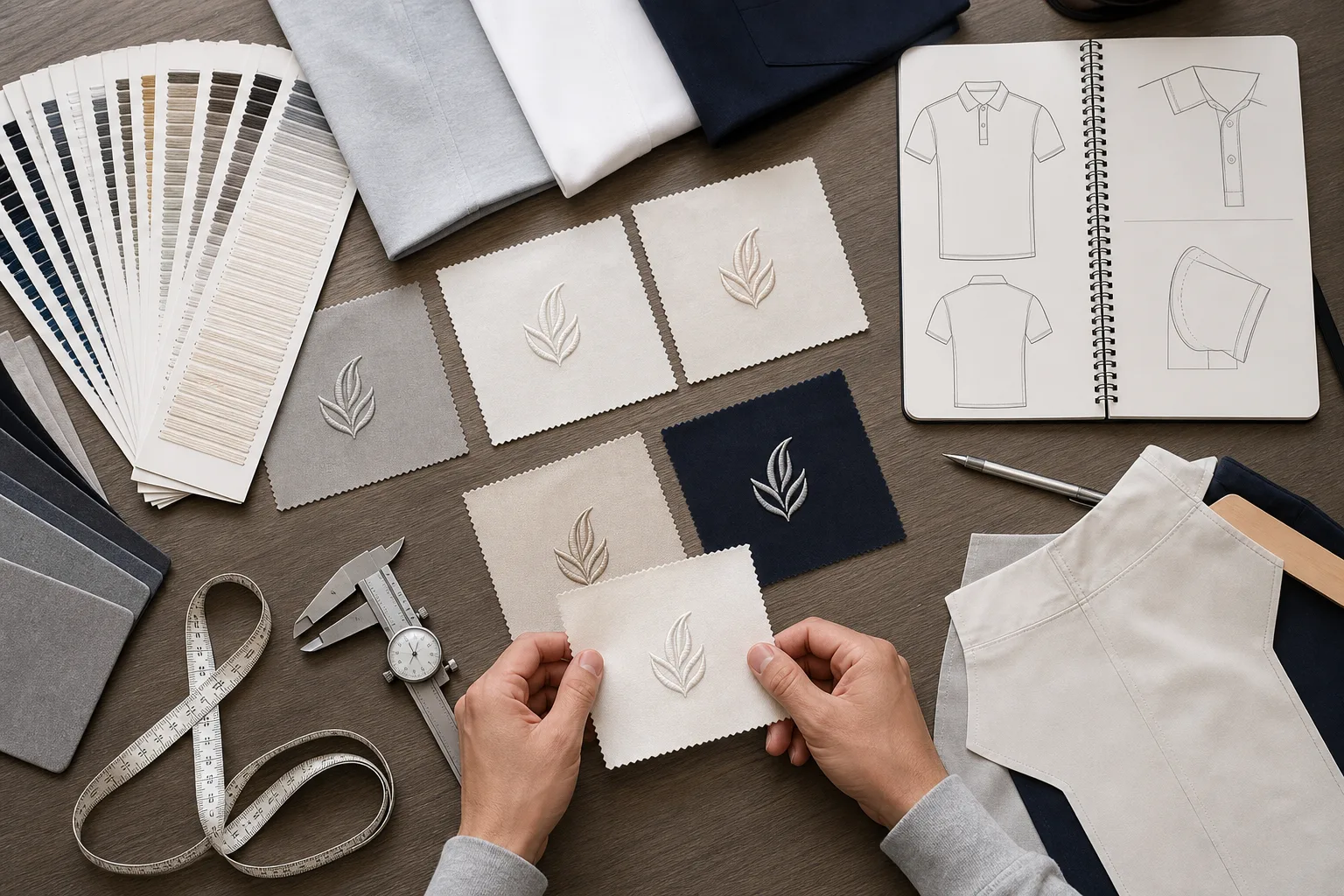
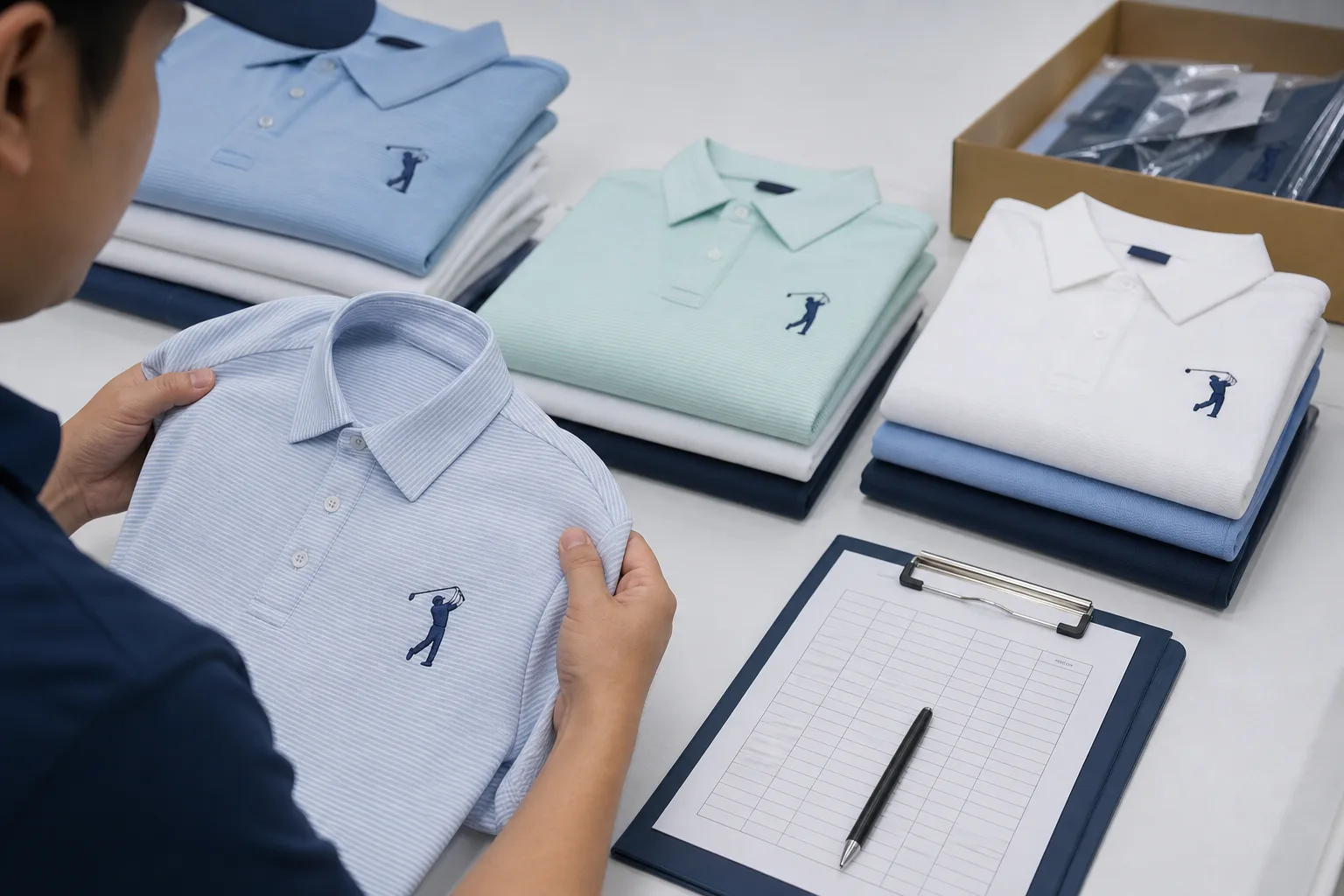
What logo details usually need adjustment before golf apparel embroidery?
Small text, thin strokes, tight spacing, layered outlines, and gradient-like details often need simplification. The final recommendation depends on logo size, thread count, garment fabric, and placement area.
Is embroidery suitable for lightweight stretch golf garments?
Sometimes, but it needs extra review. Very light or highly elastic fabrics can show puckering, reduced stretch recovery, or wearer discomfort if the logo is too dense or placed in a high-movement area.
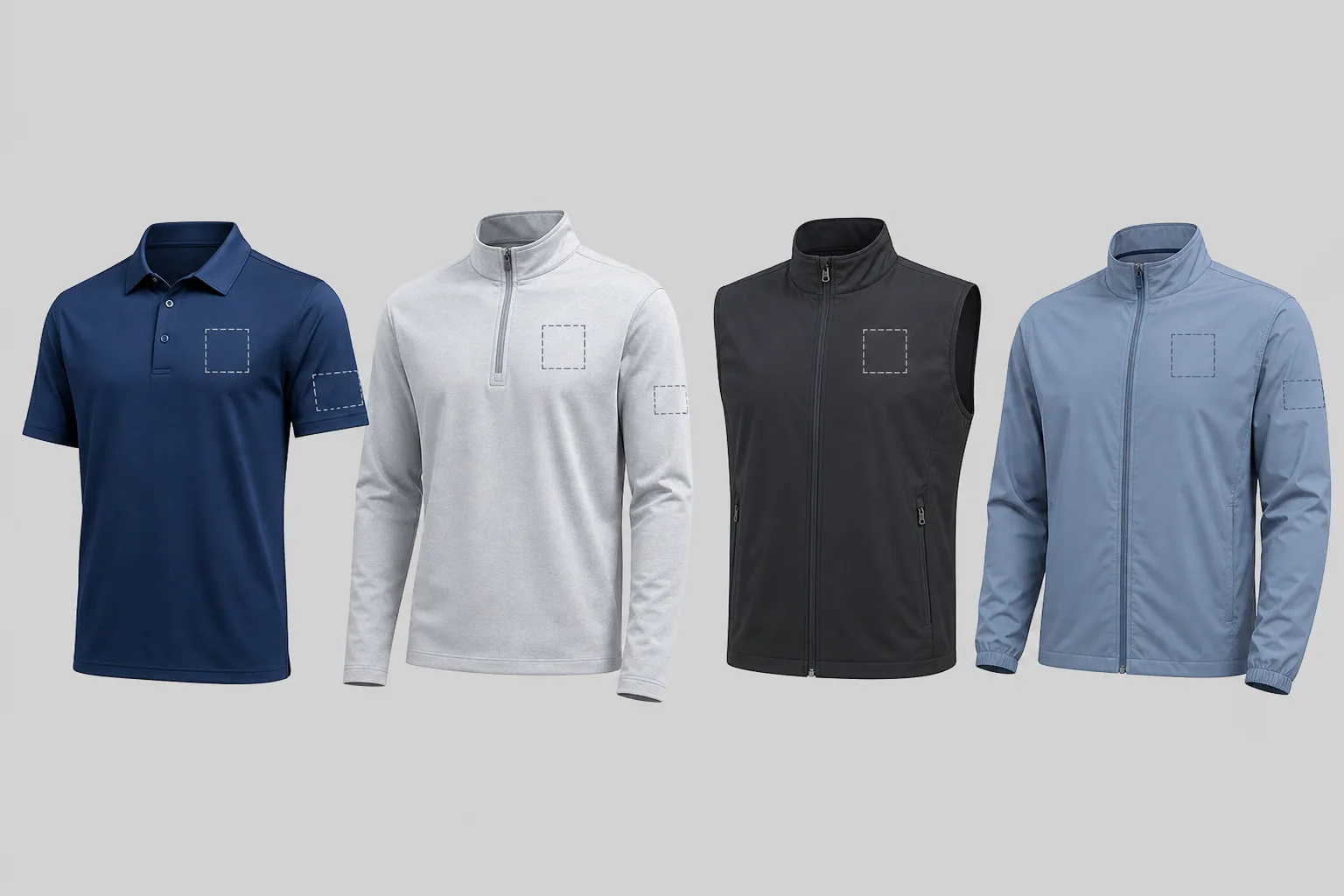
Can the same embroidered logo file be used across polos, jackets, and quarter-zips?
The artwork may start from one file, but stitch setup, size, backing, and placement often need adjustment by garment category. A logo that works on a polo may need a different approach on lined outerwear or lightweight shells.
What information helps you quote embroidery on a golf apparel order?
The main inputs are garment type, fabric, logo size, placement, artwork file, color count, estimated quantity, and whether the order includes multiple styles or private label packaging requirements.
What are the main quality risks buyers should watch for with embroidery?
The most common risks are unreadable small text, uneven placement, loose threads, poor edge definition, panel puckering, and uncomfortable inside finishing on lighter garments.
Should buyers approve embroidery on a strike-off or on the actual garment sample?
When possible, approval on the actual garment sample is stronger because it shows how the stitch file behaves on the real fabric, panel shape, and construction details. A strike-off can still help earlier in artwork review.