OEM / ODM Service Page

Performance Fabric Sourcing

Ninghow Golf supports buyers who need suitable performance fabrics for custom golf apparel programs, from polos and base layers to outerwear and team uniforms. The focus is not only fabric availability, but also matching the right hand feel, weight, stretch, surface, and end use to your product plan. If you are building a private label line, updating a club uniform range, or preparing a brand collection, we can help you compare sourcing options before sampling so your development starts with clearer material choices.

Fabric ChoiceCompare fabric options for custom golf apparel programs, including stretch, moisture management, weather use, sourcing.

Product Programs

Golf apparel buyers often need more than a generic polyester fabric.

Buyer Types

Not every functional fabric fits every golf product.

Execution Control

Stronger sourcing decisions come from clear product requirements.

Development Support

A fabric that performs well in one garment may create issues in another.

Sourcing Support Scope

How performance fabric sourcing supports golf apparel development

Golf apparel buyers often need more than a generic polyester fabric. A program may require lightweight breathability for warm-weather polos, extra stretch for bottoms, a smoother face for logo decoration, or layered fabric systems for outerwear. Material sourcing decisions affect fit, comfort, decoration, cost structure, and repeat-order consistency.

Ninghow Golf can support fabric sourcing during the early OEM / ODM stage by reviewing product goals, target garment category, climate use, expected decoration method, and bulk-order practicality. For buyers who already have a direction, this can connect directly with golf apparel product development or prototype and sampling.

  • For brand collections: compare fabric options by story, price level, and season.
  • For club and team programs: prioritize comfort, color consistency, and reorder practicality.
  • For private label projects: align fabric sourcing with label, trim, and packaging plans.
  • For outerwear programs: balance movement, weather use, and garment construction.
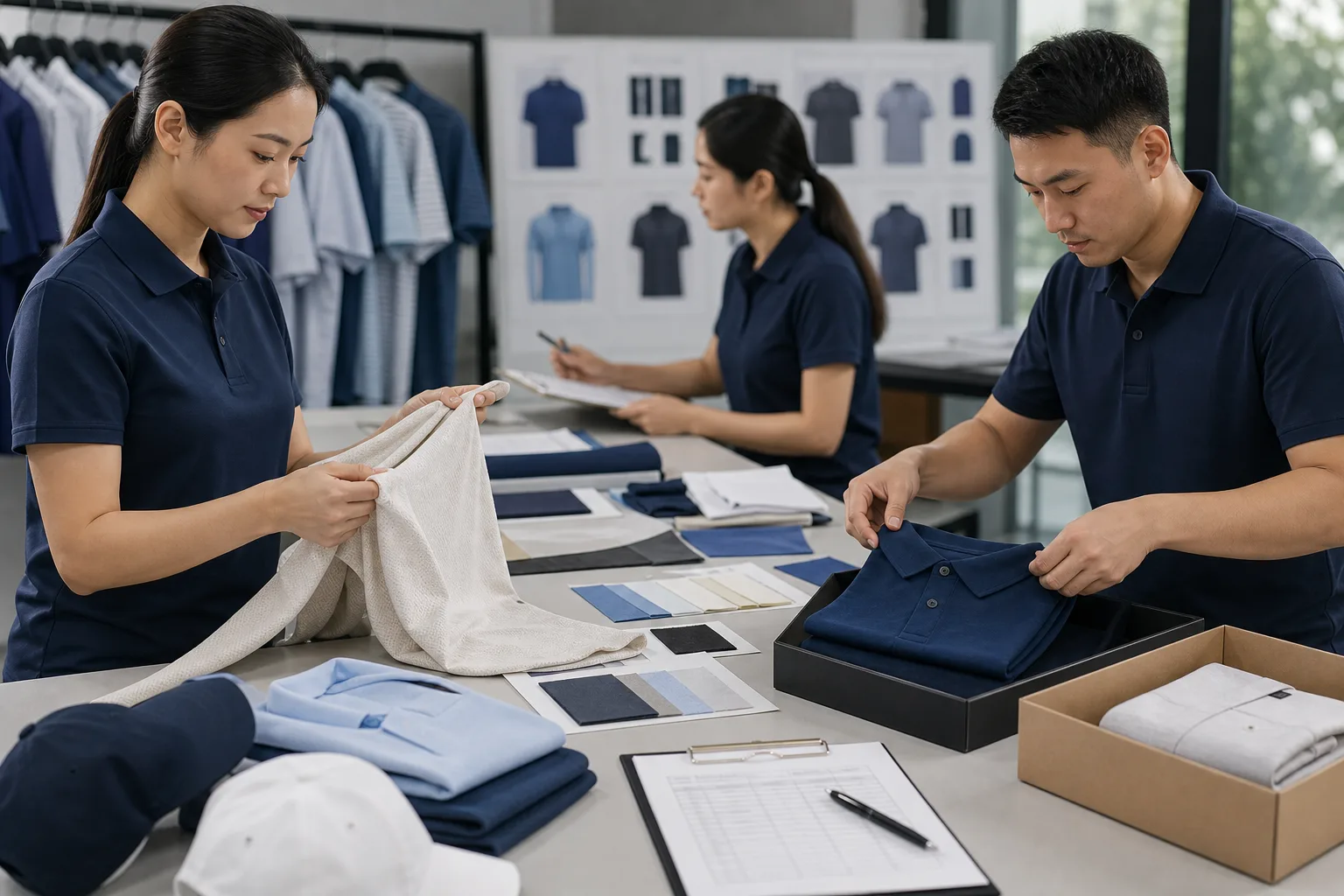
Team comparing golf fabric swatches and specification sheets
Fabric Types for Golf Use

Common performance fabric directions for golf garments

Not every functional fabric fits every golf product. A polo, quarter-zip, pant, and rain layer each require different material behavior. Sourcing typically starts by narrowing the fabric family, then refining the structure and finish.

Typical fabric directions

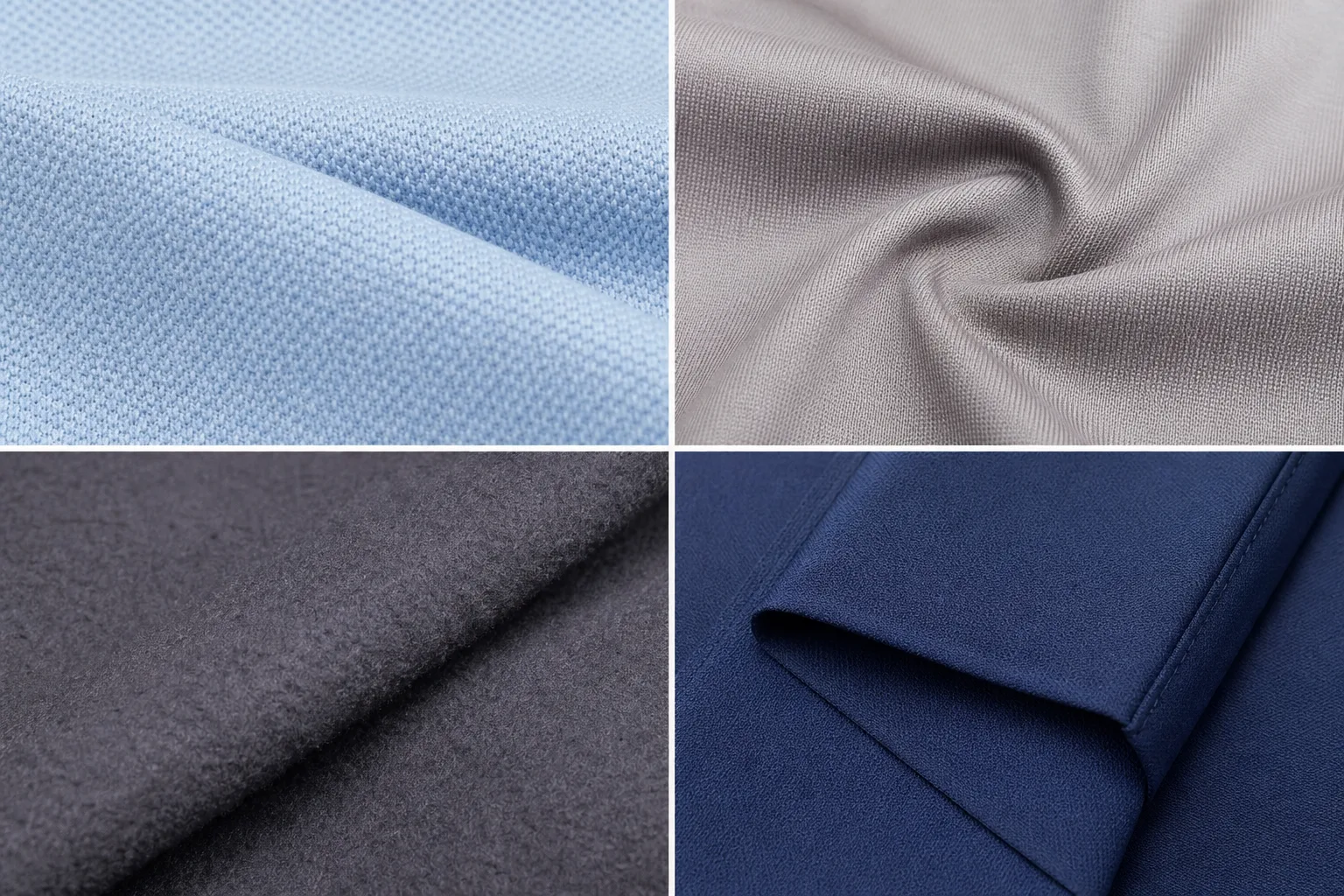
  • Single jersey knits: often used for golf T-shirts, lightweight polos, and base layers where softness and movement matter.
  • Pique and textured knits: common for golf polo programs that need a classic surface with breathable structure.
  • Interlock knits: suited to smoother, slightly denser garments with a cleaner appearance.
  • Stretch woven fabrics: widely considered for golf pants, shorts, skorts, and dresses that need mobility and shape.
  • Brushed or thermal fabrics: relevant for cooler-weather layers and selected outerwear.
  • Layering fabrics: used for windbreakers, quarter-zips, and jackets where shell behavior and lining compatibility matter.

Buyers evaluating sustainable alternatives can also compare options on the separate recycled golf fabrics page.

Selection Criteria

What buyers should define before selecting a performance fabric

Stronger sourcing decisions come from clear product requirements. When a brief only says “performance fabric,” it leaves too much open for inconsistent interpretation. A more accurate starting point helps reduce sample revisions.

  • Garment type: polo, T-shirt, hoodie, base layer, jacket, pant, skort, or dress
  • Use environment: hot weather, transitional climate, cool season, wind exposure, or light rain planning
  • Stretch direction: comfort stretch, active movement stretch, or recovery priority
  • Fabric weight range: lighter, midweight, or more structured hand feel
  • Surface preference: matte, smooth, textured, brushed, or heather look
  • Decoration needs: embroidery, heat transfer, printing, woven labels, or multiple logo placements
  • Care expectations: easy-care, wrinkle resistance preference, or travel-friendly handling
  • Target market position: value line, club uniform, premium brand range, or promotional use

When color depth, finish behavior, or functional claims matter, the exact material and order scope should be checked before approval. Applicable testing or certification documents should be confirmed for the relevant fabric, garment, and production order.

Team comparing golf fabric swatches and specification sheets
Matching Fabric to Product

How fabric sourcing changes by golf product category

A fabric that performs well in one garment may create issues in another. Matching the source material to the garment structure is part of reducing downstream sampling risk.

Product Type Typical Fabric Priorities Common Sourcing Watchpoints
Golf polos Breathability, stretch comfort, collar compatibility, clean logo surface Collar match, placket appearance, color consistency between body and trims
Base layers Recovery, body-hugging comfort, smooth touch, layering function Over-stretching, transparency risk, seam comfort
Pants and shorts Stretch woven mobility, drape, shape retention, pocket stability Bagging at knees or seat, waistband support, crease appearance
Quarter-zips and pullovers Movement, midweight structure, zipper compatibility, seasonal comfort Collar behavior, zipper wave, shoulder restriction
Windbreakers and jackets Shell behavior, lining coordination, movement range, packability Noise level, seam handling, decoration distortion, finish variation

For garment-specific requirements, buyers can also review related pages such as custom golf polo shirts, golf pants, and quarter-zip pullovers.

Sourcing Workflow

Typical sourcing workflow from brief to sample-ready fabric choice

  1. Requirement review: confirm product category, target use, fabric direction, and decoration method.
  2. Option screening: compare available or sourceable materials based on composition, structure, hand feel, and suitability.
  3. Swatch review: assess color, texture, stretch, weight, and branding compatibility.
  4. Sample selection: choose the most suitable material for prototype development.
  5. Approval checkpoint: confirm any changes before bulk planning.

Standard sample timing may be around 5 to 7 days, with more complex developments around 7 to 10 days, but actual progress depends on fabric availability, design complexity, revisions, and approval speed. If you already have material references, you can also upload your tech pack to shorten the evaluation stage.

Close-up textures of performance fabrics used for golf clothing
Risk and Review Points

Important limits and review points in performance fabric sourcing

Functional wording in apparel programs should stay tied to the actual sourced material and approved garment construction. Buyers should avoid assuming that every stretch fabric behaves the same, or that a finish shown on one swatch will remain identical across every color, quantity, or production lot.

  • Availability may change: some fabrics are stock-supported, while others depend on mill scheduling.
  • Minimums vary: MOQ can depend on fabric type, color count, garment style, and order structure.
  • Color can affect outcome: darker or brighter shades may behave differently in appearance or finishing.
  • Decoration can change fabric performance: logo application areas may alter stretch, drape, or breathability.
  • Testing scope is not automatic: third-party inspection or testing may be arranged when required.

Buyers planning special hand feel, recycled inputs, or additional finish requirements may also want to review functional finishes before approving swatches.

Quote Preparation

What to send for a faster fabric sourcing review

A practical inquiry helps narrow the fabric shortlist more efficiently. If exact specifications are not ready, a structured brief is still useful.

  • Garment type and intended season
  • Preferred fabric feel or reference garment
  • Target fabric weight range if known
  • Stretch, texture, or weather-use priority
  • Estimated quantity and color range
  • Logo method and placement areas
  • Target market level or price direction
  • Whether you need swatches only or a full sample next

For ongoing programs, Ninghow Golf can coordinate sourcing review together with sampling and later manufacturing planning through Ninghow’s development and production support structure in China.

Quality control and packing for golf clothing manufacturing buyers
Common Questions

Answers buyers usually need before starting

Keep the project conversation practical with clear expectations around sampling, production and quotation inputs.

Can you source different performance fabrics for polos, pants, and outerwear in one program?

Yes, mixed product programs can be handled together, but each garment type usually needs its own fabric assessment. A polo may prioritize breathability and collar compatibility, while pants need stretch woven stability and outerwear may need shell and lining coordination.

What information helps you recommend a suitable golf performance fabric?

The most useful inputs are garment category, target season, preferred hand feel, weight direction, stretch needs, decoration method, estimated quantity, and any reference garment or swatch. Even a simple brief can help narrow the options.

Do all sourced performance fabrics come with the same testing or certification documents?

No. Document availability depends on the exact material, supplier, factory scope, and order requirement. Buyers should request current documents for the specific fabric or product under review, and third-party testing may be arranged when required.

Can I request swatches before starting a full sample?

Yes. Swatch review is often the right first step when you are comparing surface texture, stretch, weight, or color direction. It can help reduce sample revisions caused by unclear fabric expectations.

What can delay performance fabric selection during development?

Common causes include unclear end-use requirements, changes in color plan, waiting for mill availability, multiple fabric comparisons, artwork changes that affect decoration compatibility, or additional testing requests.

Does performance fabric sourcing have one fixed MOQ?

No. MOQ is not fixed across all fabric programs. It may depend on the fabric type, colorways, whether the fabric is stock-supported or custom-developed, garment category, decoration, packaging, and the overall order structure.


Start a Project

Build your next golf clothing program with a clearer production path.

Share product type, quantity, fabric direction, branding requirements and target timing so Ninghow Golf can suggest the most practical next step.

Scroll to Top